• Fri frakt över 249 kr
  • •
  • Snabba leveranser
  • •
  • Billiga böcker
Kundservice

Du är på sajten för privatpersoner.

Företag, bibliotek eller offentlig verksamhet?

Du handlar på classic.bokus.com, där alla dina funktioner finns intakta.
Till classic.bokus.com
Bokus logotyp. Gå till startsidan.
  • Erbjudanden
  • Nyheter
  • Student
  • Topplistor
  • Barn & ungdom
  • Bokus Play
  • E-böcker
  • Pocketböcker
  • Spel & pussel

10% rabatt på allt med kod: NYSTART10 →

Sidfot

Mina sidor

    Hjälp

    • Kundservice
    • Vanliga frågor och svar
    • Frakt och leverans
    • Retur vid ångerrätt
    • Reklamera vara
    • Betalning
    • Köpvillkor
    • Allmänna villkor
    • Information om webbplatsens tillgänglighet

    Om Bokus

    • Om oss
    • Pressrum
    • För studenter
    • För företag
    • För bibliotek och offentlig verksamhet
    • För leverantörer
    • Hållbarhet

    Populärt

    • Aktuella erbjudanden
    • Presentkort
    • Studentlitteratur
    • Nya böcker
    • Topplistor
    • Signerade böcker
    • Engelska böcker

    Inspiration

    • Boktips
    • BookTok
    • Populära bokserier
    • Barnbokskaraktärer
    • Populära författare
    Logotyp för Bokus
    Följ oss på Facebook (extern länk)Följ oss på Instagram (extern länk)Följ oss på YouTube (extern länk)Följ oss på TikTok (extern länk)
    bokus @ CookiesAnpassa cookiesIntegritetspolicyKöpvillkor
    Till Citymail hemsida (extern länk)Till Budbee hemsida (extern länk)Till Postnord hemsida (extern länk)Till Schenker hemsida (extern länk)Till Early Bird hemsida (extern länk)Till Walleys hemsida (extern länk)
    1. Historia och arkeologi
    2. Historia
    3. Europas historia

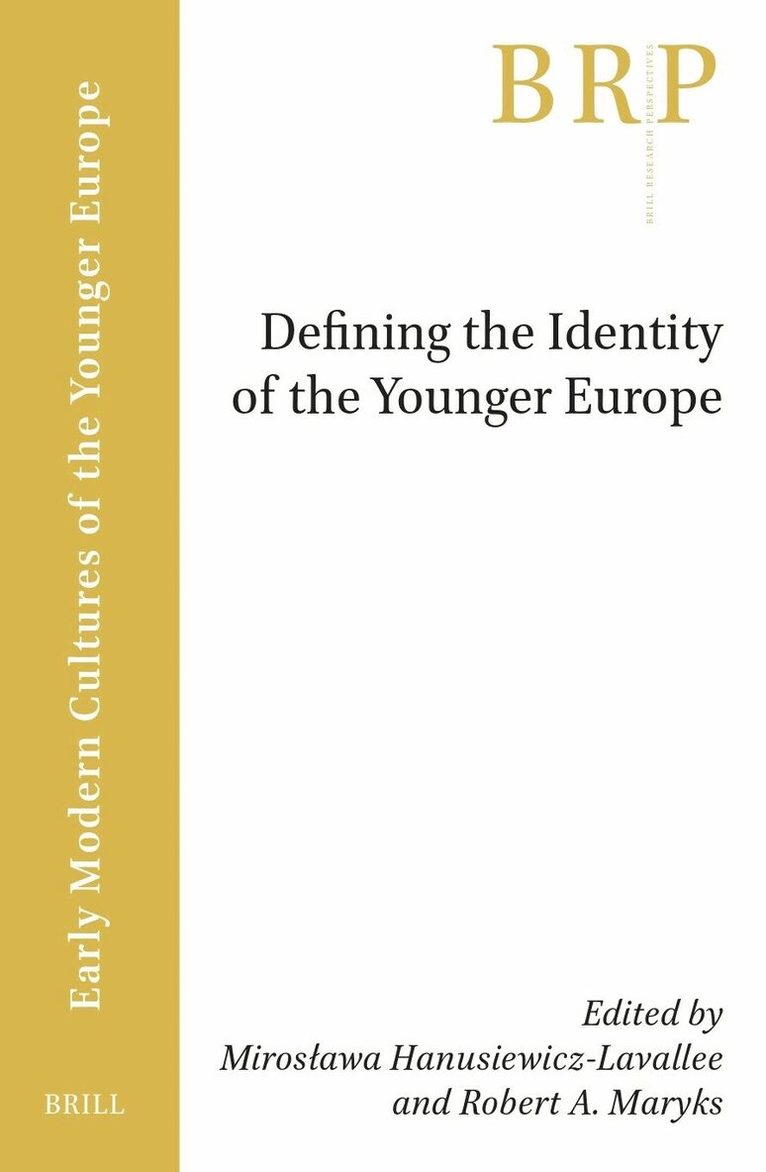
    Defining the Identity of the Younger Europe

    AvMiroslawa Hanusiewicz-Lavallee,Robert Aleksander Maryks

    Häftad, Engelska, 2023

    Del i serien Brill Research Perspectives in Early Modern Cultures of the Younger Europe

    2 388 kr

    Beställningsvara. Skickas inom 5-8 vardagar. Fri frakt över 249 kr.

    Beskrivning

    This book is available in open access thanks to the generous support of the Adam Mickiewicz University, PoznańDefining the Identity of the Younger Europe gathers studies that shed new light on the rich tapestry of early modern “Younger Europe” — Byzantine-Slavic and Scandinavian territories. It unearths the multi-dimensional aspects of the period, revealing the formation and transformation of nations that shared common threads, the establishment of political systems, and the enduring legacies of religious movements. Immersive, enlightening, and thought-provoking, the book promises to be an indispensable resource for anyone interested in the complexities of early modernEurope. This collection does not just retell history; it provokes readers to rethink it.Contributors: Giovanna Brogi, Piotr Chmiel,Karin Friedrich, Anna Grześkowiak-Krwawicz, Mirosława Hanusiewicz-Lavallee, Robert Aleksander Maryks, Tadhg Ó hAnnracháin, Maciej Ptaszyński, Paul Shore, and Frank E. Sysyn.

    Produktinformation

    • Utgivningsdatum:2023-11-15
    • Mått:155 x 235 x 13 mm
    • Vikt:374 g
    • Format:Häftad
    • Språk:Engelska
    • Serie:Brill Research Perspectives in Early Modern Cultures of the Younger Europe
    • Antal sidor:204
    • Förlag:Brill
    • ISBN:9789004520219

    Utforska kategorier

    • Europas historia inom Historia och arkeologi
    • Filosofiska discipliner inom Filosofi och religion
    • Kristendom inom Filosofi och religion

    Mer om författaren

    Mirosława Hanusiewicz-Lavallee, Ph.D. (1992, Catholic University of Lublin) Poland, is a professor of early modern Polish literature at the Catholic University of Lublin. She has published extensively on baroque poetry, religious literary culture, and the comparative context of Polish literature, including the monographs Świat podzielony (1994), Święte i zmysłowe w poezji religijnej polskiego baroku (1998), Pięć stopni miłości (2004), and W stronę Albionu(2017).Robert A. Maryks, Ph.D. (2006, Fordham University, New York City) has published widely on the history of the Jesuits, including Saint Cicero and the Jesuits (Ashgate, 2008) and The Jesuit Order as a Synagogue of Jews (Brill, 2009). He is the editor of the Journal of Jesuits Studies, Brill’s series Jesuit Studies, Jesuit Historiography Online, and Brill Research Perspectives in Jesuit Studies.

    Innehållsförteckning

    • ContentsNotes on Editors and ContributorsIntroductionMirosława Hanusiewicz-Lavallee and Robert A. MaryksThe Polish–Lithuanian Commonwealth and the Birth of Modern Ukraine: a Reappraisal of the Khmelnytsky “Revolution”Frank E. SysynAbstractKeywords1 National Traditions2 Periodization3 The General Crisis of the Seventeenth Century and Early Modern Revolts4 The Religious Factor5 New Research Agendas6 ConclusionThe Younger Europe—or the Older? Visions of Politics in the Early Modern Polish–Lithuanian CommonwealthAnna Grześkowiak-KrwawiczAbstractKeywords1 On the Main Route: the Republican Tradition2 The Side Path: Disregard of New Concepts3 New Propositions: New RoadsThe “Common Good” and Urban Crisis Management in Early Modern East-Central Europe: the Examples of Danzig and SlutskKarin FriedrichAbstractKeywords1 Self-Interest versus “Common Good” in the “Younger Europe”2 The “Common Good,” Natural Law, and Hugo Grotius3 Danzig’s Conflict with Stefan Báthory4 The “Well-Ordered Government” of the City of Slutsk5 ConclusionGood Editions of Unpublished Texts: the Case of Stefan IavorskiiGiovanna BrogiAbstractKeywords1 Historical and Cultural Context2 Stefan Iavorskii’s Heretige3 Documentary and Cultural Significance4 Stefan Iavorskii and Lazar Baranovych5 ConclusionWords Spoken and Unspoken: Preachers and the Baltic Reformation in the Younger EuropeMaciej PtaszyńskiAbstractKeywords1 Introduction2 Early Reformation in the North3 Stralsund on the Eve of Iconoclasm4 ConclusionThe Younger Europe from a Papal Perspective, 1580–1640Tadhg Ó hAnnracháinAbstractKeywords1 Introduction: Catholic Geography of Europe2 Perceptions of the Polish–Lithuanian Commonwealth3 ConclusionThe Battle of Mohács, Re-remembered History, and Hungary’s “Christian” IdentityPaul Shore†AbstractKeywordsConclusionAcknowledgementsYounger, but How? Heterochrony of Premodern European Divisions in the Discourse on Central/East-Central EuropePiotr ChmielAbstractKeywords1 Introduction2 East–West Divide3 From Spatial to Temporal Divisions4 Views on Europe: Time and Space5 Reflections on Early Modern Times6 Toward a Conclusion: Heterochrony, History, and the East–West DivideBibliographyIndex