• Fri frakt över 249 kr
  • •
  • Snabba leveranser
  • •
  • Billiga böcker
Kundservice

Du är på sajten för privatpersoner.

Företag, bibliotek eller offentlig verksamhet?

Du handlar på classic.bokus.com, där alla dina funktioner finns intakta.
Till classic.bokus.com
Bokus logotyp. Gå till startsidan.
  • Erbjudanden
  • Nyheter
  • Student
  • Topplistor
  • Barn & ungdom
  • Bokus Play
  • E-böcker
  • Pocketböcker
  • Spel & pussel

Må bättre, för mindre! Upp till 50% rabatt på hälsoböcker

Sidfot

Mina sidor

    Hjälp

    • Kundservice
    • Vanliga frågor och svar
    • Frakt och leverans
    • Retur vid ångerrätt
    • Reklamera vara
    • Betalning
    • Köpvillkor
    • Allmänna villkor
    • Information om webbplatsens tillgänglighet

    Om Bokus

    • Om oss
    • Pressrum
    • För studenter
    • För företag
    • För bibliotek och offentlig verksamhet
    • För leverantörer
    • Hållbarhet

    Populärt

    • Aktuella erbjudanden
    • Presentkort
    • Studentlitteratur
    • Nya böcker
    • Topplistor
    • Signerade böcker
    • Engelska böcker

    Inspiration

    • Boktips
    • BookTok
    • Populära bokserier
    • Barnbokskaraktärer
    • Populära författare
    Logotyp för Bokus
    Följ oss på Facebook (extern länk)Följ oss på Instagram (extern länk)Följ oss på YouTube (extern länk)Följ oss på TikTok (extern länk)
    bokus @ CookiesAnpassa cookiesIntegritetspolicyKöpvillkor
    Till Citymail hemsida (extern länk)Till Budbee hemsida (extern länk)Till Postnord hemsida (extern länk)Till Schenker hemsida (extern länk)Till Early Bird hemsida (extern länk)Till Walleys hemsida (extern länk)
    1. Kultur
    2. Konstböcker
    3. Konsthistoria

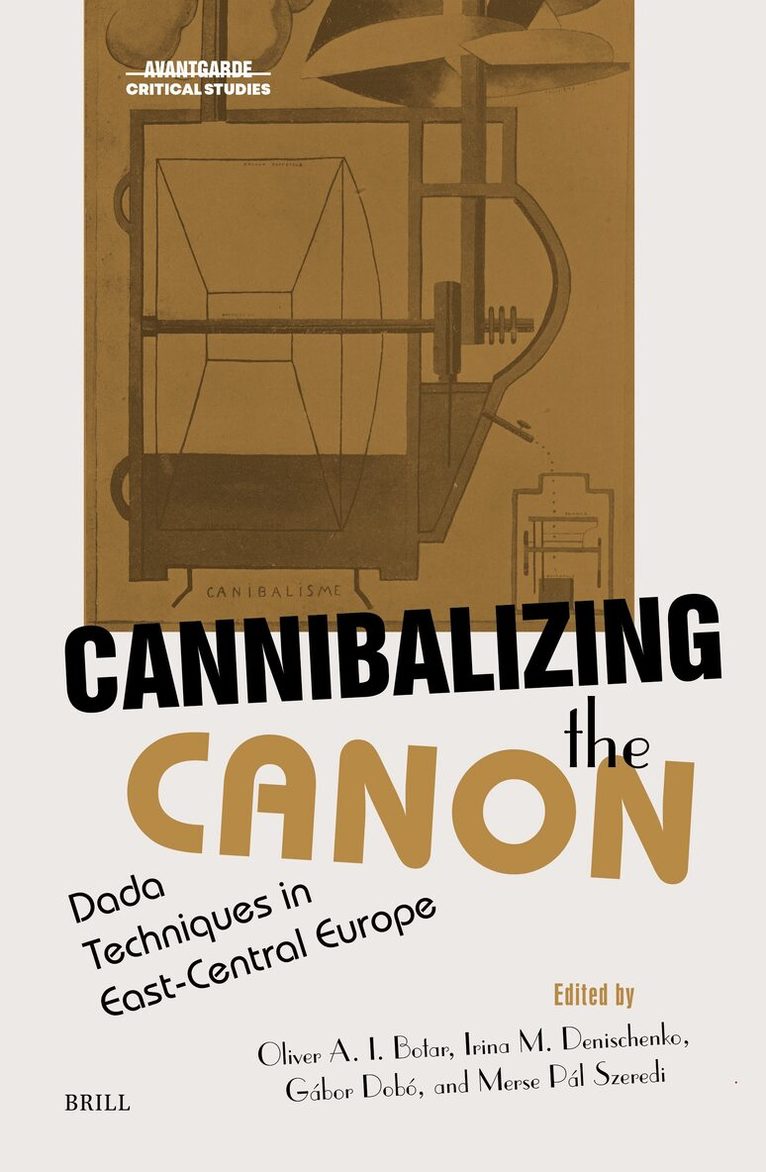
    Cannibalizing the Canon

    Dada Techniques in East-Central Europe

    AvOliver Botar

    Inbunden, Engelska, 2024

    Del 42 i serien Avant-Garde Critical Studies

    2 420 kr

    Beställningsvara. Skickas inom 5-8 vardagar. Fri frakt över 249 kr.

    Beskrivning

    This rich, in-depth exploration of Dada’s roots in East-Central Europe is a vital addition to existing research on Dada and the avant-garde. Through deeply researched case studies and employing novel theoretical approaches, the volume rewrites the history of Dada as a story of cultural and political hybridity, border-crossings, transitions, and transgressions, across political, class and gender lines. Dismantling prevailing notions of Dada as a “Western” movement, the contributors to this volume present East-Central Europe as the locus of Dada activity and techniques. The articles explore how artists from the region pre-figured Dada as well as actively “cannibalized”, that is, reabsorbed and further hybridized, a range of avant-garde techniques, thus challenging “Western” cultural hegemony.

    Produktinformation

    • Utgivningsdatum:2024-01-31
    • Mått:155 x 235 x 48 mm
    • Vikt:1 226 g
    • Format:Inbunden
    • Språk:Engelska
    • Serie:Avant-Garde Critical Studies
    • Antal sidor:634
    • Förlag:Brill
    • ISBN:9789004526730

    Utforska kategorier

    • Konsthistoria inom Kultur
    • Konstteori inom Kultur

    Mer om författaren

    Oliver Botar is a Professor of Art History and Associate Director of the School of Art at the University of Manitoba. His research focuses on early 20th-century Central European Modernism, particularly the work of Moholy-Nagy, with concentrations on art in alternative media, and “Biocentrism” and Modernism in early-to-mid 20th-century art.Irina Denischenko is an Assistant Professor at Georgetown University. Her research focuses on 20th-century literature and visual art--especially the avant-garde, on critical theory, as well as on women’s contributions to avant-garde and modernist aesthetics in Central and Eastern Europe.Gábor Dobó is a research fellow at the Kassák Museum in Budapest. He is the principal investigator of a project focusing on the artist couple Lajos Kassák and Jolán Simon. In 2022, he was a Fulbright visiting scholar at Columbia University.Merse Pál Szeredi is department head at the Kassák Museum. His research focuses on Hungarian avant-garde art and the history of Lajos Kassák’s magazine Ma in Vienna between 1920 and 1925, with special emphasis on its international networks.

    Recensioner i media

    Cannibalizing the Canon has the merit of shedding light on under-researched territories and overlooked issues in avant-garde historiography, restoring the contributions of those artists who did not figure in the canonical constructions of Dadaism and incorporating ephemeral art forms. Using new theoretical approaches and methodological frameworks, the volume challenges the singularity of Dadaism and its founding myths. The focus on the connections between local avant-gardes, employing transmedial and transnational perspectives, corrects and nuances some directions from avant-garde histories, contesting the hegemony of the West and a hierarchical system. Thus, the volume brings a significant contribution to the Dada movement and to the research of the avant-garde.

    Innehållsförteckning

    • List of IllustrationsNotes on ContributorsIntroduction: “Dada Is more than Dada”Oliver A. I. Botar, Irina Denischenko, Gábor Dobó and Merse Pál SzerediPart 1:Topographies1 An Exchange Point in a Network: Prague and Dada, 1918–1922Jindrich Toman2 Becoming Avant-Garde: Romanian Appropriations of Dada Techniques through East-Central European NetworkingEmanuel Modoc3 Polish Responses to Dadaism: The Voices on Dada, Contacts and InterpretationsPrzemyslaw Strozek4 The Dada Entr’acte of Dragan AleksicJasna Jovanov5 Hungarian Dada: the Missing LinkAndrás KappanyosPart 2: In/Exclusions6 Céline Arnauld, the “Nomadic” Avant-Garde Writer: a Transnational Approach to Her Life and WorkIulia Dondorici7 Two Mysterious “Mademoiselles”: Jeanne Rigaud and Maria Cantarelli A Multilingual Multi-Layered Dada Pun Unravelled?Hubert van den Berg8 Dada as an Avant-Garde Movement and as InvectiveKároly Kókai9 “Dada Is the Best Paying Concern of the Day”: Consumer Culture, Performativity, and the Avant-Garde in RomaniaAlexandra ChiriacPart 3: Performativities10 Marcel Breuer and Dada Performance: Remade Readymade Self and FurnitureEdit Tóth11 Míra Holzbachová: Embodying the Avant-GardeMeghan Forbes12 To Write with Dots or Not to Write at All? Dada Ideas in Polish Interwar LiteratureMichalina Kmiecik13 Green Donkey Theatre: a Case Study on Theatrical Innovations in the Name of DadaismSára Bagdi and Judit GaláczPart 4: Trans(pos)itions14 The Genesis of Dada: Futurist Influences in Germany, Romania and at the Cabaret VoltaireGünter Berghaus15 Revolt and Authority: From Kassák to Erdély Dada in the Hungarian Avant-Garde and Neo-Avant-GardeÉva Forgács16 Dadá, not Dáda: Moholy-Nagy in Berlin, 1920–1921Oliver A. I. Botar17 Words, Sounds, Images, Theories: the Authors of the Magazine IS in the Context of DadaismImre József Balázs18 Self-Positioning in the International Avant-Garde: Kassák’s Strategic Use of Dada and Constructivism in the Book of New ArtistsKrisztina Zsófia CsabaPart 5: Hybridentities19 Raoul Hausmann and the Welteislehre: Science and IdentityArndt Niebisch20 Dada Lingua Franca: The Linguistic Fate of Tristan Tzara and Raoul HausmannAlexandru Bar and Michael White21 Crossovers and Transgressions: Dada as a Life Strategy in Emil Szittya’s WorksMagdolna Gucsa22 Android, Cyborg, Dandy and WomanRepresentations of the Body in the Decadent and Dada Imaginations: The Hungarian and International ContextsGyörgyi Földes23 The New Man, According to Sándor BortnyikMerse Pál SzerediIndex