• Fri frakt över 249 kr
  • •
  • Snabba leveranser
  • •
  • Billiga böcker
Kundservice

Du är på sajten för privatpersoner.

Företag, bibliotek eller offentlig verksamhet?

Du handlar på classic.bokus.com, där alla dina funktioner finns intakta.
Till classic.bokus.com
Bokus logotyp. Gå till startsidan.
  • Erbjudanden
  • Nyheter
  • Student
  • Topplistor
  • Barn & ungdom
  • Bokus Play
  • E-böcker
  • Pocketböcker
  • Spel & pussel

10% rabatt på allt med kod: NYSTART10 →

Sidfot

Mina sidor

    Hjälp

    • Kundservice
    • Vanliga frågor och svar
    • Frakt och leverans
    • Retur vid ångerrätt
    • Reklamera vara
    • Betalning
    • Köpvillkor
    • Allmänna villkor
    • Information om webbplatsens tillgänglighet

    Om Bokus

    • Om oss
    • Pressrum
    • För studenter
    • För företag
    • För bibliotek och offentlig verksamhet
    • För leverantörer
    • Hållbarhet

    Populärt

    • Aktuella erbjudanden
    • Presentkort
    • Studentlitteratur
    • Nya böcker
    • Topplistor
    • Signerade böcker
    • Engelska böcker

    Inspiration

    • Boktips
    • BookTok
    • Populära bokserier
    • Barnbokskaraktärer
    • Populära författare
    Logotyp för Bokus
    Följ oss på Facebook (extern länk)Följ oss på Instagram (extern länk)Följ oss på YouTube (extern länk)Följ oss på TikTok (extern länk)
    bokus @ CookiesAnpassa cookiesIntegritetspolicyKöpvillkor
    Till Citymail hemsida (extern länk)Till Budbee hemsida (extern länk)Till Postnord hemsida (extern länk)Till Schenker hemsida (extern länk)Till Early Bird hemsida (extern länk)Till Walleys hemsida (extern länk)
    1. Kultur
    2. Konstböcker
    3. Konsthistoria

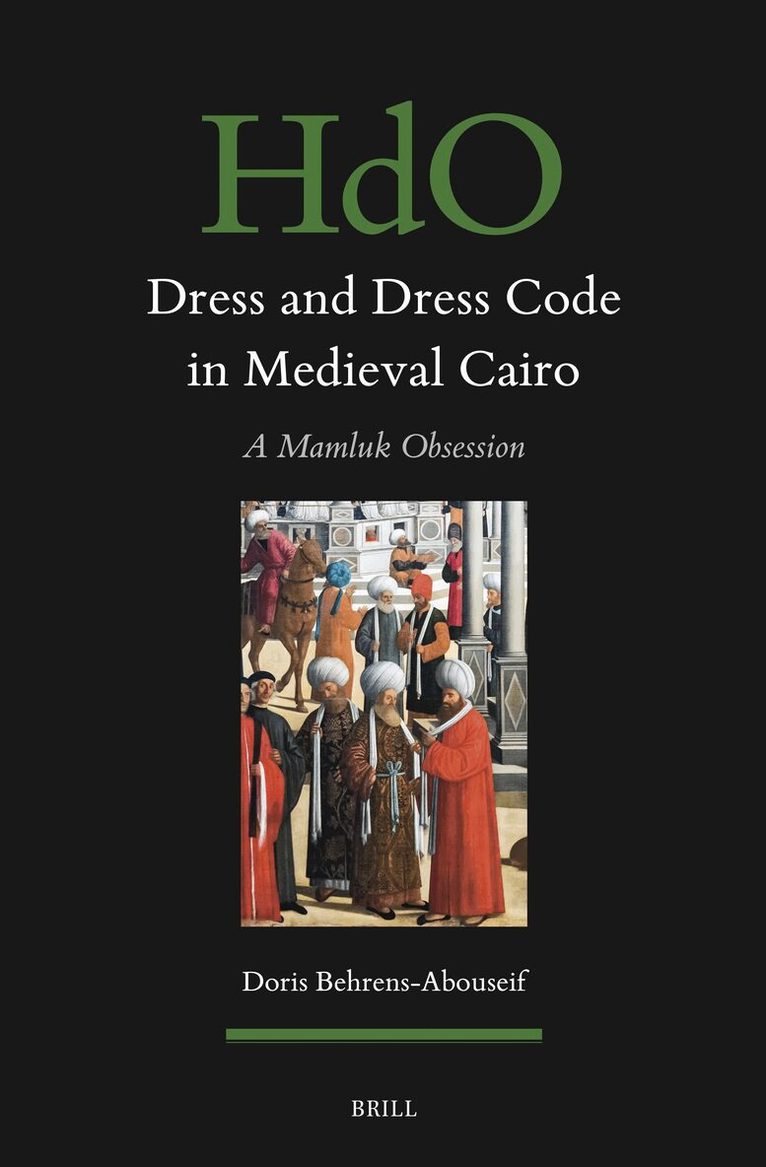
    Dress and Dress Code in Medieval Cairo

    A Mamluk Obsession

    AvDoris Behrens-Abouseif

    Inbunden, Engelska, 2023

    Del 176 i serien Handbook of Oriental Studies. Section 1 The Near and Middle East

    2 849 kr

    Beställningsvara. Skickas inom 5-8 vardagar. Fri frakt över 249 kr.

    Beskrivning

    In this book, Doris Behrens-Abouseif responds to the Mamluk chroniclers whose loquacity regarding clothing matters demands our attention. Using a multiplicity of sources including chronicles, European and Muslim travel narratives, popular storytelling, legal treatises, literature, and poetry, Behrens-Abouseif delves into the details of Mamluk dress. Whether as a vehicle for the sultanate’s self-representation both internationally and domestically or as an expression of religious and social identities, status and wealth, female assertion, urban culture, and artistic creativity, clothing personified the broad Mamluk social spectrum. Replete with colorful anecdotes and copious illustrations, Dress and Dress Code in Medieval Cairo offers a lively and comprehensive study of this fascinating topic.

    Produktinformation

    • Utgivningsdatum:2023-10-11
    • Mått:155 x 235 x 18 mm
    • Vikt:600 g
    • Format:Inbunden
    • Språk:Engelska
    • Serie:Handbook of Oriental Studies. Section 1 The Near and Middle East
    • Antal sidor:240
    • Förlag:Brill
    • ISBN:9789004684973

    Utforska kategorier

    • Konsthistoria inom Kultur
    • Mellanösterns historia inom Historia och arkeologi

    Mer om författaren

    Doris Behrens-Abouseif (Professor Emerita at SOAS), is an art and cultural historian who has many publications on Islamic culture, architecture, urbanism and the decorative arts of the Mamluk and other periods of Islamic Egypt and Syria and the Arab world in general.

    Innehållsförteckning

    • AcknowledgementList of FiguresNote to the Reader1 Introduction: Subject, Sources, and Terminology1 Studies2 Material Evidence3 Archival Sources4 Narrative Sources5 Visual Sources6 Terminology2 Religion, Traditions, and Customs1 Religion2 Sufism3 Dreams4 Urban Customs5 Manners and Rituals3 The Sultanate and Its Historians1 The Sultans’ Perspective2 The Historians’ Perspective4 The Designer Sultans (1250–1380s)1 Al-Ẓāhir Baybars (r. 1260–77)2 Al-Manṣūr Qalāwūn (r. 1278–90)3 Al-Ashraf Khalīl (1290–3)4 Al-Nāṣir Muḥammad (1293–4, 1299–1309, 1310–41)5 Al-Ashraf Shaʿbān (r. 1363–77)6 Al-Ṣāliḥ Hājjī (r. 1389–90)5 The Circassian Revision (1380s–1517) and the Ottoman Termination of the Mamluk Dress Code1 Al-Ẓāhir Barqūq (r. 1382–9, 1390–99)2 Al-Nāṣir Faraj (r. 1399–1405)3 Al-Ashraf Barsbāy (r. 1422–38)4 Al-Ẓāhir Jaqmaq (r. 1438–53)5 Al-Ẓāhir Khushqadam (r. 1461–7)6 Al-Ashraf Qāyṭbāy (r. 1468–96)7 Al-Ashraf Qānṣuh Al-Ghawrī (r. 1501–16)8 The End of the Mamluk Dress Code6 The Khilʿa: Institution and Ritual7 The Khilʿa as a Garment1 The Caliph and the Sultan2 The Military Establishment in the Bahri Period3 The Military Establishment in the Circassian Period4 The Civilian Dignitaries5 The Kāmiliyya: A Circassian Innovation8 The Dār al-Ṭirāz and Mamluk Art1 Production2 Administration3 Tirāz and Mamluk Art9 Dress and Dress Code of the Mamluk Aristocracy1 The Sultan (Fig. 16)2 The Mamlūks3 The Headdress10 The Dress Code of the Civilian Elite and the Commoners1 The Civilian Elite2 The Sufis3 The Commoners11 Women’s Clothing1 The Palace2 The Street3 Wardrobe Miscellenia4 Fashions5 Regulation and Transgression6 European Eyewitnesses12 Mamluk Dress between Text and Image1 Artefacts13 Social Order and Mobility14 Industry, Trade, and Assets1 The Markets of Cairo2 Hoards, Assets, and Security15 EpilogueBibliographyIndex