• Fri frakt över 249 kr
  • •
  • Snabba leveranser
  • •
  • Billiga böcker
Kundservice

Du är på sajten för privatpersoner.

Företag, bibliotek eller offentlig verksamhet?

Du handlar på classic.bokus.com, där alla dina funktioner finns intakta.
Till classic.bokus.com
Bokus logotyp. Gå till startsidan.
  • Erbjudanden
  • Nyheter
  • Student
  • Topplistor
  • Barn & ungdom
  • Bokus Play
  • E-böcker
  • Pocketböcker
  • Spel & pussel

10% rabatt på allt med kod NYSTART10 →

Sidfot

Mina sidor

    Hjälp

    • Kundservice
    • Vanliga frågor och svar
    • Frakt och leverans
    • Retur vid ångerrätt
    • Reklamera vara
    • Betalning
    • Köpvillkor
    • Allmänna villkor
    • Information om webbplatsens tillgänglighet

    Om Bokus

    • Om oss
    • Pressrum
    • För studenter
    • För företag
    • För bibliotek och offentlig verksamhet
    • För leverantörer
    • Hållbarhet

    Populärt

    • Aktuella erbjudanden
    • Presentkort
    • Studentlitteratur
    • Nya böcker
    • Topplistor
    • Signerade böcker
    • Engelska böcker

    Inspiration

    • Boktips
    • BookTok
    • Populära bokserier
    • Barnbokskaraktärer
    • Populära författare
    Logotyp för Bokus
    Följ oss på Facebook (extern länk)Följ oss på Instagram (extern länk)Följ oss på YouTube (extern länk)Följ oss på TikTok (extern länk)
    bokus @ CookiesAnpassa cookiesIntegritetspolicyKöpvillkor
    Till Citymail hemsida (extern länk)Till Budbee hemsida (extern länk)Till Postnord hemsida (extern länk)Till Schenker hemsida (extern länk)Till Early Bird hemsida (extern länk)Till Walleys hemsida (extern länk)
    1. Kultur
    2. Konstböcker
    3. Konsthistoria

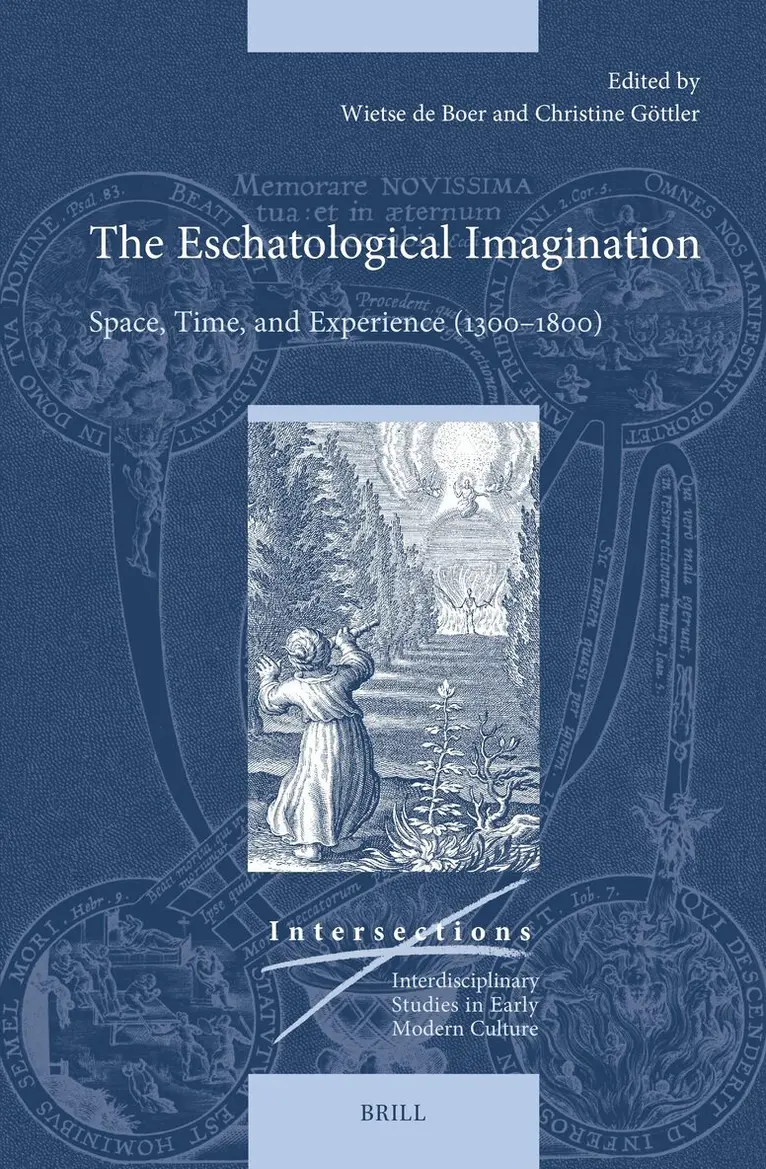
    Eschatological Imagination

    Space, Time, and Experience (1300–1800)

    AvWietse de Boer,Christine Göttler

    Inbunden, Engelska, 2024

    Del 96 i serien Intersections

    2 962 kr

    Beställningsvara. Skickas inom 3-6 vardagar. Fri frakt över 249 kr.

    Beskrivning

    How did the early-modern Christian West conceive of the spaces and times of the afterlife? The answer to this question is not obvious for a period that saw profound changes in theology, when the telescope revealed the heavens to be as changeable and imperfect as the earth, and when archaeological and geological investigations made the earth and what lies beneath it another privileged site for the acquisition of new knowledge.With its focus on the eschatological imagination at a time of transformation in cosmology, this volume opens up new ways of studying early-modern religious ideas, representations, and practices. The individual chapters explore a wealth of – at times little-known – visual and textual sources. Together they highlight how closely concepts and imaginaries of the hereafter were intertwined with the realities of the here and now.Contributors: Matteo Al Kalak, Monica Azzolini, Wietse de Boer, Christine Göttler, Luke Holloway, Martha McGill, Walter S. Melion, Mia M. Mochizuki, Laurent Paya, Raphaèle Preisinger, Aviva Rothman, Minou Schraven, Anna-Claire Stinebring, Jane Tylus, and Antoinina Bevan Zlatar.

    Produktinformation

    • Utgivningsdatum:2024-11-25
    • Mått:155 x 235 x 34 mm
    • Vikt:1 112 g
    • Format:Inbunden
    • Språk:Engelska
    • Serie:Intersections
    • Antal sidor:508
    • Upplaga:25005
    • Förlag:Brill
    • ISBN:9789004688094

    Utforska kategorier

    • Konsthistoria inom Kultur
    • Litteraturvetenskap inom Skönlitteratur
    • Religion: allmänt inom Filosofi och religion

    Mer om författaren

    Wietse de Boer is the Phillip R. Shriver Professor of History at Miami University (Ohio). His research interests are focused on Italian religious and cultural history (15th–17th centuries). His books include The Conquest of the Soul: Confession, Discipline, and Public Order in Counter-Reformation Milan (2001; Italian trans. 2004) and Art in Dispute: Catholic Debates at the Time of Trent (2021).Christine Göttler is Professor Emerita of Art History at the University of Bern. Her research interests focus on the intersections between art, natural philosophy, and religion, the relationship between landscape and nature, and early modern notions of materiality and immateriality. Her publications include the monograph Last Things: Art and the Religious Imagination in the Age of Reform (2010).

    Recensioner i media

    A “fascinating volume [...] My brief remarks can only hint at the wonderfully diverse and thought-provoking essays in this volume, which has been sensitively edited by de Boer and Göttler.”Jeffrey Chipps Smith, University of Texas, Austin. In: Journal of Jesuit Studies, Vol. 12, No. 3 (2025), pp. 513–516.

    Innehållsförteckning

    • AcknowledgementsList of FiguresNotes on the EditorsNotes on the Contributors1 The Space-Time Dimension of Early Modern Eschatology: An IntroductionWietse de Boer and Christine GöttlerPart 1: Cosmology and Eschatology2 Depicting the Universal Conflagration: Time, Space, and Artifice in Peter Paul Rubens’s Fall of the DamnedChristine Göttler3 A Castle in the Air? Space, Time, and Sensation in Gabriel de Henao’s EmpyreologiaWietse de Boer4 Kepler’s Somnium as Purgatorial JourneyAviva RothmanPart 2: Underlands and Netherworlds5 The Birth of Hell: An Angel, His Fall, and His Reign among UsMatteo Al Kalak6 ‘Oh, How Unlike the Place from Whence They Fell!’ John Milton’s Primordial Hell in Paradise LostAntoinina Bevan Zlatar7 God’s Underlands: Athanasius Kircher’s Epic Journey in the Mundus SubterraneusMonica AzzoliniPart 3: Visions of Heaven and Hell8 Ecstatic Visions: The Eschatological Imagination of Spanish Mystic Juana de la Cruz (d. 1534)Minou Schraven9 Describing the Inconceivable in Eighteenth-Century Methodist and Quaker Visions of the AfterlifeMartha McGill and Luke Holloway10 From the Isle of Patmos to the Territory of the Plumed Serpent: Eschatological Imaginations Sparked by the Virgin of Guadalupe in Colonial New SpainRaphaèle PreisingerPart 4: Spiritual Reckoning and Refuge11 Pondering Mary: Michelangelo’s Farewell to DanteJane Tylus12 The Calvinist Theatre of God as a Pleasure Garden at the Time of the First French War of Religion (ca. 1560)Laurent PayaPart 5: Sites of Purgation, Meditation, and Martyrdom13 The Desert at the World’s End: Eschatological Space in Van Hemessen’s Hermit LandscapesAnna-Claire Stinebring14 ‘Abstracto igitur animo’: Eschatological Image-Making in the Emblematic Spiritual Exercises of Jan David, S.J.Walter S. Melion15 The Jesuit Martyrdom Landscape and the Optics of DeathMia M. MochizukiIndex Nominum