• Fri frakt över 249 kr
  • •
  • Snabba leveranser
  • •
  • Billiga böcker
Kundservice

Du är på sajten för privatpersoner.

Företag, bibliotek eller offentlig verksamhet?

Du handlar på classic.bokus.com, där alla dina funktioner finns intakta.
Till classic.bokus.com
Bokus logotyp. Gå till startsidan.
  • Erbjudanden
  • Nyheter
  • Student
  • Topplistor
  • Barn & ungdom
  • Bokus Play
  • E-böcker
  • Pocketböcker
  • Spel & pussel

10% rabatt på allt med kod: NYSTART10 →

Sidfot

Mina sidor

    Hjälp

    • Kundservice
    • Vanliga frågor och svar
    • Frakt och leverans
    • Retur vid ångerrätt
    • Reklamera vara
    • Betalning
    • Köpvillkor
    • Allmänna villkor
    • Information om webbplatsens tillgänglighet

    Om Bokus

    • Om oss
    • Pressrum
    • För studenter
    • För företag
    • För bibliotek och offentlig verksamhet
    • För leverantörer
    • Hållbarhet

    Populärt

    • Aktuella erbjudanden
    • Presentkort
    • Studentlitteratur
    • Nya böcker
    • Topplistor
    • Signerade böcker
    • Engelska böcker

    Inspiration

    • Boktips
    • BookTok
    • Populära bokserier
    • Barnbokskaraktärer
    • Populära författare
    Logotyp för Bokus
    Följ oss på Facebook (extern länk)Följ oss på Instagram (extern länk)Följ oss på YouTube (extern länk)Följ oss på TikTok (extern länk)
    bokus @ CookiesAnpassa cookiesIntegritetspolicyKöpvillkor
    Till Citymail hemsida (extern länk)Till Budbee hemsida (extern länk)Till Postnord hemsida (extern länk)Till Schenker hemsida (extern länk)Till Early Bird hemsida (extern länk)Till Walleys hemsida (extern länk)
    1. Filosofi och religion
    2. Filosofi
    3. Filosofiska discipliner

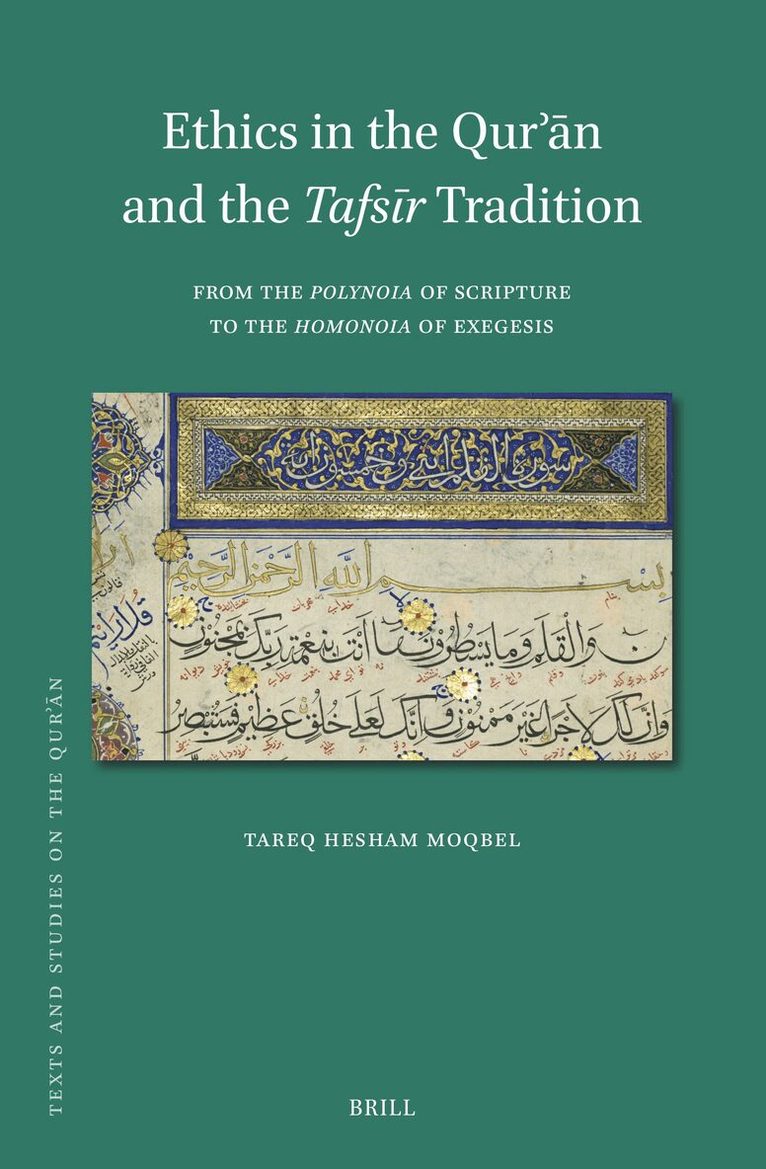
    Ethics in the Qurʾān and the Tafsīr Tradition

    From the Polynoia of Scripture to the Homonoia of Exegesis

    AvTareq Moqbel

    Inbunden, Engelska, 2024

    Del 23 i serien Texts and Studies on the Qurʾān

    1 454 kr

    Beställningsvara. Skickas inom 5-8 vardagar. Fri frakt över 249 kr.

    Beskrivning

    This book is about the articulation of ethics in the Qurʾān and the tafsīr tradition. Based on an examination of several apparently problematic Qurʾānic narrative pericopes and how the exegetes grappled with them, the book demonstrates that the moral world of the Qurʾān is polyvalent and non-linear, owing, above all, to its intrinsic ethical antinomies and textual ambiguities. That is, the book contends that paradox and uncertainty are both constituents of the Qurʾān’s ethical architectonics, and that through these constituents the Qurʾān charts a system of ethics that seeks to tread in the midst of a non-ideal world rife with uncertainty. The book also argues that the tafsīr tradition tends to erode the hermeneutical openness of the Qurʾān and, thereby, limits the Qurʾān’s ethical potential. The book, thus, advances our understanding of Qurʾānic ethics and contributes to the field of tafsīr studies and to the scholarship on Qurʾānic hermeneutics.

    Produktinformation

    • Utgivningsdatum:2024-06-27
    • Mått:155 x 235 x 21 mm
    • Vikt:538 g
    • Format:Inbunden
    • Språk:Engelska
    • Serie:Texts and Studies on the Qurʾān
    • Antal sidor:230
    • Förlag:Brill
    • ISBN:9789004696464

    Utforska kategorier

    • Filosofiska discipliner inom Filosofi och religion
    • Koranen inom Filosofi och religion

    Mer om författaren

    Tareq Hesham Moqbel is a Research Fellow at Regent’s Park College, Oxford, and an Associate Member of the Faculty of Theology and Religion at the University of Oxford. His work addresses the Qurʾān—its reading traditions, interpretation, and continuity with the Bible.

    Innehållsförteckning

    • PrefaceAcknowledgementsNotes on Referencing, Translation, and Transliteration1 Introduction1 Scope of the Inquiry2 Previous Scholarship on Qurʾānic Ethics3 Aims and Research Questions4 Choice of Qurʾānic Commentaries5 Central Arguments6 Plan of the BookPart 1 Theory2 Antinomy1 Introduction2 The Antinomy of Values3 Antinomies in the Qurʾān4 Implications of Moral Antinomies: Morality and Code Fixation5 Implications of Moral Antinomies: Moral Rules as Idealizations?6 Narratives as Sites of Moral Antinomies7 Managing Paradox: Conflict Resolution Mechanisms in the Tafsīr Tradition8 Conclusion3 Ambiguity1 Introduction2 The Concept of Ambiguity3 The Function of Ambiguity4 Bauer’s Thesis on Ambiguity in the Tafsīr Tradition5 The Tolerance of Ambiguity in Qurʾānic Narratives6 Theology of Revelation, Interpretation, and Ethics7 Conclusion4 The Drive towards Homonoia in the Tafsīr Tradition1 Introduction2 Theoretical Thematisation of Homonoia3 Homonoia in Exegetical Practice4 Counterpoints5 ConclusionPart 2 Praxis5 The Ethical Nature of God1 Introduction2 Moses on the All-Encompassing Destruction3 The Hardening of Pharaoh’s Heart4 Abraham Debating the Punishment of Sodom5 The Binding of Abraham’s Son6 Shuʿayb and the Will of God7 Conclusion6 Ethics towards God1 Introduction2 Arguing with God? The Angels and the Beginning of Creation3 Abraham’s Attribution of God’s Name to a Star4 Joseph and the Remembrance of God5 Mary’s Death Wish6 Jonah and God’s Omnipotence7 Conclusion7 Social Ethics1 Introduction2 Joseph on the Ethics of Seeking Leadership and Self-Praise3 Joseph and the Ethics of Deception4 Property Damage and Homicide in the Moses-Khiḍr Narrative5 Abraham on the Problem of Lying6 Conclusion8 Beyond Good and Evil: A ConclusionBibliographyIndex of Qurʾānic VersesGeneral Index