• Fri frakt över 249 kr
  • •
  • Snabba leveranser
  • •
  • Billiga böcker
Kundservice

Du är på sajten för privatpersoner.

Företag, bibliotek eller offentlig verksamhet?

Du handlar på classic.bokus.com, där alla dina funktioner finns intakta.
Till classic.bokus.com
Bokus logotyp. Gå till startsidan.
  • Erbjudanden
  • Nyheter
  • Student
  • Topplistor
  • Barn & ungdom
  • Bokus Play
  • E-böcker
  • Pocketböcker
  • Spel & pussel

10% rabatt på allt med kod: NYSTART10 →

Sidfot

Mina sidor

    Hjälp

    • Kundservice
    • Vanliga frågor och svar
    • Frakt och leverans
    • Retur vid ångerrätt
    • Reklamera vara
    • Betalning
    • Köpvillkor
    • Allmänna villkor
    • Information om webbplatsens tillgänglighet

    Om Bokus

    • Om oss
    • Pressrum
    • För studenter
    • För företag
    • För bibliotek och offentlig verksamhet
    • För leverantörer
    • Hållbarhet

    Populärt

    • Aktuella erbjudanden
    • Presentkort
    • Studentlitteratur
    • Nya böcker
    • Topplistor
    • Signerade böcker
    • Engelska böcker

    Inspiration

    • Boktips
    • BookTok
    • Populära bokserier
    • Barnbokskaraktärer
    • Populära författare
    Logotyp för Bokus
    Följ oss på Facebook (extern länk)Följ oss på Instagram (extern länk)Följ oss på YouTube (extern länk)Följ oss på TikTok (extern länk)
    bokus @ CookiesAnpassa cookiesIntegritetspolicyKöpvillkor
    Till Citymail hemsida (extern länk)Till Budbee hemsida (extern länk)Till Postnord hemsida (extern länk)Till Schenker hemsida (extern länk)Till Early Bird hemsida (extern länk)Till Walleys hemsida (extern länk)
    1. Juridik
    2. Internationell rätt
    3. Folkrätt

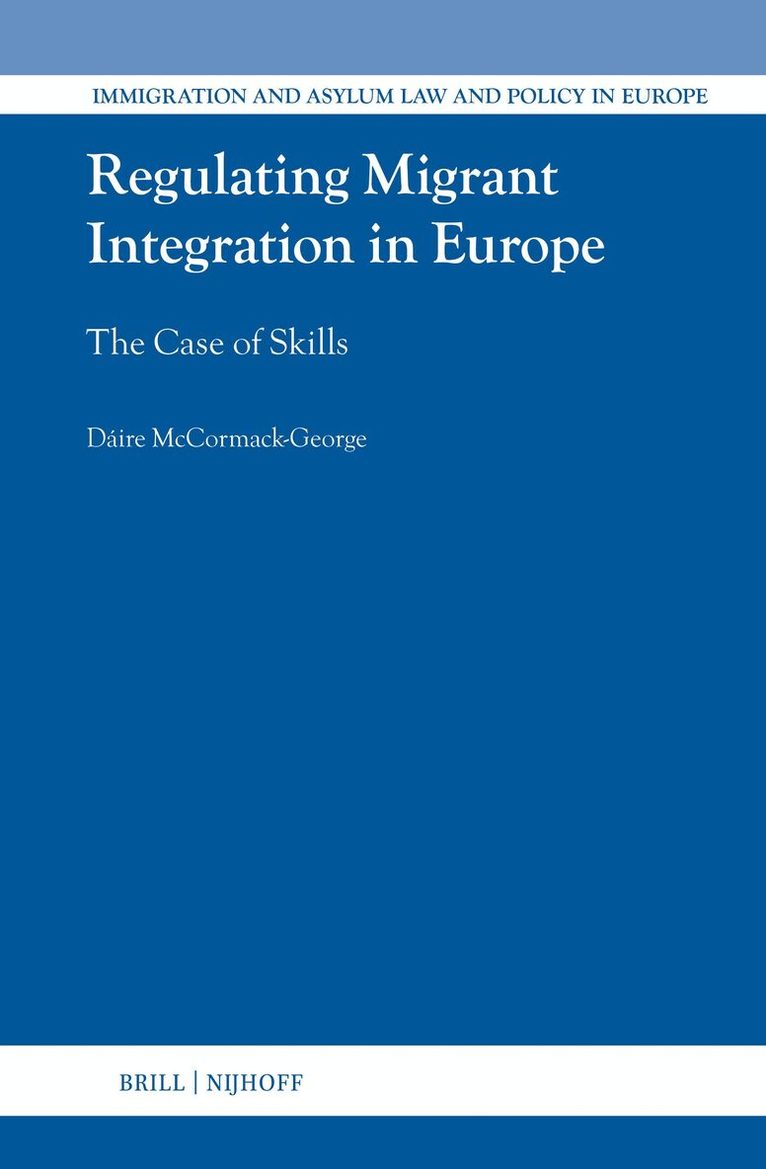
    Regulating Migrant Integration in Europe

    The Case of Skills

    AvDáire McCormack-George

    Inbunden, Engelska, 2025

    Del 54 i serien Immigration and Asylum Law and Policy in Europe

    1 474 kr

    Beställningsvara. Skickas inom 3-6 vardagar. Fri frakt över 249 kr.

    Beskrivning

    Migrants coming to and moving within Europe typically experience inadequate recognition of their professional qualifications and wrongful discrimination. This book describes and critically assesses international, European and EU laws and policies governing migrant integration in Europe, with a particular focus on those concerning the recognition of migrants' skills. It argues that at least certain parts of EU law require clarification, restatement and even reform. The book formulates practical proposals to improve the governance of migrant integration in Europe, making it more coherent, effective and fair.

    Produktinformation

    • Utgivningsdatum:2025-07-24
    • Mått:155 x 235 x 24 mm
    • Vikt:597 g
    • Format:Inbunden
    • Språk:Engelska
    • Serie:Immigration and Asylum Law and Policy in Europe
    • Antal sidor:272
    • Förlag:Brill
    • ISBN:9789004719774

    Utforska kategorier

    • Folkrätt inom Juridik
    • Migration inom Samhälle och politik

    Mer om författaren

    Dr Dáire McCormack-George is an Irish lawyer. Educated at Trinity College Dublin and the University of Oxford, his work has been published in Irish, European and international law journals and cited by textbooks, think tanks and state bodies.

    Innehållsförteckning

    • AcknowledgementsIntroductionIntroduction1 Setting the Scene1.1 A Vision for Europe?1.1.1 The Lisbon Strategy1.1.2 Europe 20201.1.3 The European Pillar of Social Rights1.1.4 The European Green Deal1.2 The EU in the Global Market1.3 The EU and Migration1.3.1 The Global Approach to Migration and Mobility1.3.2 A European Agenda on Migration1.3.3 A New Pact on Migration and Asylum1.4 Securing Europe’s Future: Skills1.5 The Experience of Migrants to Date1.6 Synthesis and Summary1.7 Limitations and Criticisms2 Central Research Questions2.1 Questions and Sub-questions2.2 Contribution to Scholarship and Originality3 Sources3.1 Sources of Law3.2 Sources of Normativity4 The Theme of Governance5 Structure of the BookConclusionPart 1The Legal Foundations of Migrant Integration1 The Right to WorkIntroduction1 The Right to Work in International and European Law1.1 International Law1.1.1 International Human Rights Law1.1.2 International Labour Law1.1.3 International Economic Law1.2 European Law1.2.1 The European Convention on Human Rights1.2.2 The European Social Charter and Revised European Social Charter2 The Right to Work in EU Law2.1 Origins2.2 Genesis2.3 The Charter of Fundamental Rights of the European Union2.4 Beneficiaries2.4.1 Citizens2.4.2 Non-citizens2.5 Scope2.6 Restrictions and LimitationsConclusion2 The Right to Equal Treatment and Non-discriminationIntroduction1 Discrimination, Migration and Nationality1.1 Overview1.2 Discrimination, Skills and Migration1.2.1 Discrimination, Freedom and Domination1.2.2 Discrimination, Skills and Migration1.3 Discrimination, Migration and Nationality2 The Right to Equal Treatment and Non-discrimination in International and European Law2.1 International Law2.1.1 International Human Rights Law2.1.2 International Labour Law2.1.3 International Economic Law2.2 European Law2.2.1 European Convention on Human Rights2.2.2 Revised European Social Charter3 The Right to Equal Treatment and Non-discrimination in EU Law3.1.1 Article 18 tfeu3.1.2 Article 21 cfreu3.1.3 The Argument for Expanding the Scope of Application of the Right to Equal Treatment and Non-discrimination3.1.4 Some Objections4 Converging Conceptions of Equal Treatment and Non-discrimination in EU Law4.1 Competing Conceptions of Equal Treatment and Non-discrimination4.1.1 Overview4.1.2 Political Reasons4.1.3 Conceptual Reasons4.1.4 Sociological Reasons4.2 A Partial Unitary Conception of Equality and Non-discrimination?4.2.1 The Goal4.2.2 Hopeful Beginnings …4.2.3 … or Hope in Vain?ConclusionPart 2The Case of Skills3 External MigrationIntroduction1 International and European Law1.1 International Law1.1.1 International Human Rights Law1.1.2 International Labour Law1.1.3 International Economic Law1.2 European Law1.2.1 The Convention on the Recognition of Qualifications Concerning Higher Education in the European Region 19971.2.2 Recommendation on the Recognition of Refugees’ Qualifications2 EU Migration and Asylum Law2.1 Overview2.2 Categories of Migrant2.2.1 Regular Migrants2.2.2 Forced Migrants2.2.3 Irregular Migrants2.3 Analysis2.3.1 General Observations2.3.2 Regular Migrants2.3.3 Forced Migrants2.3.4 Irregular Migrants3 EU External Relations Law3.1 Overview3.2 Partnership, Association and Trade Agreements3.2.1 Overview3.2.2 (Almost) Full Mutual Recognition: eea States and Switzerland3.2.3 ceta and Mutual Recognition Agreements3.2.4 ‘ceta-minus’ Arrangements3.2.5 The EU-UK Trade and Cooperation Agreement3.2.6 Equal Treatment and National Treatment3.2.7 Education and TrainingConclusion4 Internal MigrationIntroduction1 The Principle of Mutual Recognition1.1 Origins1.2 The Principle2 The Recognition Directive2.1 Operation of the Recognition Directive2.1.1 Does the National of a Member State Concerned Have a Professional Qualification?2.1.2 Has that National Moved from One Member State to Another for the Purpose of Pursuing Their Profession?2.1.3 Is that Profession a Regulated Profession in the Host Member State?2.2 Mutual Recognition in the Recognition Directive2.2.1 The Methods of Recognition2.2.2 The Effects of Mutual Recognition2.2.3 Restrictions on Mutual Recognition2.3 Beneficiaries of the Recognition Directive2.3.1 The Law2.3.2 AnalysisConclusion5 Soft Law and PolicyIntroduction1 EU Migration and Asylum Policy1.1 Overview1.2 Integration Policies and Initiatives1.2.1 Background1.2.2 The European Migration Forum1.2.3 Action Plan on the Integration of Third-Country Nationals1.2.4 Action Plan on Integration and Inclusion 2021–20271.3 Recent Developments and Proposals for Reform1.3.1 Recommendation on the Recognition of Qualifications for People Fleeing Russia’s Invasion of Ukraine1.3.2 Recommendation on the Recognition of Professional Qualifications of Third-Country Nationals1.3.3 Proposal for a Regulation Establishing an EU Talent Pool1.4 Funds Supporting Integration1.4.1 European Social Fund and European Social Fund Plus1.4.2 Asylum, Migration and Integration Fund2 EU External Relations Policy2.1 Overview2.2 Mobility Partnerships2.3 European Neighbourhood Policy and Enlargement2.3.1 European Neighbourhood Policy2.3.2 Enlargement Policy2.4 International Cooperation and Policy Dialogue2.5 International Cooperation and Development3 EU Education and Training PolicyConclusionConclusionIntroduction1 The Argument of This Book2 Judging EU Law and Policy3 The Recognition of Professional Qualifications4 The Theme of Governance5 Practical Proposals for Reform6 Explanatory GapsConclusionBibliographyIndex