• Fri frakt över 249 kr
  • •
  • Snabba leveranser
  • •
  • Billiga böcker
Kundservice

Du är på sajten för privatpersoner.

Företag, bibliotek eller offentlig verksamhet?

Du handlar på classic.bokus.com, där alla dina funktioner finns intakta.
Till classic.bokus.com
Bokus logotyp. Gå till startsidan.
  • Erbjudanden
  • Nyheter
  • Student
  • Topplistor
  • Barn & ungdom
  • Bokus Play
  • E-böcker
  • Pocketböcker
  • Spel & pussel

10% rabatt på allt med kod: NYSTART10 →

Sidfot

Mina sidor

    Hjälp

    • Kundservice
    • Vanliga frågor och svar
    • Frakt och leverans
    • Retur vid ångerrätt
    • Reklamera vara
    • Betalning
    • Köpvillkor
    • Allmänna villkor
    • Information om webbplatsens tillgänglighet

    Om Bokus

    • Om oss
    • Pressrum
    • För studenter
    • För företag
    • För bibliotek och offentlig verksamhet
    • För leverantörer
    • Hållbarhet

    Populärt

    • Aktuella erbjudanden
    • Presentkort
    • Studentlitteratur
    • Nya böcker
    • Topplistor
    • Signerade böcker
    • Engelska böcker

    Inspiration

    • Boktips
    • BookTok
    • Populära bokserier
    • Barnbokskaraktärer
    • Populära författare
    Logotyp för Bokus
    Följ oss på Facebook (extern länk)Följ oss på Instagram (extern länk)Följ oss på YouTube (extern länk)Följ oss på TikTok (extern länk)
    bokus @ CookiesAnpassa cookiesIntegritetspolicyKöpvillkor
    Till Citymail hemsida (extern länk)Till Budbee hemsida (extern länk)Till Postnord hemsida (extern länk)Till Schenker hemsida (extern länk)Till Early Bird hemsida (extern länk)Till Walleys hemsida (extern länk)
    1. Samhälle och politik
    2. Samhälle och kultur
    3. Sociala och etiska frågor

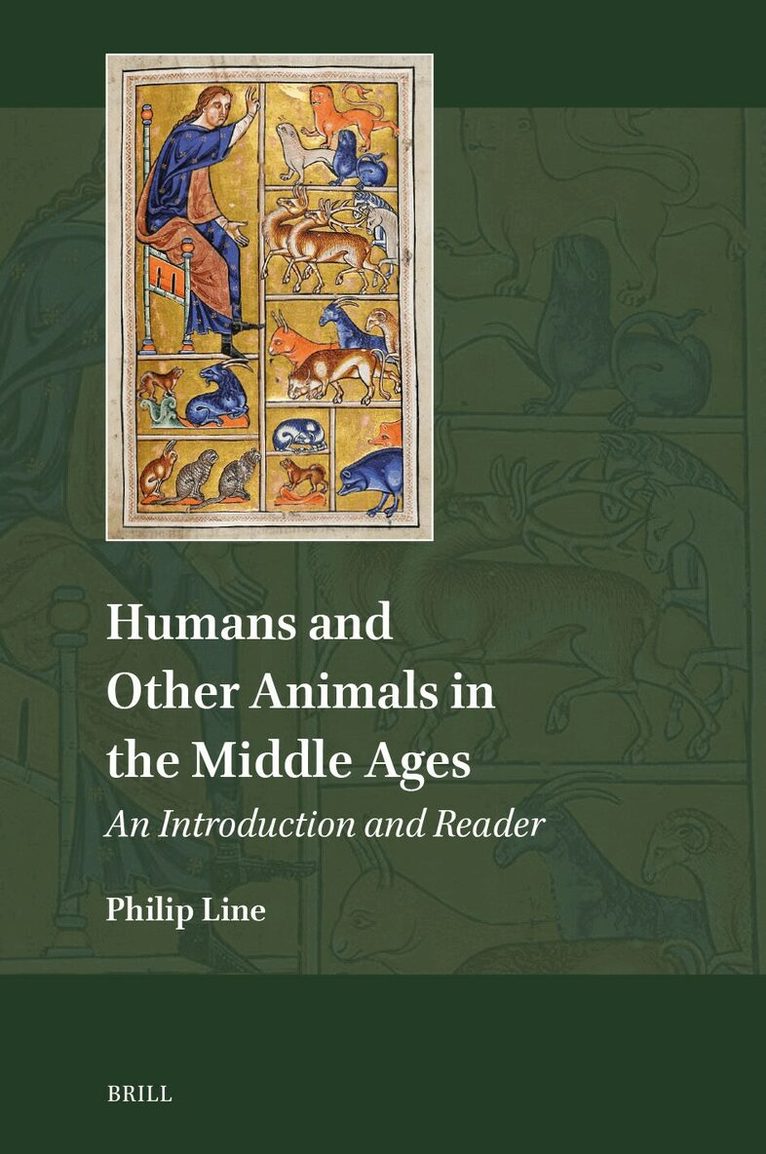
    Humans and Other Animals in the Middle Ages

    An Introduction and Reader

    AvPhilip Line

    Inbunden, Engelska, 2025

    Del 27 i serien Explorations in Medieval Culture

    2 719 kr

    Beställningsvara. Skickas inom 3-6 vardagar. Fri frakt över 249 kr.

    Beskrivning

    This sourcebook serves both as an introduction and a wide-ranging reference work for human attitudes to nonhuman animals in Latin Europe during the Middle Ages. Under twelve headings, it includes numerous translated passages from Latin and vernacular texts that reflect human conceptions and uses of other animals during the period 300-1520. Theologians, philosophers, encyclopaedists, bestiarists, hagiographers, chroniclers, huntsmen and writers of agricultural manuals, cookbooks and plague treatises all had something to say about the place of nonhuman animals in their world and their interaction with humans, or simply recorded incidentally what they did in their writings. All are represented here.

    Produktinformation

    • Utgivningsdatum:2025-03-21
    • Mått:155 x 235 x 43 mm
    • Vikt:1 511 g
    • Format:Inbunden
    • Språk:Engelska
    • Serie:Explorations in Medieval Culture
    • Antal sidor:738
    • Förlag:Brill
    • ISBN:9789004720848

    Utforska kategorier

    • Sociala och etiska frågor inom Samhälle och politik
    • Socialhistoria och kulturhistoria inom Historia och arkeologi
    • Filosofiska discipliner inom Filosofi och religion

    Mer om författaren

    Philip Line, Ph.D. (2003), University of Leeds. He now works as an independent researcher on human-animal relations. His most recent publication is "The elephants who appealed to the gods: Animal agency in the Roman arena" (Trace: Journal for Human-Animal Studies, 2022).

    Innehållsförteckning

    • DedicationAcknowledgementsList of FiguresIntroduction1 Notes1 The Genesis of the Animals1 The Medieval Conception of the Biblical Creation2 The Naming of the Animals3 Animals Wild and Tame2 Animals in Medieval Natural Philosophy1 Defining the Animal2 Categorizing Animals3 Animals in the scala naturae4 Human and Nonhuman Souls and Their Faculties5 Animal Society3 Animals as Exemplars1 Animals as Didactic Tools2 The Symmetry of Nature3 Physiologus and the Bestiaries4 The Medieval Encyclopaedia of Nature5 Animals in Homilies and Sermons6 Physiognomy7 Symbols of Ferocity, Valour and Lineage8 Animal Behaviour as Portents4 Animals in Field, Park, and Forest1 Animal Husbandry2 The Lot of the Working Animal3 Foresta and Parks5 Hunting1 Defining the Medieval Hunt2 Quarry Animals3 Animals Who Assisted in the Hunt4 Medieval Conservation?5 Hunting of Rival Predators6 Illegal Hunting7 Criticism of Hunting6 Animals and Law1 Natural Law2 Animals in the ‘Laws of the Barbarians’3 Animals in High Medieval Law4 Human Ownership of Animals and the Right to Hunt Them5 Trials, Execution and Cursing of Nonhuman Animals6 Execution of Animals for Involvement in Bestiality7 Beast-Humans and Human Beasts1 Monstrous Beings, Monstrous Races2 Metamorphosis3 Zoophilia4 Offspring of Human-Beast Unions5 Humans Acting Beasts6 Humans Compared to Beasts7 Beasts Representing Humans8 Animals as Food1 Eating as Differentiator of Humans from Other Animals2 The Old Law Dietary Restrictions in Christianity3 Cultural Taboos4 Meat-Eating, Lust and Gluttony5 Meat for the Starving6 Human Meat, Animal Meat7 Animals in the Human Diet8 Entertaining Meals9 Food Waste Management10 Animal Fast Food9 Animals, Disease and Medicine1 Animals as Sources of Medicinal Cures or Causes of Injury and Disease2 Care of Domesticated Animals3 Animal Self-Help4 Animals as Medical Metaphors5 Epidemics among Domestic Animals and the Human Perception of Them10 Animals and Saints11 Animals for Show and Companionship1 Menageries2 Animals as Companions to Humans3 Animals in the Cloister4 Pets of the Secular Aristocracy5 Naming Household Animals6 Animals Punished as Surrogates for Human Owners7 Animals for Entertainment12 Animals at War1 Warlike Animals?2 The Warhorse3 Other Animals in Battle4 Feeding the ‘Beasts of Battle’5 Animal Messengers6 Animal Attrition: on the March, in Camp and in Sieges7 Animals Stolen and SlaughteredQuoted AuthorsBibliography of Works from Which Passages Are QuotedFiguresIndex