E-bok, Engelska, 2018
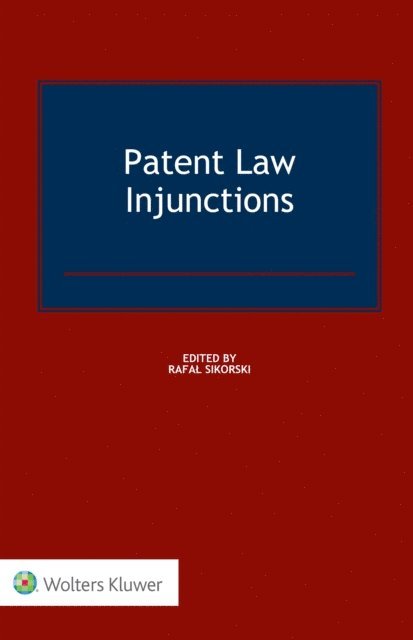
Patent Law Injunctions
2136 kr
Läs direkt i Bokus Reader – eller ladda ned till din enhet
Beskrivning
In numerous jurisdictions, courts have realized that injunctive relief should not be available automatically in case of patent infringement. Particularly in the wake of the US Supreme Court decision in eBay v. MercExchange, it has become clear that granting an injunction may in some cases enable abuse by patent holders in order to obtain royalties exceeding significantly the value of patent-protected invention or that it may be manifestly against the public interest. This book offers a comparative study of the approaches towards injunctive relief taken by a number of leading jurisdictions, including the United States, the European Union (EU), selected EU Member States (Germany, France, The Netherlands, Belgium, the United Kingdom and Poland), and China, India, Japan and South Korea.
Responding to the growing need to provide a comprehensive and flexible framework for the application of injunctive relief, twelve patent law experts, both academics and well-known practitioners familiar with practice in their particular jurisdictions, offer analyses of such elements of patent law injunctions as the following:
- • access to standard-essential patents;
- • operations of patent assertion entities;
- • trolls and patent privateers;
- • equitable nature of injunctive relief as a source of flexibility;
- • abuse of right and competition law defences to injunctive relief as sources of flexibility;
- • analysis of EU instruments that could be used in the interpretation of Member State implementing laws;
- • conditions for the application of tools such as equity, competition law or general doctrines such as abuse of rights;
- • circumstances when injunctions should be denied to patentees even though a valid patent was infringed;
- • complex products cases where patents protect minor parts of the technologies; and
- • deficiencies and advantages of various approaches to injunctive relief.
A proposal for an optimal model of granting injunctions is also included. Given that there is a growing consensus as to the circumstances when injunctions should be available to the patentees and the circumstances when injunctions should be denied, a comprehensive analysis of the various legal doctrines that justify a more flexible approach towards injunctive relief is warranted. This book will give patent law practitioners and in-house counsel the opportunity to draw from the experience of other jurisdictions where courts faced similar problems. Policymakers, patent office officials, academics and researchers in intellectual property law will also welcome this approach.
Produktinformation
- Utgivningsdatum: 2018-11-27
- Språk: Engelska
- Filformat: EPUB
- Kopieringsskydd: LCP
- ISBN: 9789041194589
- Förlag: Wolters Kluwer
Utforska kategorier
Betyg & recensioner
0 recensioner
Inga recensioner tillgängliga.