Rafal Sikorski – författare
2 001 kr
Läs direkt efter köp
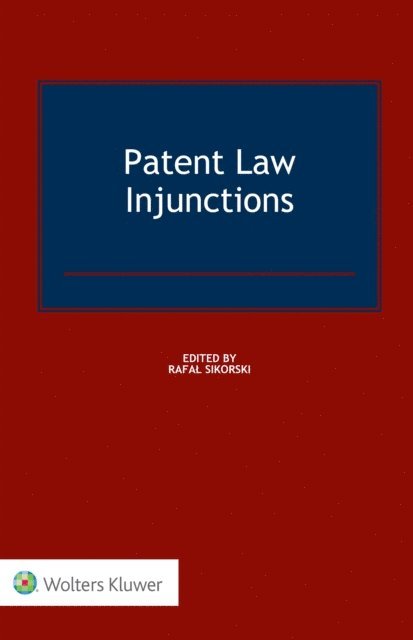
In numerous jurisdictions, courts have realized that injunctive relief should not be available automatically in case of patent infringement. Particularly in the wake of the US Supreme Court decision in eBay v. MercExchange, it has become clear that granting an injunction may in some cases enable abuse by patent holders in order to obtain royalties exceeding significantly the value of patent-protected invention or that it may be manifestly against the public interest. This book offers a comparative study of the approaches towards injunctive relief taken by a number of leading jurisdictions, including the United States, the European Union (EU), selected EU Member States (Germany, France, The Netherlands, Belgium, the United Kingdom and Poland), and China, India, Japan and South Korea.
Responding to the growing need to provide a comprehensive and flexible framework for the application of injunctive relief, twelve patent law experts, both academics and well-known practitioners familiar with practice in their particular jurisdictions, offer analyses of such elements of patent law injunctions as the following:
• access to standard-essential patents;• operations of patent assertion entities;• trolls and patent privateers;• equitable nature of injunctive relief as a source of flexibility;• abuse of right and competition law defences to injunctive relief as sources of flexibility;• analysis of EU instruments that could be used in the interpretation of Member State implementing laws;• conditions for the application of tools such as equity, competition law or general doctrines such as abuse of rights;• circumstances when injunctions should be denied to patentees even though a valid patent was infringed;• complex products cases where patents protect minor parts of the technologies; and• deficiencies and advantages of various approaches to injunctive relief.A proposal for an optimal model of granting injunctions is also included. Given that there is a growing consensus as to the circumstances when injunctions should be available to the patentees and the circumstances when injunctions should be denied, a comprehensive analysis of the various legal doctrines that justify a more flexible approach towards injunctive relief is warranted. This book will give patent law practitioners and in-house counsel the opportunity to draw from the experience of other jurisdictions where courts faced similar problems. Policymakers, patent office officials, academics and researchers in intellectual property law will also welcome this approach.
2 074 kr
Läs direkt efter köp
In numerous jurisdictions, courts have realized that injunctive relief should not be available automatically in case of patent infringement. Particularly in the wake of the US Supreme Court decision in eBay v. MercExchange, it has become clear that granting an injunction may in some cases enable abuse by patent holders in order to obtain royalties exceeding significantly the value of patent-protected invention or that it may be manifestly against the public interest. This book offers a comparative study of the approaches towards injunctive relief taken by a number of leading jurisdictions, including the United States, the European Union (EU), selected EU Member States (Germany, France, The Netherlands, Belgium, the United Kingdom and Poland), and China, India, Japan and South Korea.
Responding to the growing need to provide a comprehensive and flexible framework for the application of injunctive relief, twelve patent law experts, both academics and well-known practitioners familiar with practice in their particular jurisdictions, offer analyses of such elements of patent law injunctions as the following:
• access to standard-essential patents;• operations of patent assertion entities;• trolls and patent privateers;• equitable nature of injunctive relief as a source of flexibility;• abuse of right and competition law defences to injunctive relief as sources of flexibility;• analysis of EU instruments that could be used in the interpretation of Member State implementing laws;• conditions for the application of tools such as equity, competition law or general doctrines such as abuse of rights;• circumstances when injunctions should be denied to patentees even though a valid patent was infringed;• complex products cases where patents protect minor parts of the technologies; and• deficiencies and advantages of various approaches to injunctive relief.A proposal for an optimal model of granting injunctions is also included. Given that there is a growing consensus as to the circumstances when injunctions should be available to the patentees and the circumstances when injunctions should be denied, a comprehensive analysis of the various legal doctrines that justify a more flexible approach towards injunctive relief is warranted. This book will give patent law practitioners and in-house counsel the opportunity to draw from the experience of other jurisdictions where courts faced similar problems. Policymakers, patent office officials, academics and researchers in intellectual property law will also welcome this approach.
1 894 kr
Skickas inom 5-8 vardagar
1 668 kr
Läs direkt efter köp
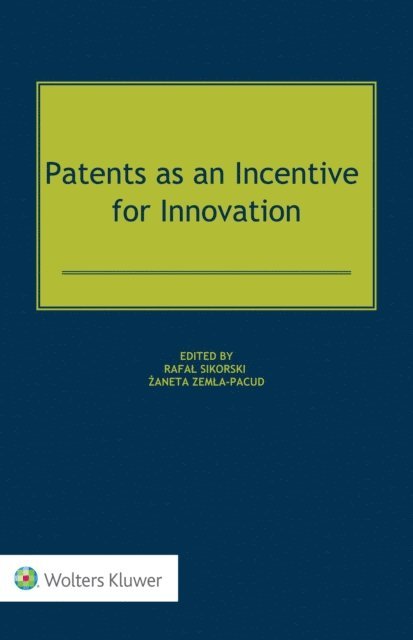
Patents as an Incentive for Innovation
Edited by Rafal Sikorski & Zaneta Zemla-Pacud
Patents are a reward for human inventiveness. A well-functioning patent system must provide incentives for innovation, safeguard dynamic competition and protect the public interest – a balancing act fraught with difficulty in the ‘connected’ global world. This ground-breaking book is the first to deeply analyse how patent law today performs its function of stimulating innovation in the crucial sectors of healthcare, agriculture, artificial intelligence and communications technology.
Patent specialists, practitioners and scholars from various jurisdictions thoroughly describe how patent rights can be deployed to incentivize investments in researching and developing socially critical innovations without sacrificing the public’s interest in sharing the benefits that are produced. Among the emerging issues of patent rights investigated are the following:
protectability and morality of according private rights over material derived from the human body; licensing on fair, reasonable and non-discriminatory (FRAND) terms; the supplementary protection certificate (SPC) manufacturing waiver; patent eligibility of artificial intelligence-related inventions; excessive enforcement of patents by patent assertion entities; enforcement of second medical use innovations; the so-called farmer’s privilege, the farm-save seed exemption, and breeders’ rights; international trade regulations and their influence on patent systems; human enhancement technologies and the consequences of patenting them; specifics of patent protection for biologic medicines; challenges posed by artificial intelligence for the disclosure requirement in patent law; and standard essential patent licensing, particularly in the context of the 5G standard.Perspectives taken into consideration by the authors include protectability criteria, length and scope of the granted protection, mechanisms for dealing with the friction between generalized application and specialized concerns, and rights enforcement. These aspects are analysed on the domestic, international and global levels.
The COVID-19 pandemic has highlighted the urgent need to strike the right balance between innovation and access in healthcare and other technologies, a need rooted in patent law. Because the problems discussed – and solutions offered – in this collection of expert essays are of tremendous practical and cultural significance, the book will be of immeasurable value to practitioners, policymakers and researchers in patent law and other fields of intellectual property law.
1 609 kr
Läs direkt efter köp
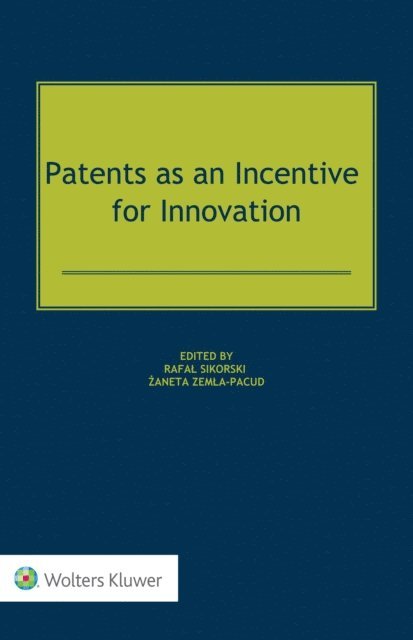
Patents as an Incentive for Innovation
Edited by Rafal Sikorski & Zaneta Zemla-Pacud
Patents are a reward for human inventiveness. A well-functioning patent system must provide incentives for innovation, safeguard dynamic competition and protect the public interest – a balancing act fraught with difficulty in the ‘connected’ global world. This ground-breaking book is the first to deeply analyse how patent law today performs its function of stimulating innovation in the crucial sectors of healthcare, agriculture, artificial intelligence and communications technology.
Patent specialists, practitioners and scholars from various jurisdictions thoroughly describe how patent rights can be deployed to incentivize investments in researching and developing socially critical innovations without sacrificing the public’s interest in sharing the benefits that are produced. Among the emerging issues of patent rights investigated are the following:
protectability and morality of according private rights over material derived from the human body; licensing on fair, reasonable and non-discriminatory (FRAND) terms; the supplementary protection certificate (SPC) manufacturing waiver; patent eligibility of artificial intelligence-related inventions; excessive enforcement of patents by patent assertion entities; enforcement of second medical use innovations; the so-called farmer’s privilege, the farm-save seed exemption, and breeders’ rights; international trade regulations and their influence on patent systems; human enhancement technologies and the consequences of patenting them; specifics of patent protection for biologic medicines; challenges posed by artificial intelligence for the disclosure requirement in patent law; and standard essential patent licensing, particularly in the context of the 5G standard.Perspectives taken into consideration by the authors include protectability criteria, length and scope of the granted protection, mechanisms for dealing with the friction between generalized application and specialized concerns, and rights enforcement. These aspects are analysed on the domestic, international and global levels.
The COVID-19 pandemic has highlighted the urgent need to strike the right balance between innovation and access in healthcare and other technologies, a need rooted in patent law. Because the problems discussed – and solutions offered – in this collection of expert essays are of tremendous practical and cultural significance, the book will be of immeasurable value to practitioners, policymakers and researchers in patent law and other fields of intellectual property law.
2 854 kr
Tillfälligt slut