• Fri frakt över 249 kr
  • •
  • Snabba leveranser
  • •
  • Billiga böcker
Kundservice

Du är på sajten för privatpersoner.

Företag, bibliotek eller offentlig verksamhet?

Du handlar på classic.bokus.com, där alla dina funktioner finns intakta.
Till classic.bokus.com
Bokus logotyp. Gå till startsidan.
  • Erbjudanden
  • Student
  • Topplistor
  • Barn & ungdom
  • Bokus Play
  • E-böcker
  • Ljudböcker
  • Pocketböcker
  • Spel & pussel

Upp till 25% på utvalda nyheter →

Sidfot

Mina sidor

    Hjälp

    • Kundservice
    • Vanliga frågor och svar
    • Frakt och leverans
    • Retur vid ångerrätt
    • Reklamera vara
    • Betalning
    • Köpvillkor
    • Allmänna villkor
    • Information om webbplatsens tillgänglighet

    Om Bokus

    • Om oss
    • Pressrum
    • För studenter
    • För företag
    • För bibliotek och offentlig verksamhet
    • För leverantörer
    • Hållbarhet

    Populärt

    • Aktuella erbjudanden
    • Presentkort
    • Studentlitteratur
    • Nya böcker
    • Topplistor
    • Signerade böcker
    • Engelska böcker

    Inspiration

    • Boktips
    • BookTok
    • Populära bokserier
    • Barnbokskaraktärer
    • Populära författare
    Logotyp för Bokus
    Följ oss på Facebook (extern länk)Följ oss på Instagram (extern länk)Följ oss på YouTube (extern länk)Följ oss på TikTok (extern länk)
    bokus @ CookiesAnpassa cookiesIntegritetspolicyKöpvillkor
    Till Citymail hemsida (extern länk)Till Budbee hemsida (extern länk)Till Postnord hemsida (extern länk)Till Schenker hemsida (extern länk)Till Early Bird hemsida (extern länk)Till Walleys hemsida (extern länk)
    1. Skönlitteratur
    2. Litteraturvetenskap
    3. Litteraturvetenskap

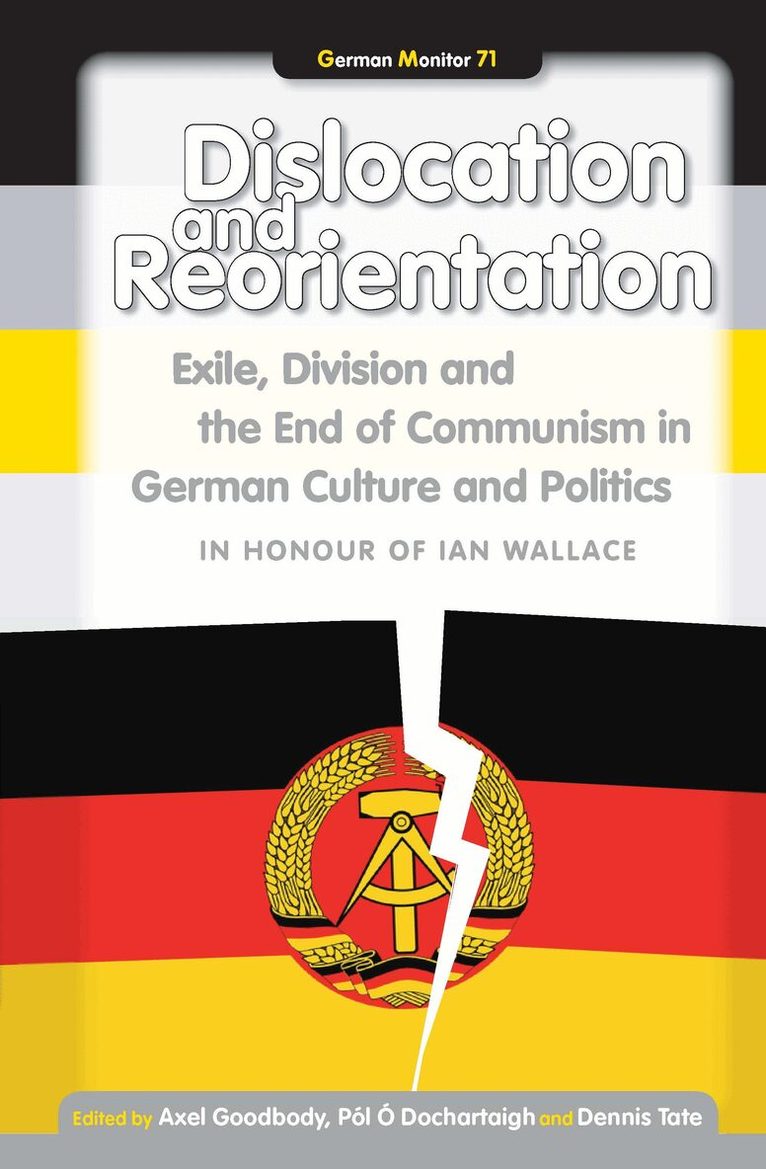
    Dislocation and Reorientation

    Exile, Division and the End of Communism in German Culture and Politics

    AvAxel Goodbody

    Inbunden, Engelska, 2009

    Del 71 i serien German Monitor

    1 979 kr

    Beställningsvara. Skickas inom 5-8 vardagar. Fri frakt över 249 kr.

    Beskrivning

    Dislocation and the need for radical reorientation are central experiences in 20th-century German history. Much of German culture has also consisted of reflections on and responses to the historical caesurae of 1933, 1945 and 1989-90, and the massive political, social and economic changes that accompanied them. In the first instance, dislocation and reorientation are to be understood in the physical sense, i.e. the loss of their homes in Germany, Austria and Czechoslovakia by Jewish and Communist émigrés after 1933, by Germans in Eastern Europe after 1945, and by disaffected individuals leaving the GDR for the West between 1949 and 1989. But they are also ideological, social and cultural experiences.This volume seeks to explore the parallels and differences between the impact on these groups of their sense of loss and their struggle to establish new identities after major upheavals. What their diverse experiences have in common is the sense of social and intellectual dislocation, even amongst those whose physical location did not change for long periods of time. Drawing on the ideas of various social and cultural theorists, and adopting a variety of approaches, our contributors examine how not only dislocation but also reorientation has been articulated, both in political discourse and across the cultural spectrum from fiction to life writing, from poetry to film.

    Produktinformation

    • Utgivningsdatum:2009-01-01
    • Mått:155 x 235 x 25 mm
    • Vikt:717 g
    • Format:Inbunden
    • Språk:Engelska
    • Serie:German Monitor
    • Antal sidor:330
    • Förlag:Brill
    • ISBN:9789042025547

    Utforska kategorier

    • Litteraturvetenskap inom Skönlitteratur
    • Kulturvetenskap inom Samhälle och politik

    Innehållsförteckning

    • Axel GOODBODY, Pól Ó DOCHARTAIGH, Dennis TATE: Introduction Volker BRAUN: Aus: Machwerk oder Das Schichtbuch des Flick von Lauchhammer Anna CHIARLONI: A polso teso. Portrait der Poesie Volker Brauns Axel GOODBODY: Political dislocation and poetic reorientation in Volker Braun’s Bodenloser Satz Karen LEEDER: ‘Totentänze’: Volker Braun’s late poems – Postscripts on the end of utopia Gerd LABROISSE: Überlegungen zu Volker Brauns Rede zur Verleihung des Schiller-Gedächtnispreises 1992: ‘Ist das unser Himmel? Ist das unsre Hölle?’ Daniel AZUÉLOS: Die deutschsprachige Exilpresse und das Attentat des 20. Juli 1944 Geoffrey V. DAVIS: ‘The fog of peace and war’: German exiles in postcolonial Anglophone writing Wolfgang EMMERICH: Odradek – ein Bewohner des Dritten Raums. Mit Franz Kafka unterwegs zu transkulturellen Lektüren Helen FEHERVARY: Kipling and others: Literary allusions in Anna Seghers’s ‘Die schönsten Sagen vom Räuber Woynok’ Peter HUTCHINSON: Stefan Heym’s exile poetry as the foundation for his later fiction Hamish RITCHIE: Kurt Schwitters in Ambleside Gisela HOLFTER: Ein Fallbeispiel zur Rückkehrproblematik aus dem Exil – Ernst Lewy (1881-1966) Deborah VIETOR-ENGLÄNDER: Résistance, Restauration und deutsch-jüdische West-Remigranten: Alfred Kantorowiczs Schauspiel Die Verbündeten in der DDR Ian CONNOR: German expellees in the SBZ/GDR and the Oder-Neisse ‘peace border’Peter BARKER: Dislocation and reorientation in the Sorbian community (1945-2008) Dennis TATE: Von der Fröhlichkeit im Schrecken: Fred Wander’s celebration of dislocation Mike DENNIS: A people’s game: Football in the German Democratic Republic Peter THOMPSON: Heimatlos zu Hause: Bloch, Žižek and the dislocated Heimat Dieter SEGERT: Ausreisen und Ausflüge – Geschichten aus dem letzten Jahr der DDR Roger WOODS: Retold lives: East German autobiography after East Germany Gerrit-Jan BERENDSE: Verlust der Mitte: Wolf Biermanns Abnabelung von seinem Topos Berlin Christine COSENTINO: Ingo Schulze’s Handy. Thirteen Tales in the Old Style: Another look at East(ern) Germanness and identity formation Stuart PARKES: ‘Home soured home?’ Dislocation as a motif in the works of Martin Walser Colin B. GRANT: Without a name: Kurt Drawert and the dislocated self Gert-Joachim GLAEßNER: Westernisation, Europeanisation, and civil society: Has Thomas Mann’s vision of a European Germany come true? Ian Wallace Bibliography Index of Contributors