• Fri frakt över 249 kr
  • •
  • Snabba leveranser
  • •
  • Billiga böcker
Kundservice

Du är på sajten för privatpersoner.

Företag, bibliotek eller offentlig verksamhet?

Du handlar på classic.bokus.com, där alla dina funktioner finns intakta.
Till classic.bokus.com
Bokus logotyp. Gå till startsidan.
  • Erbjudanden
  • Nyheter
  • Student
  • Topplistor
  • Barn & ungdom
  • Bokus Play
  • E-böcker
  • Pocketböcker
  • Spel & pussel

10% rabatt på allt med kod NYSTART10 →

Sidfot

Mina sidor

    Hjälp

    • Kundservice
    • Vanliga frågor och svar
    • Frakt och leverans
    • Retur vid ångerrätt
    • Reklamera vara
    • Betalning
    • Köpvillkor
    • Allmänna villkor
    • Information om webbplatsens tillgänglighet

    Om Bokus

    • Om oss
    • Pressrum
    • För studenter
    • För företag
    • För bibliotek och offentlig verksamhet
    • För leverantörer
    • Hållbarhet

    Populärt

    • Aktuella erbjudanden
    • Presentkort
    • Studentlitteratur
    • Nya böcker
    • Topplistor
    • Signerade böcker
    • Engelska böcker

    Inspiration

    • Boktips
    • BookTok
    • Populära bokserier
    • Barnbokskaraktärer
    • Populära författare
    Logotyp för Bokus
    Följ oss på Facebook (extern länk)Följ oss på Instagram (extern länk)Följ oss på YouTube (extern länk)Följ oss på TikTok (extern länk)
    bokus @ CookiesAnpassa cookiesIntegritetspolicyKöpvillkor
    Till Citymail hemsida (extern länk)Till Budbee hemsida (extern länk)Till Postnord hemsida (extern länk)Till Schenker hemsida (extern länk)Till Early Bird hemsida (extern länk)Till Walleys hemsida (extern länk)
    1. Djur och Natur
    2. Naturböcker
    3. Växtböcker

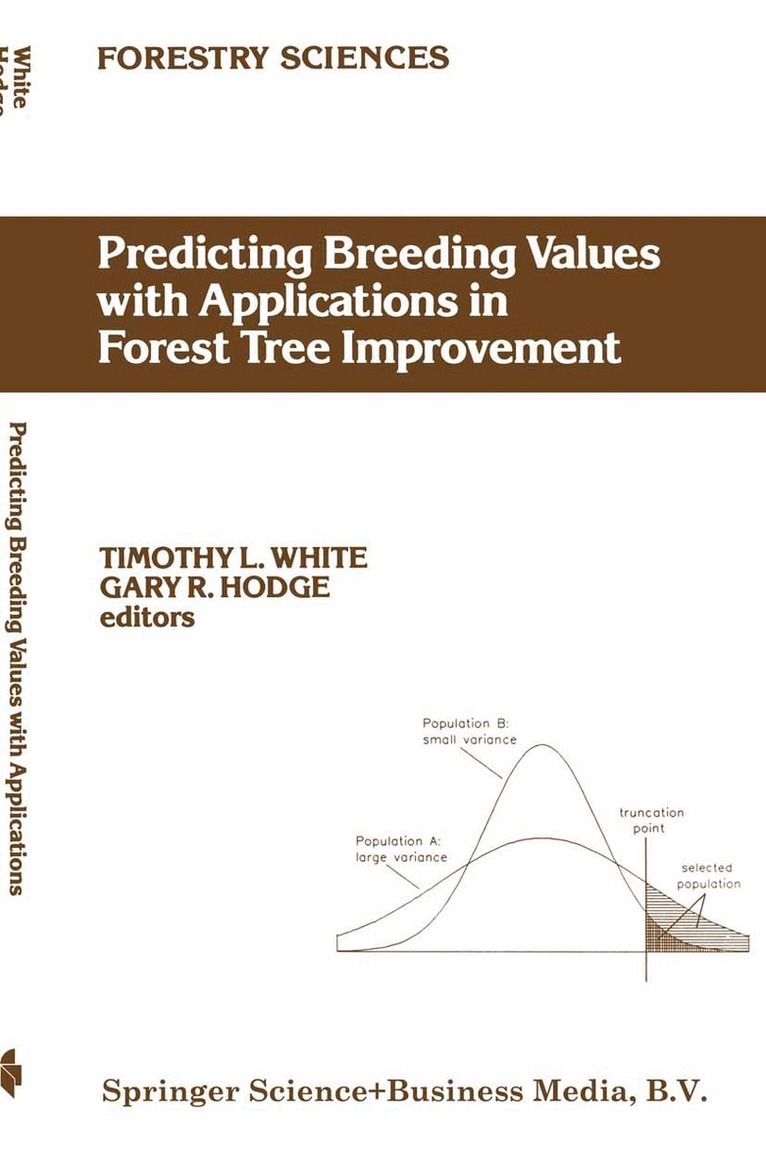
    Predicting Breeding Values with Applications in Forest Tree Improvement

    AvT.L. White,G.R. Hodge

    Häftad, Engelska, 2010

    Del i serien Forestry Sciences

    2 229 kr

    Beställningsvara. Skickas inom 10-15 vardagar. Fri frakt över 249 kr.

    Fler format och utgåvor

    Inbunden

    2 162 kr

    Beskrivning

    In most breeding programs of plant and animal species, genetic data (such as data from field progeny tests) are used to rank parents and help choose candidates for selection. In general, all selection processes first rank the candidates using some function of the observed data and then choose as the selected portion those candidates with the largest (or smallest) values of that function. To make maximum progress from selection, it is necessary to use a function of the data that results in the candidates being ranked as closely as possible to the true (but always unknown) ranking. Very often the observed data on various candidates are messy and unbalanced and this complicates the process of developing precise and accurate rankings. For example, for any given candidate, there may be data on that candidate and its siblings growing in several field tests of different ages. Also, there may be performance data on siblings, ancestors or other relatives from greenhouse, laboratory or other field tests. In addition, data on different candidates may differ drastically in terms of quality and quantity available and may come from varied relatives. Genetic improvement programs which make most effective use of these varied, messy, unbalanced and ancestral data will maximize progress from all stages of selection. In this regard, there are two analytical techniques, best linear prediction (BLP) and best linear unbiased prediction (BLUP), which are quite well-suited to predicting genetic values from a wide variety of sources, ages, qualities and quantities of data.

    Produktinformation

    • Utgivningsdatum:2010-12-15
    • Mått:155 x 235 x 21 mm
    • Vikt:581 g
    • Format:Häftad
    • Språk:Engelska
    • Serie:Forestry Sciences
    • Antal sidor:367
    • Förlag:Springer
    • ISBN:9789048140558

    Utforska kategorier

    • Växtböcker inom Djur och Natur
    • Botanik inom Naturvetenskap och teknik
    • Biovetenskap inom Naturvetenskap och teknik

    Innehållsförteckning

    • 1 Matrix Algebra.- 2 Statistics.- 3 Concepts of Progeny Test Analysis.- 4 Theory of Best Linear Prediction (BLP).- 5 BLP with Half-sib Progeny Test Data.- 6 BLP with Full-sib and Multiple Sources of Data.- 7 BLP: Further Topics.- 8 BLP: An Operational Example.- 9 Selection Index Theory.- 10 Selection Index Applications.- 11 Best Linear Unbiased Prediction: Introduction.- 12 Best Linear Unbiased Prediction: Applications.- Literature Cited.- Appendices.- Answers to Problems.