• Fri frakt över 249 kr
  • •
  • Snabba leveranser
  • •
  • Billiga böcker
Kundservice

Du är på sajten för privatpersoner.

Företag, bibliotek eller offentlig verksamhet?

Du handlar på classic.bokus.com, där alla dina funktioner finns intakta.
Till classic.bokus.com
Bokus logotyp. Gå till startsidan.
  • Erbjudanden
  • Nyheter
  • Student
  • Topplistor
  • Barn & ungdom
  • Bokus Play
  • E-böcker
  • Pocketböcker
  • Spel & pussel

10% rabatt på allt med kod NYSTART10 →

Sidfot

Mina sidor

    Hjälp

    • Kundservice
    • Vanliga frågor och svar
    • Frakt och leverans
    • Retur vid ångerrätt
    • Reklamera vara
    • Betalning
    • Köpvillkor
    • Allmänna villkor
    • Information om webbplatsens tillgänglighet

    Om Bokus

    • Om oss
    • Pressrum
    • För studenter
    • För företag
    • För bibliotek och offentlig verksamhet
    • För leverantörer
    • Hållbarhet

    Populärt

    • Aktuella erbjudanden
    • Presentkort
    • Studentlitteratur
    • Nya böcker
    • Topplistor
    • Signerade böcker
    • Engelska böcker

    Inspiration

    • Boktips
    • BookTok
    • Populära bokserier
    • Barnbokskaraktärer
    • Populära författare
    Logotyp för Bokus
    Följ oss på Facebook (extern länk)Följ oss på Instagram (extern länk)Följ oss på YouTube (extern länk)Följ oss på TikTok (extern länk)
    bokus @ CookiesAnpassa cookiesIntegritetspolicyKöpvillkor
    Till Citymail hemsida (extern länk)Till Budbee hemsida (extern länk)Till Postnord hemsida (extern länk)Till Schenker hemsida (extern länk)Till Early Bird hemsida (extern länk)Till Walleys hemsida (extern länk)
    1. Samhälle och politik
    2. Samhälle och kultur
    3. Kultur och medier
    4. Referensverk och tvärvetenskap

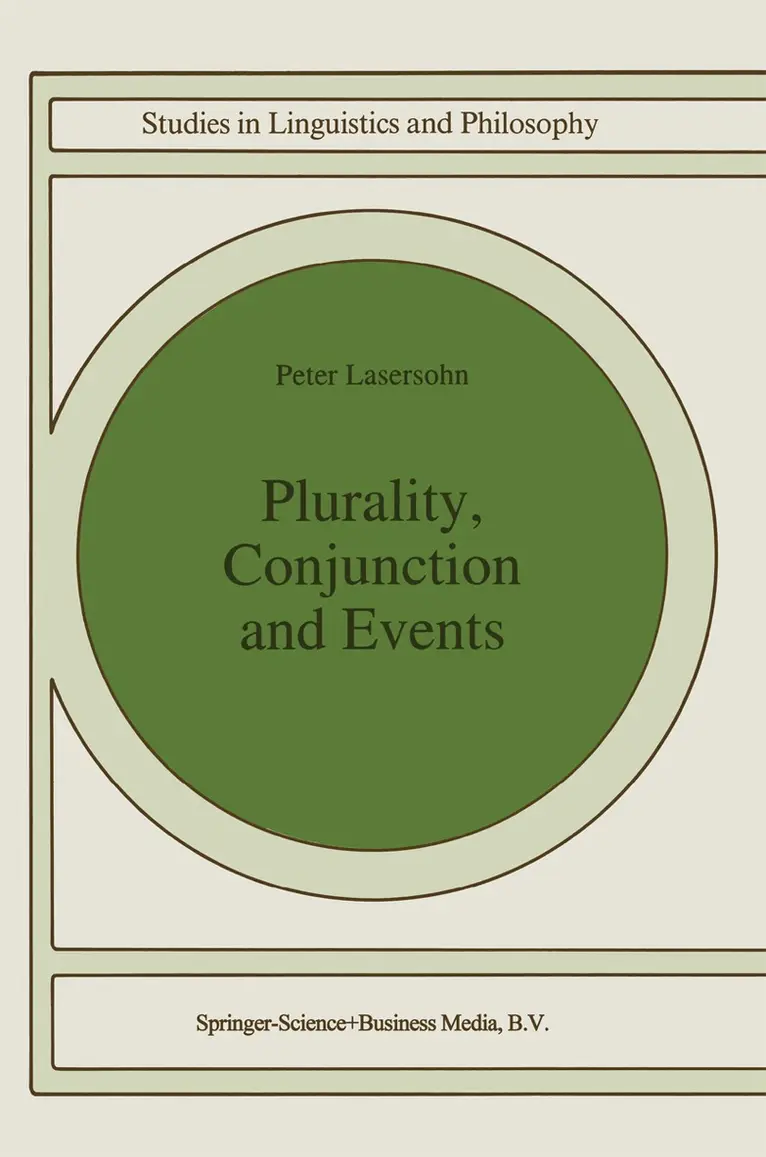
    Plurality, Conjunction and Events

    AvP. Lasersohn

    Häftad, Engelska, 2010

    Del 55 i serien Studies in Linguistics and Philosophy

    1 623 kr

    Beställningsvara. Skickas inom 10-15 vardagar. Fri frakt över 249 kr.

    Fler format och utgåvor

    Inbunden

    1 673 kr

    E-bok

    2 105 kr

    Beskrivning

    Plurality, Conjunction and Events presents a novel theory of plural and conjoined phrases, in an event-based semantic framework. It begins by reviewing options for treating the alternation between `collective' and `distributive' readings of sentences containing plural or conjoined noun phrases, including analyses from both the modern and the premodern literature. It is argued that plural and conjoined noun phrases are unambiguously group-denoting, and that the collective/distributive distinction therefore must be located in the predicates with which these noun phrases combine. More specifically, predicates must have a hidden argument place for events; the collective/distributive distinction may then be represented in the part/whole structure of these events. This allows a natural treatment of `collectivizing' adverbial expressions, and of `pluractional' affixes; it also allows a unified semantics for conjunction, in which conjoined sentences and predicates denote groups of events, much like conjoined noun phrases denote groups of individuals.

    Produktinformation

    • Utgivningsdatum:2010-11-16
    • Mått:152 x 223 x 18 mm
    • Vikt:487 g
    • Format:Häftad
    • Språk:Engelska
    • Serie:Studies in Linguistics and Philosophy
    • Antal sidor:308
    • Förlag:Springer
    • ISBN:9789048144945

    Utforska kategorier

    • Referensverk och tvärvetenskap inom Samhälle och politik
    • Språkvetenskap och lingvistik inom Språk och ordböcker
    • Filosofiska discipliner inom Filosofi och religion

    Innehållsförteckning

    • One. Collective and Distributive Readings: History and Range of Possible Analyses.- 1: Logical Form.- 2: The NP/S Analysis.- 3: The Relational/S Analysis.- 4: The S/S Analysis.- 5: Two Types of NP/NP Analysis.- 6: Interlude On Collective Action and Colors.- 7: Locating the Ambiguity.- 8: How Many Readings?.- 9: On The Structure of Groups.- 10: The Event-Free Fragment.- Two. Events in the Semantics of Plurality and Conjunction.- 11: Earlier Work on Collectivizing Adverbials.- 12: Return to an Event-Based Analysis.- 13: Pluractional Markers.- 14: Unifying the Semantics of Conjunction.- Conclusion.- References.