• Fri frakt över 249 kr
  • •
  • Snabba leveranser
  • •
  • Billiga böcker
Kundservice

Du är på sajten för privatpersoner.

Företag, bibliotek eller offentlig verksamhet?

Du handlar på classic.bokus.com, där alla dina funktioner finns intakta.
Till classic.bokus.com
Bokus logotyp. Gå till startsidan.
  • Erbjudanden
  • Nyheter
  • Student
  • Topplistor
  • Barn & ungdom
  • Bokus Play
  • E-böcker
  • Pocketböcker
  • Spel & pussel

10% studentrabatt med kod TERM26

Sidfot

Mina sidor

    Hjälp

    • Kundservice
    • Vanliga frågor och svar
    • Frakt och leverans
    • Retur vid ångerrätt
    • Reklamera vara
    • Betalning
    • Köpvillkor
    • Allmänna villkor
    • Information om webbplatsens tillgänglighet

    Om Bokus

    • Om oss
    • Pressrum
    • För studenter
    • För företag
    • För bibliotek och offentlig verksamhet
    • För leverantörer
    • Hållbarhet

    Populärt

    • Aktuella erbjudanden
    • Presentkort
    • Studentlitteratur
    • Nya böcker
    • Topplistor
    • Signerade böcker
    • Engelska böcker

    Inspiration

    • Boktips
    • BookTok
    • Populära bokserier
    • Barnbokskaraktärer
    • Populära författare
    Logotyp för Bokus
    Följ oss på Facebook (extern länk)Följ oss på Instagram (extern länk)Följ oss på YouTube (extern länk)Följ oss på TikTok (extern länk)
    bokus @ CookiesAnpassa cookiesIntegritetspolicyKöpvillkor
    Till Citymail hemsida (extern länk)Till Budbee hemsida (extern länk)Till Postnord hemsida (extern länk)Till Schenker hemsida (extern länk)Till Early Bird hemsida (extern länk)Till Walleys hemsida (extern länk)
    1. Ekonomi och Ledarskap
    2. Nationalekonomi
    3. Mikroekonomi

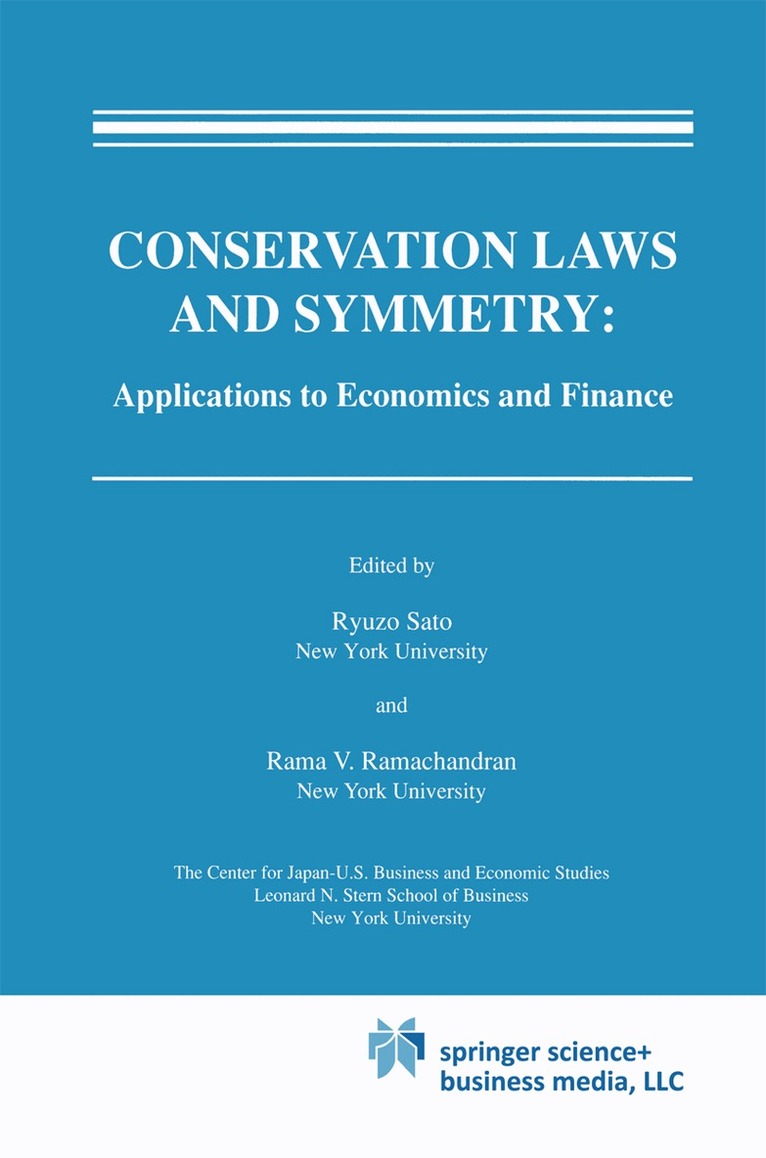
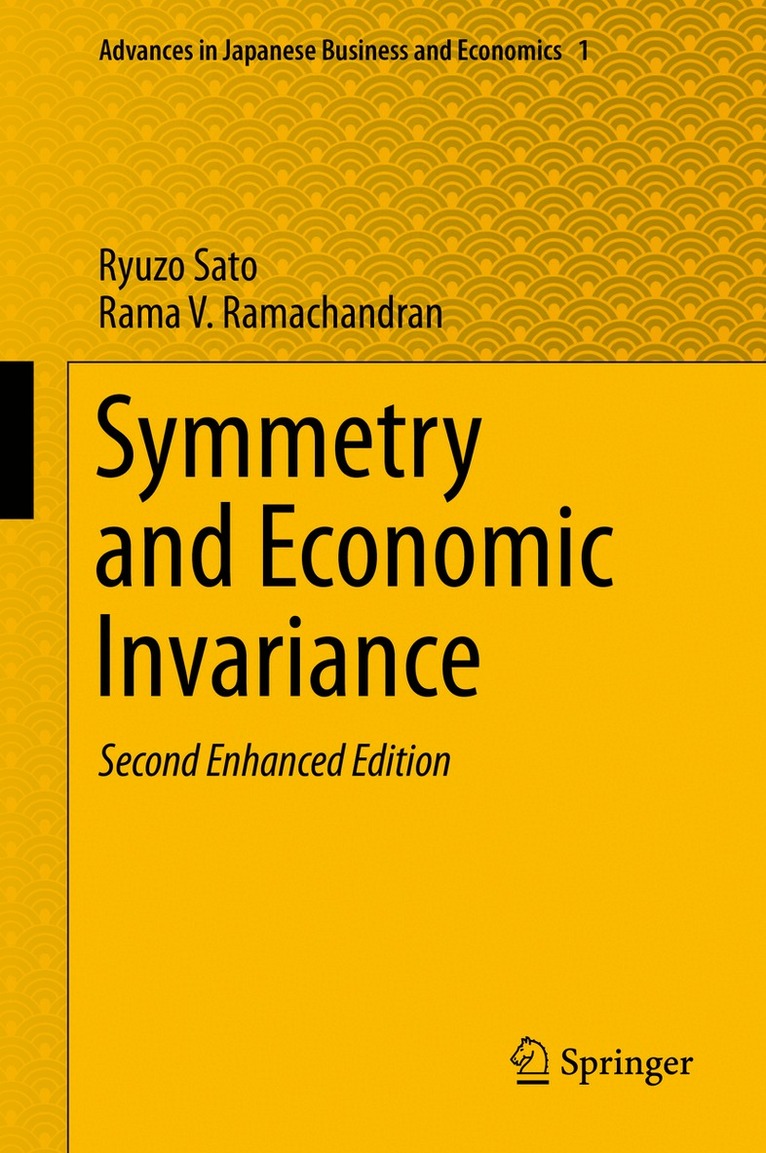
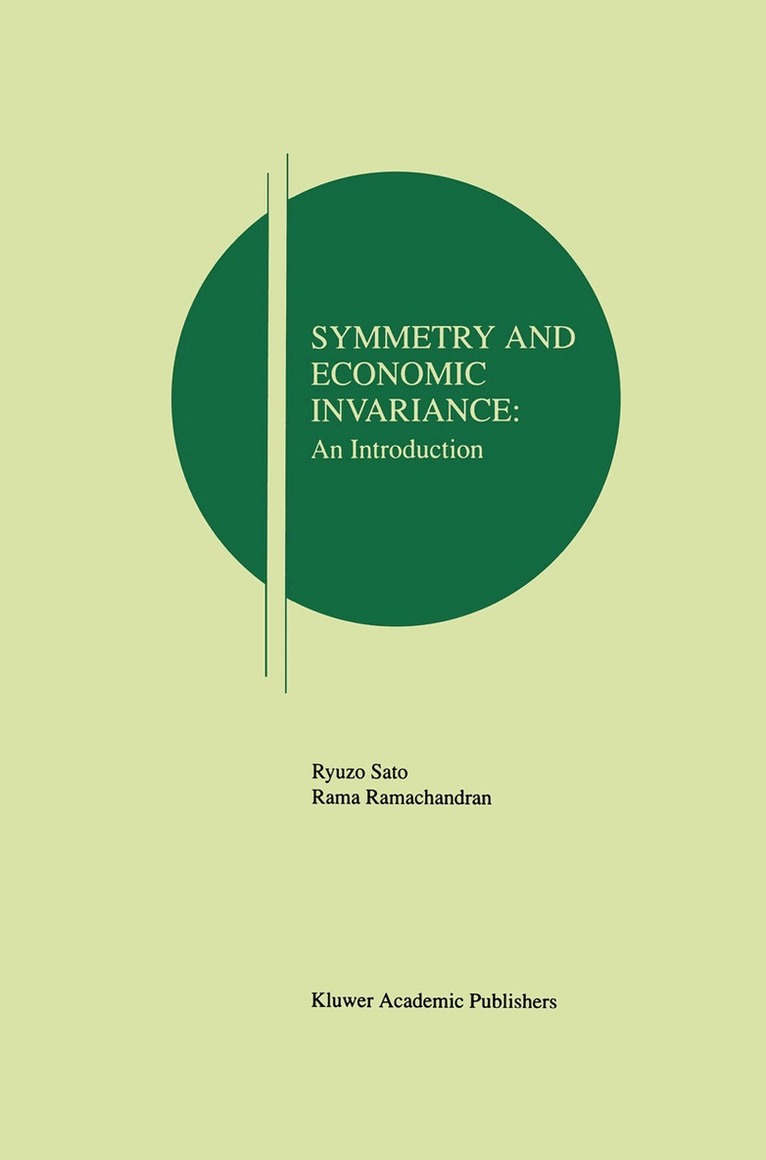
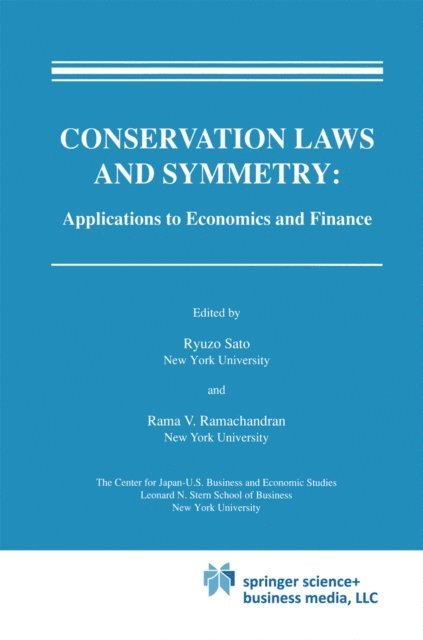
    Conservation Laws and Symmetry: Applications to Economics and Finance

    AvRyuzo Sato,Rama V. Ramachandran

    Häftad, Engelska, 2010

    1 634 kr

    Beställningsvara. Skickas inom 10-15 vardagar. Fri frakt över 249 kr.
    Beskrivning

    Modem geometric methods combine the intuitiveness of spatial visualization with the rigor of analytical derivation. Classical analysis is shown to provide a foundation for the study of geometry while geometrical ideas lead to analytical concepts of intrinsic beauty. Arching over many subdisciplines of mathematics and branching out in applications to every quantitative science, these methods are, notes the Russian mathematician A.T. Fomenko, in tune with the Renais­ sance traditions. Economists and finance theorists are already familiar with some aspects of this synthetic tradition. Bifurcation and catastrophe theo­ ries have been used to analyze the instability of economic models. Differential topology provided useful techniques for deriving results in general equilibrium analysis. But they are less aware of the central role that Felix Klein and Sophus Lie gave to group theory in the study of geometrical systems. Lie went on to show that the special methods used in solving differential equations can be classified through the study of the invariance of these equations under a continuous group of transformations. Mathematicians and physicists later recognized the relation between Lie's work on differential equations and symme­ try and, combining the visions of Hamilton, Lie, Klein and Noether, embarked on a research program whose vitality is attested by the innumerable books and articles written by them as well as by biolo­ gists, chemists and philosophers.

    Produktinformation

    • Utgivningsdatum:2010-12-15
    • Mått:155 x 235 x 18 mm
    • Vikt:493 g
    • Format:Häftad
    • Språk:Engelska
    • Antal sidor:304
    • Förlag:Springer
    • ISBN:9789048157860

    Utforska kategorier

    • Mikroekonomi inom Ekonomi och Ledarskap
    • Nationalekonomi inom Ekonomi och Ledarskap
    • Grupper och gruppteori inom Naturvetenskap och teknik

    Recensioner i media

    ' This book is recommendable to mathematicians in the field of differential geometry and calculus of variations, who take an interest in economic applications ' Journal of Economic 55:3 1992

    Innehållsförteckning

    • 1 Symmetry: An Overview of Geometric Methods in Economics.- 2 Law of Conservation of the Capital-Output Ratio in Closed von Neumann Systems.- 3 Two Conservation Laws in Theoretical Economics.- 4 The Invariance Principle and Income-Wealth Conservation Laws.- 5 Conservation Laws Derived via the Application of Helmholtz Conditions.- 6 Conservation Laws in Continuous and Discrete Models.- 7 Choice as Geometry.- 8 Symmetries, Dynamic Equilibria, and the Value Function.- 9 On Estimating Technical Progress and Returns to Scale.- 10 On the Functional Forms of Technical Change Functions.