• Fri frakt över 249 kr
  • •
  • Snabba leveranser
  • •
  • Billiga böcker
Kundservice

Du är på sajten för privatpersoner.

Företag, bibliotek eller offentlig verksamhet?

Du handlar på classic.bokus.com, där alla dina funktioner finns intakta.
Till classic.bokus.com
Bokus logotyp. Gå till startsidan.
  • Erbjudanden
  • Nyheter
  • Student
  • Topplistor
  • Barn & ungdom
  • Bokus Play
  • E-böcker
  • Pocketböcker
  • Spel & pussel

10% rabatt på allt med kod: NYSTART10 →

Sidfot

Mina sidor

    Hjälp

    • Kundservice
    • Vanliga frågor och svar
    • Frakt och leverans
    • Retur vid ångerrätt
    • Reklamera vara
    • Betalning
    • Köpvillkor
    • Allmänna villkor
    • Information om webbplatsens tillgänglighet

    Om Bokus

    • Om oss
    • Pressrum
    • För studenter
    • För företag
    • För bibliotek och offentlig verksamhet
    • För leverantörer
    • Hållbarhet

    Populärt

    • Aktuella erbjudanden
    • Presentkort
    • Studentlitteratur
    • Nya böcker
    • Topplistor
    • Signerade böcker
    • Engelska böcker

    Inspiration

    • Boktips
    • BookTok
    • Populära bokserier
    • Barnbokskaraktärer
    • Populära författare
    Logotyp för Bokus
    Följ oss på Facebook (extern länk)Följ oss på Instagram (extern länk)Följ oss på YouTube (extern länk)Följ oss på TikTok (extern länk)
    bokus @ CookiesAnpassa cookiesIntegritetspolicyKöpvillkor
    Till Citymail hemsida (extern länk)Till Budbee hemsida (extern länk)Till Postnord hemsida (extern länk)Till Schenker hemsida (extern länk)Till Early Bird hemsida (extern länk)Till Walleys hemsida (extern länk)
    1. Språk och ordböcker
    2. Språkvetenskap och lingvistik

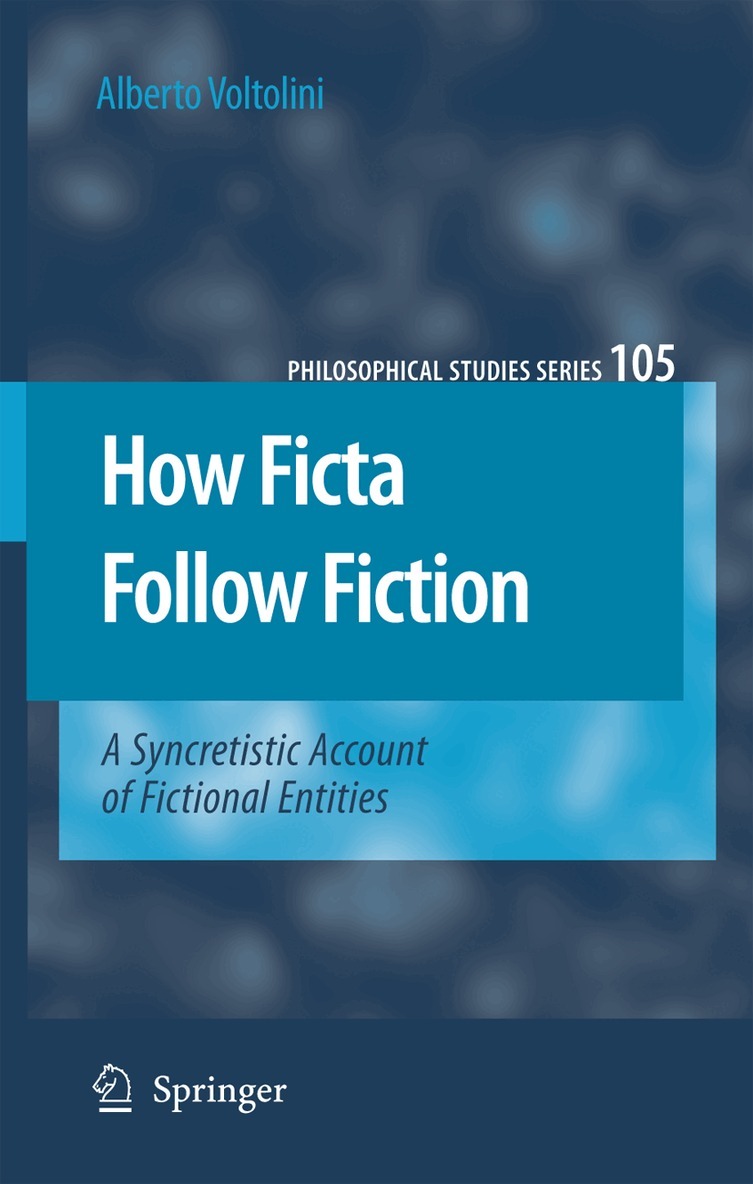
    How Ficta Follow Fiction

    A Syncretistic Account of Fictional Entities

    AvAlberto Voltolini

    Häftad, Engelska, 2010

    Del 105 i serien Philosophical Studies Series

    1 626 kr

    Beställningsvara. Skickas inom 10-15 vardagar. Fri frakt över 249 kr.

    Fler format och utgåvor

    Inbunden

    1 626 kr

    E-bok

    2 044 kr

    Beskrivning

    This book is devoted to fictional entities or, to be more precise, fictional entities as they emerge from the literary process of storytelling. They encompass the great immortal figures in human literature—Don Quixote, Faust, Sherlock Holmes and so on—as well as the protagonists of single novels such as Anna Karenina, Emma Woodhouse and Emma Bovary and even the unknown characters in the oral tradition of storytelling developed by small communities of people for their own entertainment. This is p- sumably how Achilles, Penelope and Ulysses originated. We must also include among these figures mythological characters such as Apollo, Odin and Zeus, regardless of the fact that they were originally thought to be supernatural beings rather than fictional individuals. The subject of this book is not new, which may make it seem less appe- ing to a prospective reader—just one more book on fictional entities. Yet I would argue that this apparent drawback is fundamental to the purpose of the book, which is to present a syncretistic doctrine of fictional entities. In other words, it is a theory which firmly acknowledges that the various other theories already developed on this subject have great merits. Their main flaw, however, is not that they are wrong but, rather, that they are inc- plete. Accordingly, they are not to be put to one side; instead, they need to be integrated into a single theory that aims both to maintain their positive results and to overcome their defects.

    Produktinformation

    • Utgivningsdatum:2010-11-25
    • Mått:160 x 240 x 17 mm
    • Vikt:464 g
    • Format:Häftad
    • Språk:Engelska
    • Serie:Philosophical Studies Series
    • Antal sidor:280
    • Förlag:Springer
    • ISBN:9789048172955

    Utforska kategorier

    • Språkvetenskap och lingvistik inom Språk och ordböcker
    • Filosofiska discipliner inom Filosofi och religion

    Recensioner i media

    From the reviews: "In How Ficta Follow Fiction,Voltolini presents us with one of the richest and most ingenious defences of fictional entities (ficta)." (Eros Corazza, Carleton University, in dialectica Vol. 63 (1), 2009, book symposium on A. Voltolini's How Ficta Follow Fiction) "The book will be very useful for all those who want to have a guided overview of the state of the art in the field, and very helpful if used as a main text for an introductory graduate course." (Manuel Garcia-Carpintero, University of Barcelona, in dialectica Vol. 63 (1), 2009, book symposium on A. Voltolini's How Ficta Follow Fiction) "This book is extremely well written and the issues clearly set before the reader. I happily recommend this work. It provides genuine food for thought and is a must for students, specialists and anyone interested in fiction, the philosophy of language, or metaphysics." (Alex Orenstein, Queens College and the Graduate Center, CUNY, in The Review of Metaphysics) "[...] one can't but be impressed by the quality of Voltolini's contribution to the question he sets out to discuss in the book." (Frederick Kroon, University of Auckland, in Australasian Journal of Philosophy) "[How Ficta Follow Fiction] is a paradigm of excellent philosophy and sets a new benchmark in the discussion of fictional objects." (Anthony Everett, Bristol University, in Notre Dame Philosophical Reviews) "How Ficta Follow Fiction is divided in three parts. ... Voltolini's work is an outstanding contribution to the debate in the ontology of fiction, and a must reading for any interested in the topic. More than this, it is a deep and original book, filled with bold positions and provocative insights on a host of different themes in metaphysics and the philosophy of language." (Giuseppe Spolaore, in Epistemologia Vol. 30 (2), 2007)

    Innehållsförteckning

    • The Metaphysical Side.- The Committal Theories (I).- The Committal Theories (II).- The Syncretistic Theory.- Further Developments of the Syncretistic Theory.- The Semantic Side.- The Noncommittal Theories.- The Syncretistic Theory.- The Ontological Side.- An Ontological Argument in Favor of the Existence of Fictional Entities.