• Fri frakt över 249 kr
  • •
  • Snabba leveranser
  • •
  • Billiga böcker
Kundservice

Du är på sajten för privatpersoner.

Företag, bibliotek eller offentlig verksamhet?

Du handlar på classic.bokus.com, där alla dina funktioner finns intakta.
Till classic.bokus.com
Bokus logotyp. Gå till startsidan.
  • Erbjudanden
  • Nyheter
  • Student
  • Topplistor
  • Barn & ungdom
  • Bokus Play
  • E-böcker
  • Pocketböcker
  • Spel & pussel

10% rabatt på allt med kod: NYSTART10 →

Sidfot

Mina sidor

    Hjälp

    • Kundservice
    • Vanliga frågor och svar
    • Frakt och leverans
    • Retur vid ångerrätt
    • Reklamera vara
    • Betalning
    • Köpvillkor
    • Allmänna villkor
    • Information om webbplatsens tillgänglighet

    Om Bokus

    • Om oss
    • Pressrum
    • För studenter
    • För företag
    • För bibliotek och offentlig verksamhet
    • För leverantörer
    • Hållbarhet

    Populärt

    • Aktuella erbjudanden
    • Presentkort
    • Studentlitteratur
    • Nya böcker
    • Topplistor
    • Signerade böcker
    • Engelska böcker

    Inspiration

    • Boktips
    • BookTok
    • Populära bokserier
    • Barnbokskaraktärer
    • Populära författare
    Logotyp för Bokus
    Följ oss på Facebook (extern länk)Följ oss på Instagram (extern länk)Följ oss på YouTube (extern länk)Följ oss på TikTok (extern länk)
    bokus @ CookiesAnpassa cookiesIntegritetspolicyKöpvillkor
    Till Citymail hemsida (extern länk)Till Budbee hemsida (extern länk)Till Postnord hemsida (extern länk)Till Schenker hemsida (extern länk)Till Early Bird hemsida (extern länk)Till Walleys hemsida (extern länk)
    1. Samhälle och politik
    2. Politik och statsskick
    3. Internationella relationer

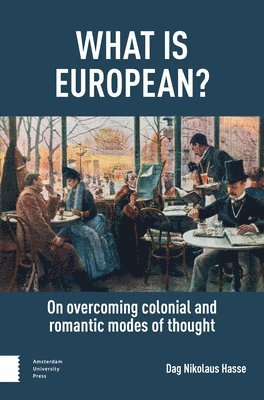
    What is European?

    On Overcoming Colonial and Romantic Modes of Thought

    AvDag Nikolaus Hasse

    Häftad, Engelska, 2025

    246 kr

    Beställningsvara. Skickas inom 10-15 vardagar. Fri frakt över 249 kr.

    Beskrivning

    It is common to define Europe by its democratic, scientific, religious, and cultural traditions. But in What is European?, Dag Nikolaus Hasse argues that the search for Europe's essence has taken a troubling turn. He shows that many traditional ideas about Europe are culturally one-sided and historically and geographically distorted, and calls for a decolonisation and deromanticisation of the discourse on Europe. The book promotes an inclusive vision of Europe that reflects its long history of multiethnic cities, offers a cultural home to a wider range of people across the continent, and extends attention and respect to other continents, thus laying a more respectful foundation for shaping the future together. At the same time, Hasse demonstrates that overcoming colonial ways of thinking does not and should not result in anti-Europeanism. Criticising European arrogance may well go hand in hand with feeling culturally at home in other traditions of Europe. For this, it does not matter whether one is a resident of the European continent or not. There is no privileged access to European culture or to the culture of any other continent.

    Produktinformation

    • Utgivningsdatum:2025-09-04
    • Mått:135 x 210 x 12 mm
    • Vikt:91 g
    • Format:Häftad
    • Språk:Engelska
    • Antal sidor:128
    • Förlag:Amsterdam University Press
    • ISBN:9789048571277

    Utforska kategorier

    • Internationella relationer inom Samhälle och politik
    • Socialhistoria och kulturhistoria inom Historia och arkeologi
    • Europas historia inom Historia och arkeologi

    Mer om författaren

    Dag Nikolaus Hasse is professor of the history of philosophy at the University of Würzburg. Among his numerous publications, two monographs stand out: Avicenna's De Anima in the Latin West (2000), and Success and Suppression: Arabic Sciences and Philosophy in the Renaissance (2016). In 2016, Hasse was awarded the prestigious Gottfried Wilhelm Leibniz Prize, the highest disctinction for a scientist in Germany.

    Innehållsförteckning

    • Introduction 1 Decolonisation 2 Deromanticisation 3 What is typically European? 4 Multi-ethnic cities: the Europe of the future Notes Acknowledgements About the Author