• Fri frakt över 249 kr
  • •
  • Snabba leveranser
  • •
  • Billiga böcker
Kundservice

Du är på sajten för privatpersoner.

Företag, bibliotek eller offentlig verksamhet?

Du handlar på classic.bokus.com, där alla dina funktioner finns intakta.
Till classic.bokus.com
Bokus logotyp. Gå till startsidan.
  • Erbjudanden
  • Nyheter
  • Student
  • Topplistor
  • Barn & ungdom
  • Bokus Play
  • E-böcker
  • Pocketböcker
  • Spel & pussel

10% rabatt på allt med kod: NYSTART10 →

Sidfot

Mina sidor

    Hjälp

    • Kundservice
    • Vanliga frågor och svar
    • Frakt och leverans
    • Retur vid ångerrätt
    • Reklamera vara
    • Betalning
    • Köpvillkor
    • Allmänna villkor
    • Information om webbplatsens tillgänglighet

    Om Bokus

    • Om oss
    • Pressrum
    • För studenter
    • För företag
    • För bibliotek och offentlig verksamhet
    • För leverantörer
    • Hållbarhet

    Populärt

    • Aktuella erbjudanden
    • Presentkort
    • Studentlitteratur
    • Nya böcker
    • Topplistor
    • Signerade böcker
    • Engelska böcker

    Inspiration

    • Boktips
    • BookTok
    • Populära bokserier
    • Barnbokskaraktärer
    • Populära författare
    Logotyp för Bokus
    Följ oss på Facebook (extern länk)Följ oss på Instagram (extern länk)Följ oss på YouTube (extern länk)Följ oss på TikTok (extern länk)
    bokus @ CookiesAnpassa cookiesIntegritetspolicyKöpvillkor
    Till Citymail hemsida (extern länk)Till Budbee hemsida (extern länk)Till Postnord hemsida (extern länk)Till Schenker hemsida (extern länk)Till Early Bird hemsida (extern länk)Till Walleys hemsida (extern länk)
    1. Juridik
    2. Internationell rätt
    3. Folkrätt

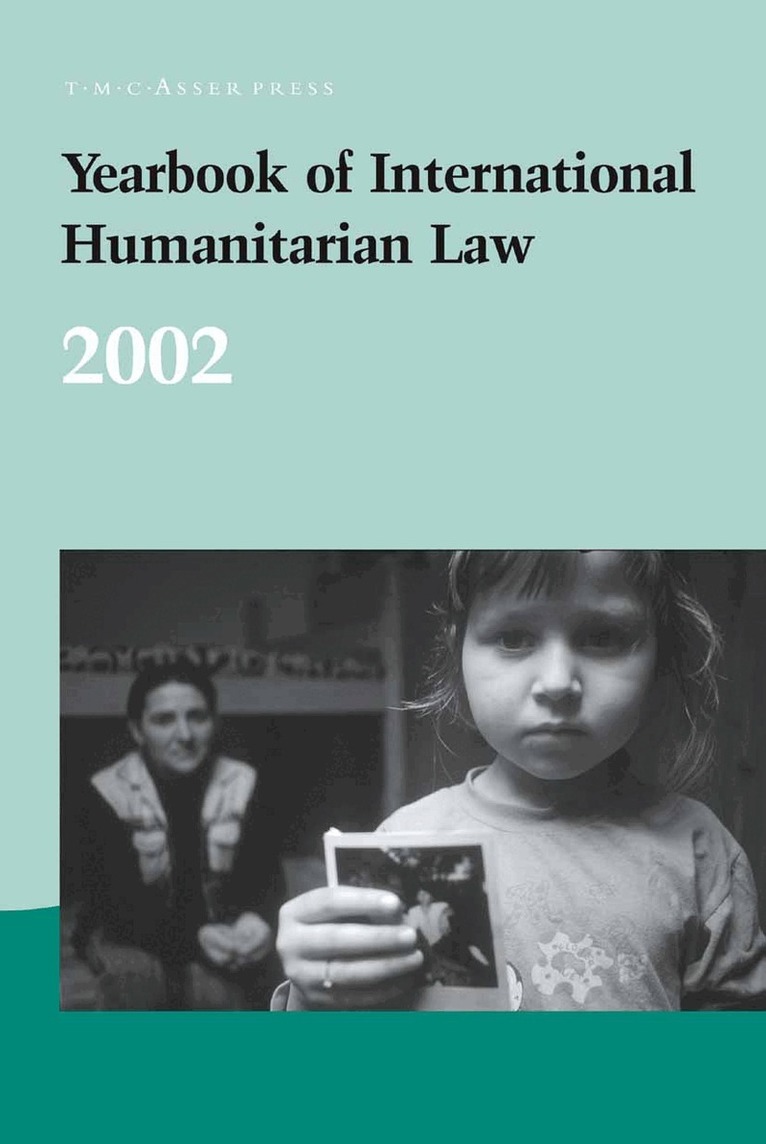
    Yearbook of International Humanitarian Law - 2002

    AvH. Fischer,Dr McDonald, A.

    Inbunden, Engelska, 2011

    Del i serien Yearbook of International Humanitarian Law

    1 496 kr

    Beställningsvara. Skickas inom 10-15 vardagar. Fri frakt över 249 kr.

    Beskrivning

    3 On 22 February 2002, Jonas Malheiro Savimbi, who led the UNITA rebel move- 4 ment during the bloody armed conflict in Angola and who had battled to take power by force since Angola’s independence from Portugal in 1975, was killed in 5 a gun battle with the Angolan Army. During the Cold War, Savimbi was a proxy for the United States against the then-Marxist government of Angola. But after the end of the Cold War, he lost international support for rejecting peace efforts. He was accused of perpetuating a bloody internal conflict to advance his own interests 6 and was exposed to international sanctions. Meanwhile, the government of Presi- 7 dent José Eduardo dos Santos moved closer to the United States. The 27-year-long armed conflict is believed to have killed approximately one million people and driven four million others from their homes, creating a humani- 8 tarian crisis. In addition, the conflict destroyed almost all of the country’s inf- structure, and effectively disrupted every effort by the government to start the long desired national reconstruction after independence, and the building of prosperity for the nation’s children. Savimbi was viewed as the primary obstacle to peace, personifying the ‘corrupt- 9 ing influence of ambition, mineral wealth, and the grinding brutality of war’. His 3. ‘UNITA’ is the Portuguese acronym for ‘National Union for the Total Independence of Angola’ (União Nacional para a Independência Total de Angola). It was founded in 1966 by the late Mr Jonas Savimbi.

    Produktinformation

    • Utgivningsdatum:2011-08-31
    • Mått:160 x 241 x 60 mm
    • Vikt:1 701 g
    • Format:Inbunden
    • Språk:Engelska
    • Serie:Yearbook of International Humanitarian Law
    • Antal sidor:1 022
    • Upplaga:11001
    • Förlag:T.M.C. Asser Press
    • ISBN:9789067041898

    Utforska kategorier

    • Folkrätt inom Juridik
    • Referensverk och tvärvetenskap inom Samhälle och politik

    Mer om författaren

    Leiden University. T.M.C. Asser Institute, The Hague.

    Innehållsförteckning

    • Articles.- Angola: A Case Study in the Challenges of Achieving Peace and the Question of Amnesty or Prosecution of War Crimes in Mixed Armed Conflicts.- Disentangling Legal Quagmires: The Legal Characterisation of the Armed Conflicts in Afghanistan since 6/7 October 2001 and the Question of Prisoner of War Status.- What Future for the Doctrine of Belligerent Reprisals?.- Developments in the Law of Genocide.- Establishing the Responsibility of the Khmer Rouge Leadership for International Crimes.- International Criminal Procedure and Its Participants: An Examination of the Interaction of Judges, Prosecutor and Defence at the Yugoslav Tribunal.- Current Developments.- The Year in Review.- The Complementary and Conflicting Relationship between the Special Court for Sierra Leone and the Truth and Reconciliation Commission.- Transitional Justice: The Prosecution of War Crimes in Bosnia and Herzegovina under the ‘Rules of the Road’.- The Liability of Civilians under International Humanitarian Law’s War Crimes Provisions.- Regulating Explosive Remnants of War.- The Conflict in Western Sahara — An Unresolved Issue from the Decolonization Period.- Teaching International Humanitarian Law in Universities: The Contribution of the International Committee of the Red Cross.- Universal Jurisdiction: Lessons from the Belgian Experience.- The First OPCW Review Conference of the Chemical Weapons Convention.- Correspondents’ Reports.- Correspondents’ Reports.