• Fri frakt över 249 kr
  • •
  • Snabba leveranser
  • •
  • Billiga böcker
Kundservice

Du är på sajten för privatpersoner.

Företag, bibliotek eller offentlig verksamhet?

Du handlar på classic.bokus.com, där alla dina funktioner finns intakta.
Till classic.bokus.com
Bokus logotyp. Gå till startsidan.
  • Erbjudanden
  • Nyheter
  • Student
  • Topplistor
  • Barn & ungdom
  • Bokus Play
  • E-böcker
  • Pocketböcker
  • Spel & pussel

10% rabatt på allt med kod: NYSTART10 →

Sidfot

Mina sidor

    Hjälp

    • Kundservice
    • Vanliga frågor och svar
    • Frakt och leverans
    • Retur vid ångerrätt
    • Reklamera vara
    • Betalning
    • Köpvillkor
    • Allmänna villkor
    • Information om webbplatsens tillgänglighet

    Om Bokus

    • Om oss
    • Pressrum
    • För studenter
    • För företag
    • För bibliotek och offentlig verksamhet
    • För leverantörer
    • Hållbarhet

    Populärt

    • Aktuella erbjudanden
    • Presentkort
    • Studentlitteratur
    • Nya böcker
    • Topplistor
    • Signerade böcker
    • Engelska böcker

    Inspiration

    • Boktips
    • BookTok
    • Populära bokserier
    • Barnbokskaraktärer
    • Populära författare
    Logotyp för Bokus
    Följ oss på Facebook (extern länk)Följ oss på Instagram (extern länk)Följ oss på YouTube (extern länk)Följ oss på TikTok (extern länk)
    bokus @ CookiesAnpassa cookiesIntegritetspolicyKöpvillkor
    Till Citymail hemsida (extern länk)Till Budbee hemsida (extern länk)Till Postnord hemsida (extern länk)Till Schenker hemsida (extern länk)Till Early Bird hemsida (extern länk)Till Walleys hemsida (extern länk)
    1. Naturvetenskap och teknik
    2. Geovetenskap
    3. Geovetenskap
    4. Geologi

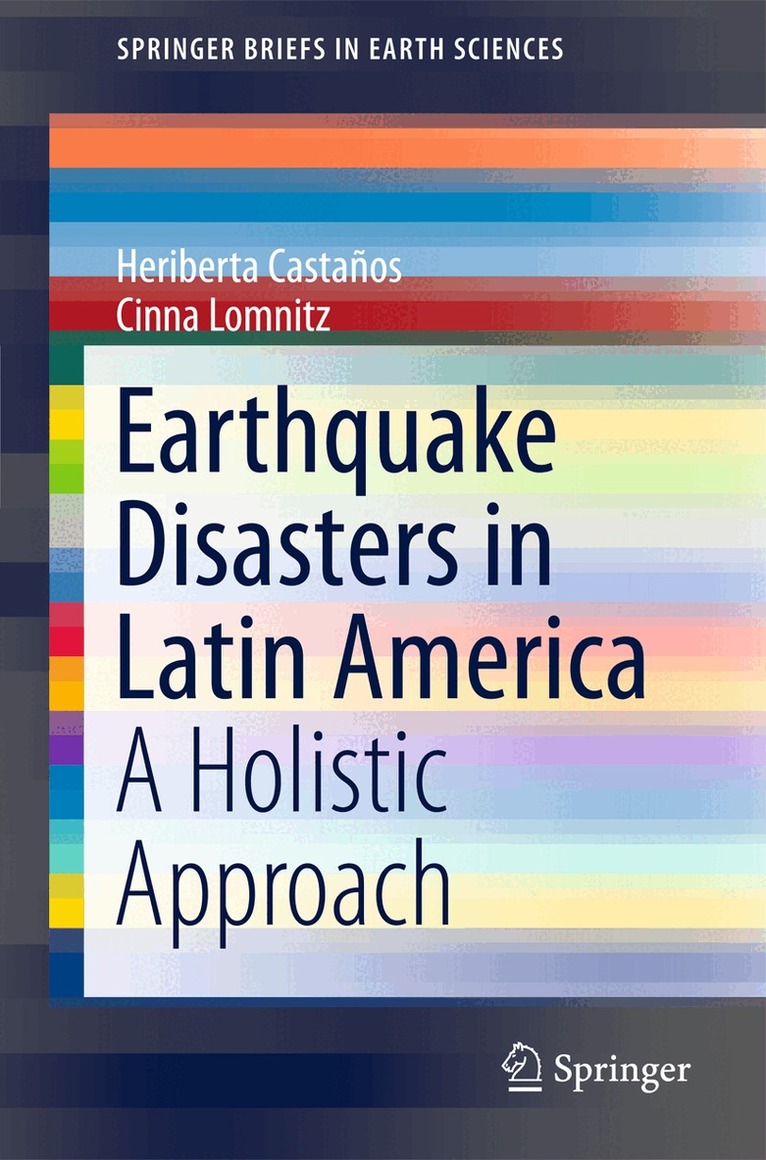
    Earthquake Disasters in Latin America

    A Holistic Approach

    AvHeriberta Castaños,Cinna Lomnitz

    Häftad, Engelska, 2012

    Del i serien SpringerBriefs in Earth Sciences

    502 kr

    Beställningsvara. Skickas inom 10-15 vardagar. Fri frakt över 249 kr.

    Beskrivning

    This book is an attempt to demonstrate the analytical power of the holistic approach for understanding disasters.   Six major earthquakes in Latin America are used as an example: the general idea is to place disasters in a broad social and regional context.  Understanding disasters is a way of understanding the social system.  The idea is to show that every major disaster is unique and different.  Statistical methods may be useful for purposes of risk estimation but modern disasters are "systemic" and complex.  In the chapter on the 2010 Chile earthquake we discuss the tsunami and why the system of tsunami alert did not work.  The introductory chapter contains some basics of seismology (plate tectonics) and earthquake engineering.  The 1985 Mexico earthquake describes why geology is important.   Why was Mexico City founded in a lake?  Technology must be adapted to the environment, not "imported" from possibly more advanced but different societies.  The 1970 Peru earthquake is an example of disaster in a unique environment.  Caracas 1967 takes us on a survey of different engineering solutions.  And the 1960 Chile earthquake leads us on a retrospective survey--what has changed in Chile between the two major Chile earthquakes?  A discussion on Charles Darwin’s observations of the 1835 Chile earthquake provides a fitting summary.

    Produktinformation

    • Utgivningsdatum:2012-01-05
    • Mått:155 x 235 x 5 mm
    • Vikt:131 g
    • Format:Häftad
    • Språk:Engelska
    • Serie:SpringerBriefs in Earth Sciences
    • Antal sidor:65
    • Upplaga:2012
    • Förlag:Springer
    • ISBN:9789400728097

    Utforska kategorier

    • Geologi inom Naturvetenskap och teknik
    • Tillämpad fysik inom Naturvetenskap och teknik
    • Miljövetenskap och miljöpolitik inom Naturvetenskap och teknik

    Innehållsförteckning

    • 1. Darwin and plate tectonics.- 2. The great 1960 Chile earthquake.- 3. The 1967 Caracas earthquake.-  4. The 1970 Peru earthquake.- 5. The 1985 Mexico earthquake.- 6. The 2010 Haiti earthquake.- 7. The 2010 Chile earthquake.- 8. A list of significant earthquakes in Latin America.- 9. Conclusions and recommendations.