• Fri frakt över 249 kr
  • •
  • Snabba leveranser
  • •
  • Billiga böcker
Kundservice

Du är på sajten för privatpersoner.

Företag, bibliotek eller offentlig verksamhet?

Du handlar på classic.bokus.com, där alla dina funktioner finns intakta.
Till classic.bokus.com
Bokus logotyp. Gå till startsidan.
  • Erbjudanden
  • Student
  • Topplistor
  • Barn & ungdom
  • Bokus Play
  • E-böcker
  • Ljudböcker
  • Pocketböcker
  • Spel och pussel

Pocketfynda! Hundratals böcker för 49 kr/st →

Sidfot

Mina sidor

    Hjälp

    • Kundservice
    • Vanliga frågor och svar
    • Frakt och leverans
    • Retur vid ångerrätt
    • Reklamera vara
    • Betalning
    • Köpvillkor
    • Allmänna villkor
    • Information om webbplatsens tillgänglighet

    Om Bokus

    • Om oss
    • Pressrum
    • För studenter
    • För företag
    • För bibliotek och offentlig verksamhet
    • För leverantörer
    • Hållbarhet

    Populärt

    • Aktuella erbjudanden
    • Presentkort
    • Studentlitteratur
    • Nya böcker
    • Topplistor
    • Signerade böcker
    • Engelska böcker

    Inspiration

    • Boktips
    • BookTok
    • Barnbokskaraktärer
    • Populära författare
    Logotyp för Bokus
    Följ oss på Facebook (extern länk)Följ oss på Instagram (extern länk)Följ oss på YouTube (extern länk)Följ oss på TikTok (extern länk)
    bokus @ CookiesAnpassa cookiesIntegritetspolicyKöpvillkor
    Till Citymail hemsida (extern länk)Till Budbee hemsida (extern länk)Till Postnord hemsida (extern länk)Till Schenker hemsida (extern länk)Till Early Bird hemsida (extern länk)Till Walleys hemsida (extern länk)
    1. Samhälle och politik
    2. Samhälle och kultur
    3. Kultur och medier
    4. Referensverk och tvärvetenskap

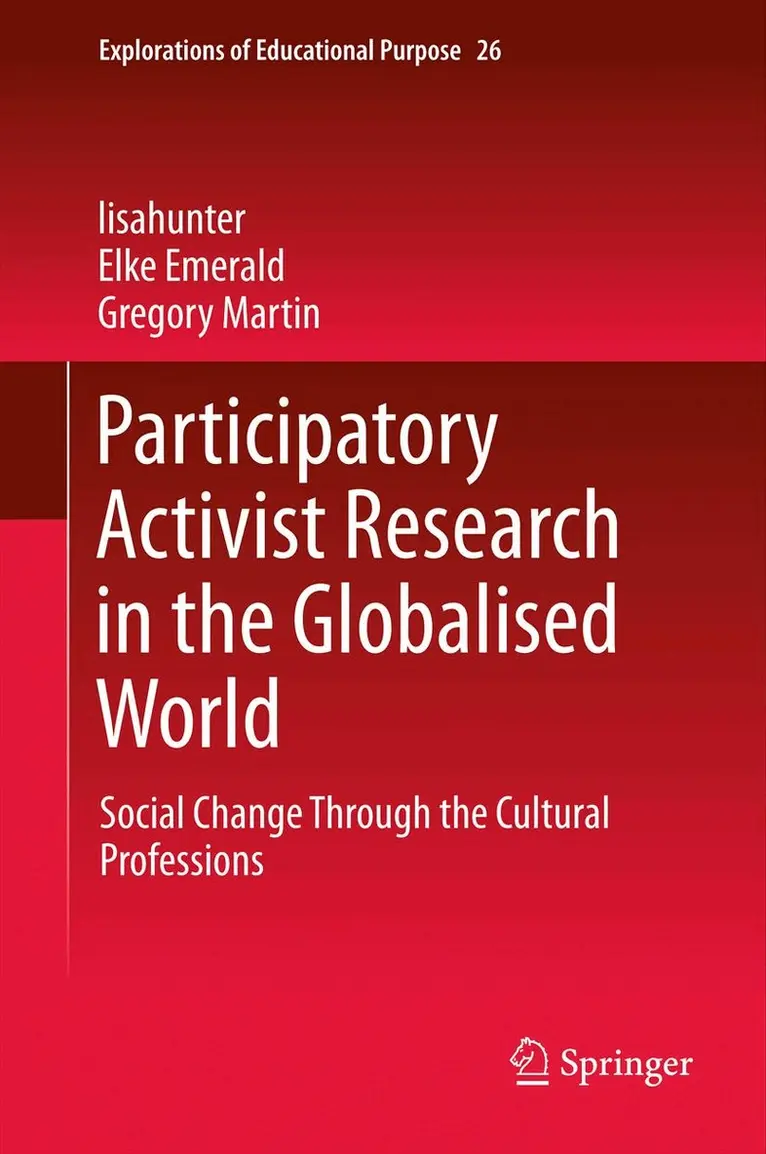
    Participatory Activist Research in the Globalised World

    Social Change Through the Cultural Professions

    Avlisahunter,Elke Emerald

    Inbunden, Engelska, 2012

    Del 26 i serien Explorations of Educational Purpose

    1 048 kr

    Beställningsvara. Skickas inom 10-15 vardagar. Fri frakt över 249 kr.

    Fler format och utgåvor

    Häftad

    1 048 kr

    Beskrivning

    Action research was conceived as a method of collaborative, self-reflective problem-solving in a community context. Yet many believe it has evolved too far away from its original, directly activist roots. As a direct response to calls for a rejuvenation of the social agenda of ‘action research’, this volume provides an all-inclusive road map to generating and implementing politically active grass-roots research activities. It is a priceless practical guide for the newly minted researcher wanting to make a tangible difference in their profession and in the world. Where some action research models have been criticized for losing focus on the participatory and social justice roots of this type of research, this book puts social justice activism squarely center stage, guiding the researcher through the theoretical, methodological and practical considerations and constraints of developing, implementing and sustaining research in the cultural professions.Lcating and contextualizing the history and theory of action research, critical theory and other related methodologies and concepts, this volume takes the reader on a journey that begins with the formation of a question, puzzle or research idea right through to the publication of a report on your finished project. Including discrete sections on every stage in the process, from generating a social justice activism agenda, through forming a team and empowering participants, to ensuring the implementation of your agenda and publishing and disseminating your work. Engaging their readers with a fresh acronym, PAtR—Participatory Activist Research—the authors give fresh impetus to those looking for asystematic way to understand and shape practice in their daily work, their profession and their world.This is an outstanding book that represents a critical research process  sorely needed in the academy today. Any researcher interested in making an intervention into the egregious social conditions wrought by neoliberal capitalism would do well to read this book. An important contribution to the literature on research methodology.Peter McLaren, Professor, School of Critical Studies in Education, University of AucklandThis is an outstanding book that represents a critical research process  sorely needed in the academy today. Any researcher interested in making an intervention into the egregious social conditions wrought by neoliberal capitalism would do well to read this book. An important contribution to the literature on research methodology.Peter McLaren, Professor, School of Critical Studies in Education, University of Auckland

    Produktinformation

    • Utgivningsdatum:2012-12-05
    • Mått:155 x 235 x 20 mm
    • Vikt:532 g
    • Format:Inbunden
    • Språk:Engelska
    • Serie:Explorations of Educational Purpose
    • Antal sidor:240
    • Upplaga:2013
    • Förlag:Springer
    • ISBN:9789400744257

    Utforska kategorier

    • Referensverk och tvärvetenskap inom Samhälle och politik
    • Utbildningsstrategier och utbildningspolitik inom Psykologi och pedagogik

    Recensioner i media

    Michelle Fine, Distinguished Professor of Psychology, The Graduate Center - City University of New York I love this manuscript. As I was packing a car filled with tents and sleeping bags, food and money for Occupy protestors on Wall Street, I received lisahunter's email asking me to review the book. This text is the perfect cup of activist tea for critical researchers and activist professionals haunted by the question of how to "be of use," as we engage with, and pick up the pieces of lives shrewn about by grotesque inequality gaps in these revolting times. PAtR takes on both definitions of revolting. Theoretically Participatory Activist Research is positioned critically in relation to histories and practices of oppression, dispossession and structural violence that are, indeed, revolting; politically, at the same time, Participatory Activist Research floats on the winds of protest that dot the globe, incited by the 99% who insist on a different tomorrow. The volume offers a queer geneology on the history and praxis of critical participatory work that is at core critical, activist, and folded into professional identities. The authors write as they would expect a PAR project to unravel -- they democratize knowledge, offer clear definitions which then get muddy, and hold the hands of the novice researcher, asking him/her only to be true to their activist passions, to design research for justice, to resist the pull toward the technical practices that reproduce, and solidify, injustice. Holding at once critical theory and activist praxis, these writers have crafted a book that seduces readers into PAR for beginners; the book itself is a PAR process of exploration, reflect, action and more reflection. With graphic organizers and clarifying questions they seek radical transparency and resist the curricular recipes of accountability regimes. In language that is accessible and inviting, the text is fueled by the fire of social critique; the energy and exhaustion of collective engagement; the deliberate dethroning of expertise; the surprise of new solidarities and new findings. The text is, further, imbued with a sweet manifesto on the responsibilities of activist professionals; the need for cross sector solidarity; the invigoration of cultural work, with allies, for justice. Peter McLaren, Professor, School of Critical Studies in Education, University of Auckland. This is an outstanding book that represents a critical research process sorely needed in the academy today. Any researcher interested in making an intervention into the egregious social conditions wrought by neoliberal capitalism would do well to read this book. An important contribution to the literature on research methodology. Richard Tinning, Professor of Pedagogy & Physical Education, The University of Queensland, Australia. As the screws of new liberal thinking and policy tighten on the helping professions, the boundaries between Left and Right are increasingly being blurred, the spaces to find support from like-minded (and spirited) colleagues seem to be diminishing. Resistance seems futile against the juggernaut of performativity and evidence-based practice (of the measured kind). Opportunities for public solidarity are limited and we are forced further into individualist oriented practices. Enter Participatory Activist Research (PAtR). This form of Action Research with its roots in critical theory has empowerment possibilities for participants. PAtR is collaborative in nature and through considerable ongoing dialogue between participants it is possible to achieve a level of trust and mutual support that can facilitate praxis as informed, committed action. Activists have to stick their heads up over the parapet (not merely above the pulpit!). But it is dangerous to do so. It takes passion, belief and a certain lack of self-regard for one's safety. However, as the authors of Participatory Activist Research reveal, there are examples of praxis and empowerment from across the range of helping professions and these examples can serve to give us hope. Hope for professional renewal in the face of an arid audit culture and hope for a more informed collectivist future. Noeline Alcorn, Emeritus Professor, Wilf Malcolm Institute of Educational Research, The University of Waikato, Aotearoa New Zealand This book will be a valuable resource for emerging researchers in the field. Situated clearly and unambiguously in an activist social justice framework, it discusses a range of theoretical, philosophical and practical issues and examples. Far more than a "how-to" text it nevertheless provides succinct, step-by-step guidance while never deviating from its critical stance. It speaks directly to its readers and is a book for researchers will return to often. It deserves a wide readership

    Innehållsförteckning

    • Introduction.- SECTION A: THE BIGGER PICTURE.- Pasts, presents and futures: An overview of the Action Research family.- Theoretical orientations: critical theory and related theories for activism.- Where do you stand? Philosophical orientations.- SECTION B: DOING THIS STUFF.- Methodology of activism in research.- Methods of constructing field texts.- Methods of analysing field texts to make research texts.- SECTION C: GOING PUBLIC.- Difficulties, limitations and cautions.- A checklist for activist research(ers).- A practical example: Don’t LEAP into this.- Other examples from professional fields.- Presenting your research for an audience.- Conclusion.- Index.