• Fri frakt över 249 kr
  • •
  • Snabba leveranser
  • •
  • Billiga böcker
Kundservice

Du är på sajten för privatpersoner.

Företag, bibliotek eller offentlig verksamhet?

Du handlar på classic.bokus.com, där alla dina funktioner finns intakta.
Till classic.bokus.com
Bokus logotyp. Gå till startsidan.
  • Erbjudanden
  • Nyheter
  • Student
  • Topplistor
  • Barn & ungdom
  • Bokus Play
  • E-böcker
  • Pocketböcker
  • Spel & pussel

10% rabatt på allt med kod: NYSTART10 →

Sidfot

Mina sidor

    Hjälp

    • Kundservice
    • Vanliga frågor och svar
    • Frakt och leverans
    • Retur vid ångerrätt
    • Reklamera vara
    • Betalning
    • Köpvillkor
    • Allmänna villkor
    • Information om webbplatsens tillgänglighet

    Om Bokus

    • Om oss
    • Pressrum
    • För studenter
    • För företag
    • För bibliotek och offentlig verksamhet
    • För leverantörer
    • Hållbarhet

    Populärt

    • Aktuella erbjudanden
    • Presentkort
    • Studentlitteratur
    • Nya böcker
    • Topplistor
    • Signerade böcker
    • Engelska böcker

    Inspiration

    • Boktips
    • BookTok
    • Populära bokserier
    • Barnbokskaraktärer
    • Populära författare
    Logotyp för Bokus
    Följ oss på Facebook (extern länk)Följ oss på Instagram (extern länk)Följ oss på YouTube (extern länk)Följ oss på TikTok (extern länk)
    bokus @ CookiesAnpassa cookiesIntegritetspolicyKöpvillkor
    Till Citymail hemsida (extern länk)Till Budbee hemsida (extern länk)Till Postnord hemsida (extern länk)Till Schenker hemsida (extern länk)Till Early Bird hemsida (extern länk)Till Walleys hemsida (extern länk)
    1. Psykologi och pedagogik
    2. Pedagogik
    3. Pedagogisk psykologi

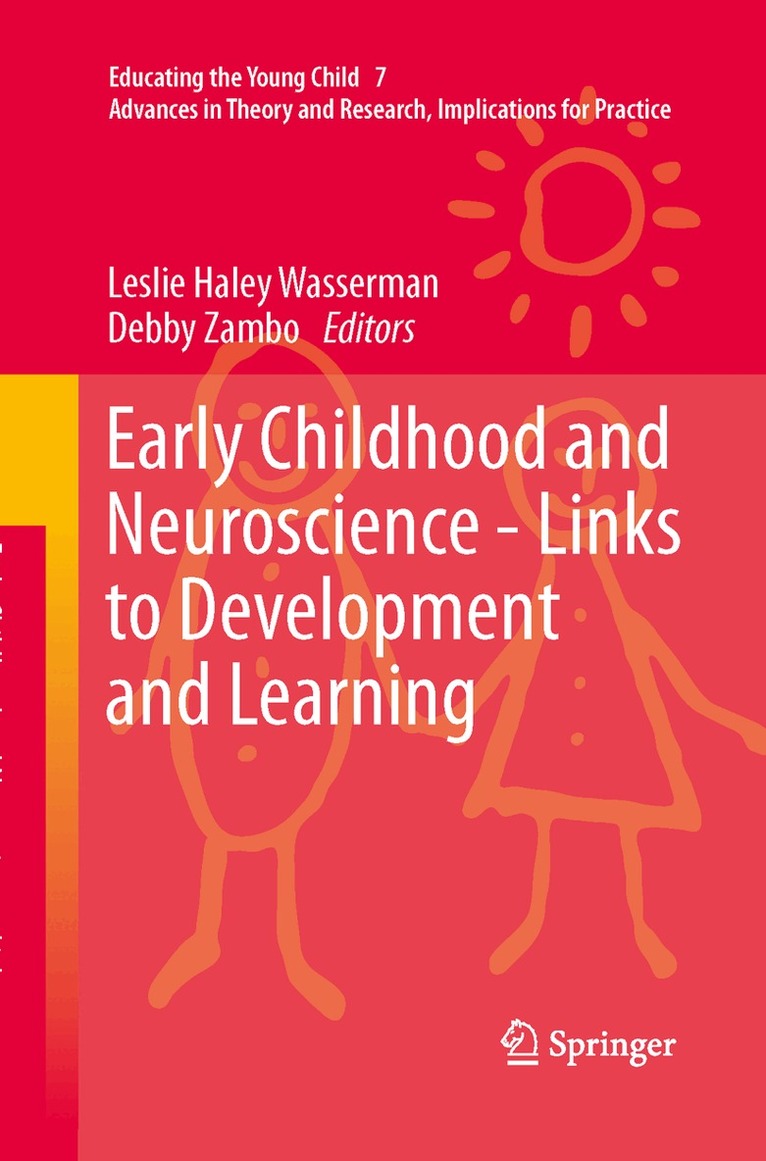
    Early Childhood and Neuroscience - Links to Development and Learning

    AvLeslie Haley Wasserman,Debby Zambo

    Häftad, Engelska, 2015

    Del 7 i serien Educating the Young Child

    1 842 kr

    Beställningsvara. Skickas inom 10-15 vardagar. Fri frakt över 249 kr.

    Beskrivning

    Information from neuroscience is growing and being properly used, and misused wich makes it imperative that educators receive accurate and practical information. This book provides the accurate and practical information educators (pre-service and in-service) and caregivers serving children birth through age 8 need to know. This volume takes a practical and cautionary stance. It reminds educators to consider the ethical implications of neuroscience when it is applied to education, reviews current findings from neuroscience and reveals the dangers of oversimplification and inappropriate extensions of neuroscience into curricula. It brings together a group of authors with varied expertise writing on an array of inter-related educational topics that will help educators use neuroscience to understand and address the cognitive, emotional, social, and behavioral needs of all young children, including those with exceptionalities. They believe neuroscience can be insightful and useful to educators if applied ethically and with care. The book offers strategies educators and caregivers can use to affect children today and the adults they can become.

    Produktinformation

    • Utgivningsdatum:2015-07-15
    • Mått:155 x 235 x 13 mm
    • Vikt:359 g
    • Format:Häftad
    • Språk:Engelska
    • Serie:Educating the Young Child
    • Antal sidor:220
    • Förlag:Springer
    • ISBN:9789400794566

    Utforska kategorier

    • Pedagogisk psykologi inom Psykologi och pedagogik
    • Utbildningsstrategier och utbildningspolitik inom Psykologi och pedagogik
    • Biovetenskap inom Naturvetenskap och teknik

    Innehållsförteckning

    • Acknowledgements.- Preface; Layne Kalbfleisch.- Introduction; Leslie Haley Wasserman and Debby Zambo.- 1. The Practical and Ethical Concerns of Using Neuroscience to Teach Young Children  and Help them Self-Regulate; Debby Zambo.- 2. Neuroscience: The Genesis of Our Individual Brain Strengths; Diane Connell and Jena VanStelten.- 3. Reading and the Young Brain; Nancy Frey and Douglas Fisher.- 4. Brain Development in Early Childhood: A Critical Analysis; Valeri Farmer-Dougan and Larry Alferink.- 5. Addressing the Affective Domain: What Neuroscience says about Social/Emotional Development in Early Childhood; William A. Mosier.- 6. Early Literacy Trends for Children Identified as At-Risk for School Failure: Are They Consistent with Contemporary Neuroscience and Learning Theory?; Rae Ann Hirsh.- 7. Brain Differences in Children with Autism and the Subsequent Impact this has on Learning; Diane Branson.- 8. The Twice Exceptional Young Learner; Leslie Haley Wasserman.- 9. Making a Case for Early Intervention: The Role of Developmental Neuroscience; Niamh Stack.- 10. Effective Strategies to Help Teachers Learn about Brain Development; Billie Enz and Jill Stamm.- 11. Metaphors of Developmental Process for Brain-Savvy Teachers; George Hruby.- Closing Thoughts: Remaining Optimistic, Cautious and Active; Debby Zambo and Leslie Haley Wasserman.