• Fri frakt över 249 kr
  • •
  • Snabba leveranser
  • •
  • Billiga böcker
Kundservice

Du är på sajten för privatpersoner.

Företag, bibliotek eller offentlig verksamhet?

Du handlar på classic.bokus.com, där alla dina funktioner finns intakta.
Till classic.bokus.com
Bokus logotyp. Gå till startsidan.
  • Erbjudanden
  • Nyheter
  • Student
  • Topplistor
  • Barn & ungdom
  • Bokus Play
  • E-böcker
  • Pocketböcker
  • Spel & pussel

10% rabatt på allt med kod NYSTART10 →

Sidfot

Mina sidor

    Hjälp

    • Kundservice
    • Vanliga frågor och svar
    • Frakt och leverans
    • Retur vid ångerrätt
    • Reklamera vara
    • Betalning
    • Köpvillkor
    • Allmänna villkor
    • Information om webbplatsens tillgänglighet

    Om Bokus

    • Om oss
    • Pressrum
    • För studenter
    • För företag
    • För bibliotek och offentlig verksamhet
    • För leverantörer
    • Hållbarhet

    Populärt

    • Aktuella erbjudanden
    • Presentkort
    • Studentlitteratur
    • Nya böcker
    • Topplistor
    • Signerade böcker
    • Engelska böcker

    Inspiration

    • Boktips
    • BookTok
    • Populära bokserier
    • Barnbokskaraktärer
    • Populära författare
    Logotyp för Bokus
    Följ oss på Facebook (extern länk)Följ oss på Instagram (extern länk)Följ oss på YouTube (extern länk)Följ oss på TikTok (extern länk)
    bokus @ CookiesAnpassa cookiesIntegritetspolicyKöpvillkor
    Till Citymail hemsida (extern länk)Till Budbee hemsida (extern länk)Till Postnord hemsida (extern länk)Till Schenker hemsida (extern länk)Till Early Bird hemsida (extern länk)Till Walleys hemsida (extern länk)
    1. Djur och Natur
    2. Naturböcker
    3. Växtböcker

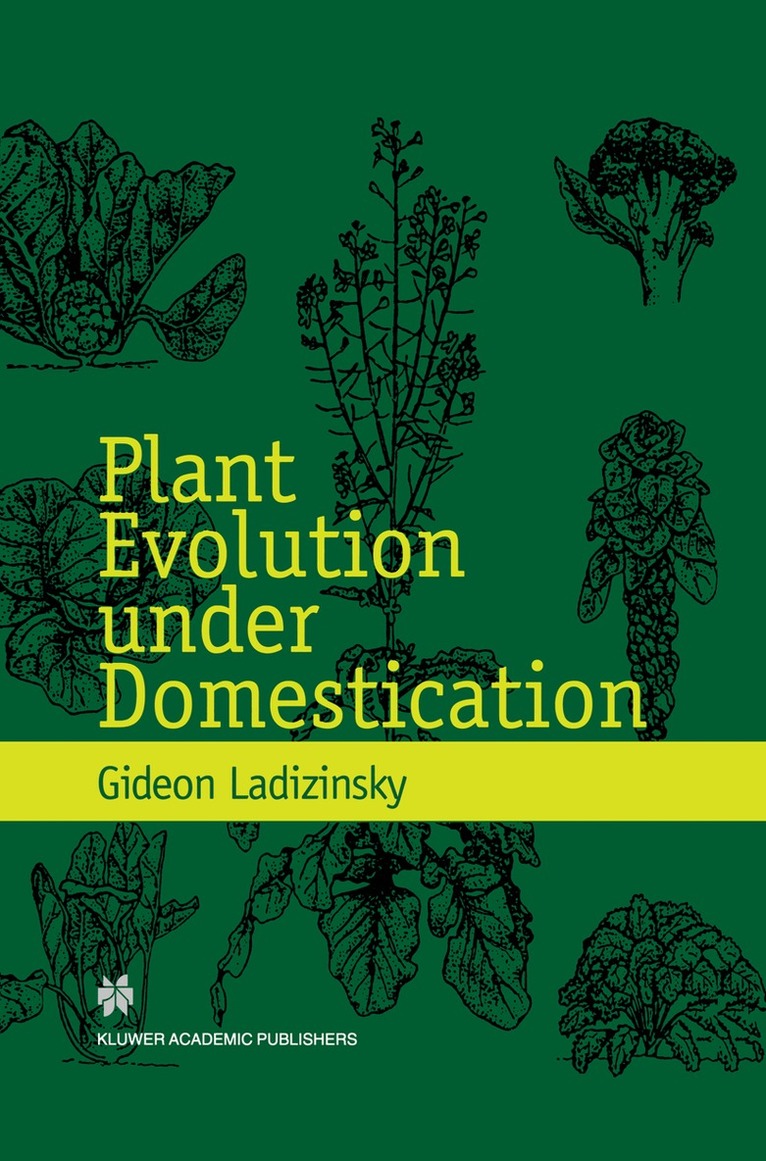
    Plant Evolution under Domestication

    AvGideon Ladizinsky

    Häftad, Engelska, 2012

    1 672 kr

    Beställningsvara. Skickas inom 10-15 vardagar. Fri frakt över 249 kr.

    Fler format och utgåvor

    Inbunden

    1 623 kr

    E-bok

    2 105 kr

    Beskrivning

    This book emerged from a series of lectures on crop evolution at the Faculty of Agriculture of The Hebrew University of Jerusalem. While many textbooks are available on general evolution, only a few deal with evolution under domestication. This book is a modest attempt to bridge this gap. It was written for advanced undergraduate and graduate students in the fields of crop evolution, ethnobotany, plant breeding and related subjects. Evolution under domestication is unique in the general field of plant evolution for three main reasons: (a) it is recent, having started not much more than 10 000 years ago with the emergence of agri­ culture; (b) the original plant material, i. e. the wild progenitors of many important crop plants, still grow in their natural habitats; (c) man played in this process. These factors enable a more reliable a major role assessment of the impact of different evolutionary forces such as hybridization, migration, selection and drift under new circumstances. Interestingly, a great part of evolution under domestication has been unconscious and a result of agricultural practices which have created a new selection criteria, mostly against characters favored by natural selec­ tion. Introducing crop plants to new territories exposed them to different ecological conditions enhancing selection for new characters. Diversity in characters associated with crop plants evolution is virtually absent in theit wild progenitors and most of it has evolved under domestication.

    Produktinformation

    • Utgivningsdatum:2012-10-31
    • Mått:155 x 235 x 15 mm
    • Vikt:411 g
    • Format:Häftad
    • Språk:Engelska
    • Antal sidor:254
    • Upplaga:1998
    • Förlag:Springer
    • ISBN:9789401059039

    Utforska kategorier

    • Växtböcker inom Djur och Natur
    • Botanik inom Naturvetenskap och teknik
    • Medicinsk genetik inom Medicin

    Innehållsförteckning

    • 1. Origin of agriculture.- 1.1 The economy of hunter-gatherers.- 1.2 Agriculture, cultivation, domestication and their meanings.- 1.3 Transition from foraging to farming.- 1.4 The beginning of evolution under domestication.- 1.5 Time and place of domestication.- 1.6 Patterns of domestication.- 1.7 Botany of crop plants.- 1.8 Centers of plant domestication.- 1.9 Conclusions.- 2. Increasing diversity under domestication.- 2.1 Mutations and their effect.- 2.2 Hybridization.- 2.3 Barriers to introgression.- 2.4 Crop diffusion.- 2.5 Manipulating genetic variation by breeding.- 2.6 Developing new variation by transgenesis.- 2.7 Conclusions.- 3. The course of reducing and maintaining genetic diversity under domestication.- 3.1 Selection.- 3.2 Genetic drift.- 3.3 Conclusions.- 4. Speciation under domestication.- 4.1 The species concept.- 4.2 The process of speciation.- 4.3 Instantaneous formation of RIBs.- 4.4 Speciation under domestication.- 4.5 Conclusions.- 5. Weeds and their evolution.- 5.1 Definitions of weeds.- 5.2 Origin of weeds.- 5.3 Biological characteristics of weeds.- 5.4 Weed evolution.- 5.5 Conclusions.- 6. Evolution of selected crop plants.- 6.1 Faba bean, Vicia faba (Leguminosae-Papilionideae).- 6.2 Chickpea, Cicer arietinum (Leguminosae-Papilionideae).- 6.3 Barley, Hordeum vulgare (Gramineae-Triticinae).- 6.4 Maize, Zea mays (Gramineae-Maydeae).- 6.5 Oats, Avena spp. (Gramineae-Aveneae).- 6.6 Lettuce, Lactuca sativa (Compositae).- 6.7 Carrot, Daucus carota (Umbelliferae).- 6.8 Potato, Solanum tuberosum (Solanaceae).- 6.9 Almond, Amygdalus communis (Rosaceae).- 6.10 Grapes, Vitis vinifera (Vitiaceae).- 6.11 Bananas, Musa (Musaceae).- 6.12 Vetch, Vicia sativa (Leguminosae-Papilionideae).- 7. Genetic resources for future crop evolution.- 7.1 Cultivated germplasm.-7.2 Identifying, locating and collecting wild genetic resources.- 7.3 The field work.- 7.4 Gene banks and their role.- 7.5 In situ conservation.- References.