• Fri frakt över 249 kr
  • •
  • Snabba leveranser
  • •
  • Billiga böcker
Kundservice

Du är på sajten för privatpersoner.

Företag, bibliotek eller offentlig verksamhet?

Du handlar på classic.bokus.com, där alla dina funktioner finns intakta.
Till classic.bokus.com
Bokus logotyp. Gå till startsidan.
  • Erbjudanden
  • Nyheter
  • Student
  • Topplistor
  • Barn & ungdom
  • Bokus Play
  • E-böcker
  • Pocketböcker
  • Spel & pussel

10% rabatt på allt med kod: NYSTART10 →

Sidfot

Mina sidor

    Hjälp

    • Kundservice
    • Vanliga frågor och svar
    • Frakt och leverans
    • Retur vid ångerrätt
    • Reklamera vara
    • Betalning
    • Köpvillkor
    • Allmänna villkor
    • Information om webbplatsens tillgänglighet

    Om Bokus

    • Om oss
    • Pressrum
    • För studenter
    • För företag
    • För bibliotek och offentlig verksamhet
    • För leverantörer
    • Hållbarhet

    Populärt

    • Aktuella erbjudanden
    • Presentkort
    • Studentlitteratur
    • Nya böcker
    • Topplistor
    • Signerade böcker
    • Engelska böcker

    Inspiration

    • Boktips
    • BookTok
    • Populära bokserier
    • Barnbokskaraktärer
    • Populära författare
    Logotyp för Bokus
    Följ oss på Facebook (extern länk)Följ oss på Instagram (extern länk)Följ oss på YouTube (extern länk)Följ oss på TikTok (extern länk)
    bokus @ CookiesAnpassa cookiesIntegritetspolicyKöpvillkor
    Till Citymail hemsida (extern länk)Till Budbee hemsida (extern länk)Till Postnord hemsida (extern länk)Till Schenker hemsida (extern länk)Till Early Bird hemsida (extern länk)Till Walleys hemsida (extern länk)
    1. Språk och ordböcker
    2. Språkvetenskap och lingvistik

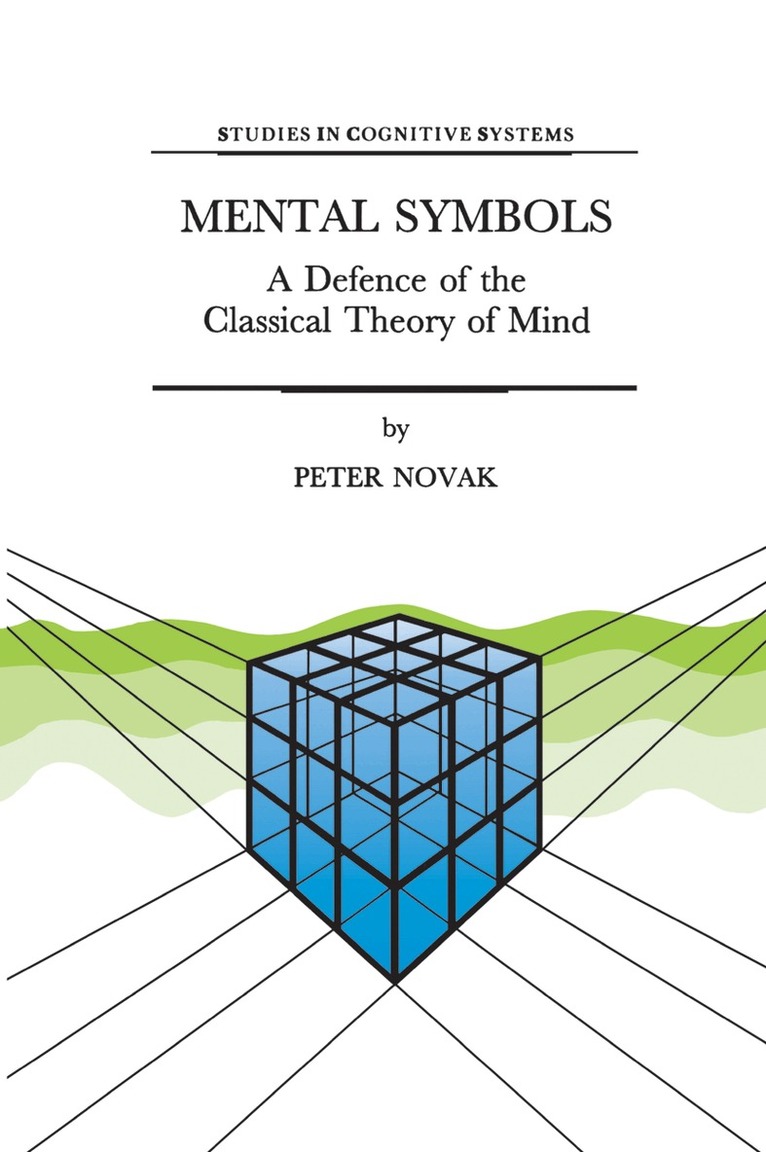
    Mental Symbols

    A Defence of the Classical Theory of Mind

    AvP. Novak

    Häftad, Engelska, 2012

    Del 19 i serien Studies in Cognitive Systems

    1 086 kr

    Beställningsvara. Skickas inom 10-15 vardagar. Fri frakt över 249 kr.

    Fler format och utgåvor

    Inbunden

    1 086 kr

    E-bok

    1 413 kr

    Beskrivning

    Mental Symbols is an essay on mind and meaning, on the biological implementation of mental symbols, on the architecture of mind, and on the correct construal of logical properties and relations of symbols, including implication and inference. The book argues against the main contemporary trends in the cognitive sciences, preferring rather the classical early-modern tradition. The author looks at some logical paradoxes in the light of that tradition, and offers a novel answer to the problem of the biological implementation of the mind in the brain.

    Produktinformation

    • Utgivningsdatum:2012-10-11
    • Mått:160 x 240 x 17 mm
    • Vikt:477 g
    • Format:Häftad
    • Språk:Engelska
    • Serie:Studies in Cognitive Systems
    • Antal sidor:267
    • Förlag:Springer
    • ISBN:9789401063746

    Utforska kategorier

    • Språkvetenskap och lingvistik inom Språk och ordböcker
    • Filosofiska discipliner inom Filosofi och religion

    Innehållsförteckning

    • 1 Conservative Rationalism I.- 1.1 Common-sense Psychology.- 1.2 The Supervenience Chain.- 1.3 The Nomic Theory of Reference.- 1.4 Casus Belli.- 1.5 Nomenclature.- 2 The Idea as World and Will A Belief in a Contribution of Environment to Meaning and a Division of Semantic Labour.- 2.1 The Ambiguous Meaning of “Meaning ”.- 2.2 The Will to Linguistic Power.- 3 Sentence-based Semantics Early Steps toward Semantic Holism.- 3.1 Motivation for Semantic Holism.- 3.2 Frege on Term-based Semantics.- 3.3 Russell on Term-based Semantics.- 3.4 Carnap’Semantic Verificationism.- 4 Radical Empiricism I.- 4.1 Meaning and Non-existent Entities.- 4.2 The Separation of Meaning and Reference.- 4.3 Mental and Mind-Independent Semantic Universals.- 5 Radical Empiricism II.- 5.1 Two Major Routes to Semantic Holism.- 5.2 The Route from Verificationism to Holism.- 5.3 The Route from Behaviourism to Holism.- 5.4 Remarks on Middlebrow Pragmatism.- 6 Conservative Rationalism II.- 6.1 The Old Sorcerer’s Supervenience Chain.- 6.2 Misrepresentation and Asymmetric Dependence.- 6.3 The Sociological Phase of Reference.- 7 The Classical Theory of Mind I.- 7.1 Five Ways of Defining Logical Modality.- 7.2 The Classical Theory of Mind.- 7.3 The Classical Theory of Representation.- 7.4 Aspects of the Classical Theory of Knowledge.- 7.5 Modal Properties in the Model Code.- 7.6 The Complex Ideas of Implication.- 7.7 The Complex A Priori Idea of Valid Deductive Inference.- 7.8 Remarks on CTM and Analytic Philosophy.- 8 The Classical Theory of Mind II.- 8.1 The Ontology and Architecture of CTM.- 8.2 Learning, Memory, and Association in Aplysia.- 8.3 Learning, Memory, and Association in Vertebrates.- 8.4 The Genetic Code, the Mental Code.- 8.5 History, Histology, and the Molecular Level of Analysis.- 9The Classical Theory of Mind III.- 9.1 Toward an Integrated Account of Mind.- 9.2 The Symbolic System of a Deep-layer, Long-term-store Psychic Cell.- 9.3 The Mind as a System of Psychic Cells.- 9.4 The Mind and its External Affairs.- 10 The Tale of Russell’s Paradox.- 10.1 The Misty Origins of Analytic Philosophy.- 10.2 Russell’s Sophism in the Classical Theory of Mind.- 10.3 The Well-Formedness of the Mind.- Epilogue.