• Fri frakt över 249 kr
  • •
  • Snabba leveranser
  • •
  • Billiga böcker
Kundservice

Du är på sajten för privatpersoner.

Företag, bibliotek eller offentlig verksamhet?

Du handlar på classic.bokus.com, där alla dina funktioner finns intakta.
Till classic.bokus.com
Bokus logotyp. Gå till startsidan.
  • Erbjudanden
  • Nyheter
  • Student
  • Topplistor
  • Barn & ungdom
  • Bokus Play
  • E-böcker
  • Pocketböcker
  • Spel & pussel

10% rabatt på allt med kod: NYSTART10 →

Sidfot

Mina sidor

    Hjälp

    • Kundservice
    • Vanliga frågor och svar
    • Frakt och leverans
    • Retur vid ångerrätt
    • Reklamera vara
    • Betalning
    • Köpvillkor
    • Allmänna villkor
    • Information om webbplatsens tillgänglighet

    Om Bokus

    • Om oss
    • Pressrum
    • För studenter
    • För företag
    • För bibliotek och offentlig verksamhet
    • För leverantörer
    • Hållbarhet

    Populärt

    • Aktuella erbjudanden
    • Presentkort
    • Studentlitteratur
    • Nya böcker
    • Topplistor
    • Signerade böcker
    • Engelska böcker

    Inspiration

    • Boktips
    • BookTok
    • Populära bokserier
    • Barnbokskaraktärer
    • Populära författare
    Logotyp för Bokus
    Följ oss på Facebook (extern länk)Följ oss på Instagram (extern länk)Följ oss på YouTube (extern länk)Följ oss på TikTok (extern länk)
    bokus @ CookiesAnpassa cookiesIntegritetspolicyKöpvillkor
    Till Citymail hemsida (extern länk)Till Budbee hemsida (extern länk)Till Postnord hemsida (extern länk)Till Schenker hemsida (extern länk)Till Early Bird hemsida (extern länk)Till Walleys hemsida (extern länk)
    1. Samhälle och politik
    2. Samhälle och kultur
    3. Sociala grupper och identitet

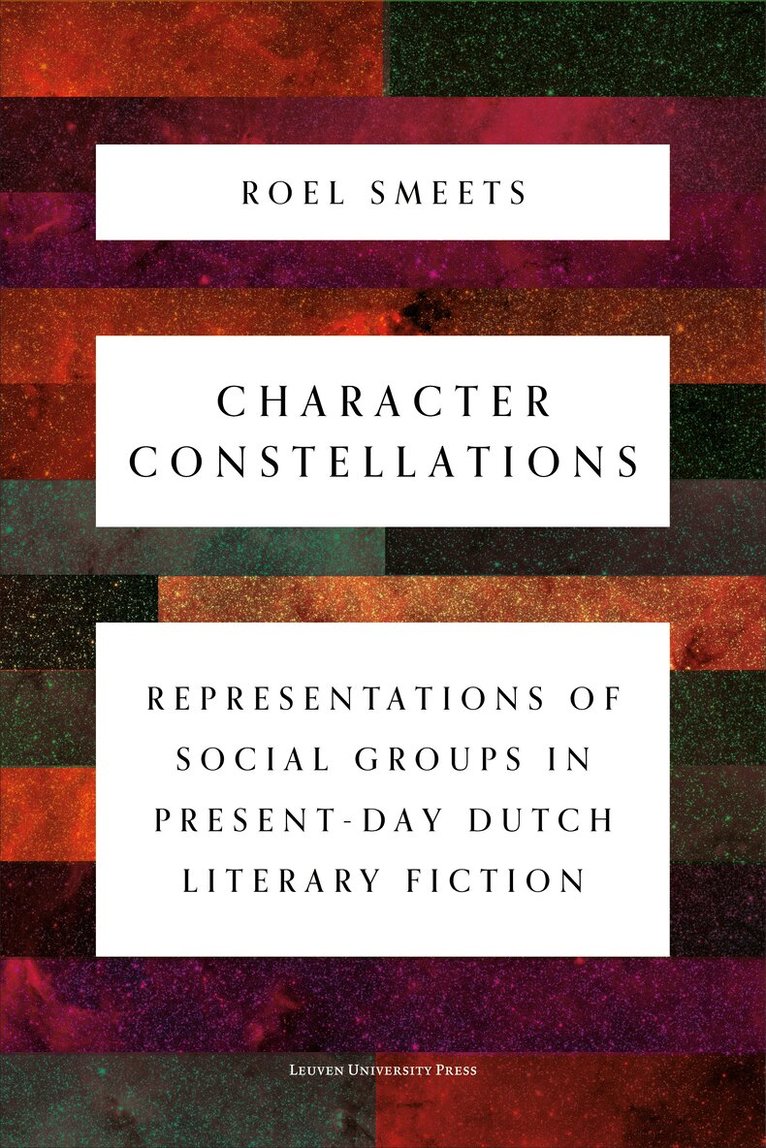
    Character Constellations

    Representations of Social Groups in Present-Day Dutch Literary Fiction

    AvRoel Smeets

    Häftad, Engelska, 2021

    447 kr

    Beställningsvara. Skickas inom 5-8 vardagar. Fri frakt över 249 kr.

    Beskrivning

    Fiction has a major social impact, not least because it co-shapes the image that society has of various social groups. Drawing on a collection of 170 contemporary Dutch-language novels, Character Constellations presents a range of data-driven, statistical models to study depictions of characters in terms of gender, race, ethnicity, class, age, sexuality, and other identity categories. Incorporating the tools of network analysis, each chapter highlights an aspect of fictional social networks that affects the representation of social groups: their centrality, their communities, and their conflicts. While reading individual novels in light of emerging statistical patterns, combining the formal methods of social network analysis with the interpretive tools of narratology, this study shows how central societal themes such as (in)equality and emancipation, integration and segregation, and social mobility and class struggle are foregrounded, replicated, or distorted in the Dutch novel.Showcasing what character-based critiques of literary representation gain by integrating data-driven methods into the practice of critical close reading, Character Constellations contributes to societal debates on cultural representation and identity and the role fiction and art have in those debates.

    Produktinformation

    • Utgivningsdatum:2021-11-15
    • Mått:156 x 234 x 13 mm
    • Vikt:395 g
    • Format:Häftad
    • Språk:Engelska
    • Antal sidor:252
    • Förlag:Leuven University Press
    • ISBN:9789462702950
    • Utmärkelser:Winner of OSL Awards 2021

    Utforska kategorier

    • Sociala grupper och identitet inom Samhälle och politik
    • Litteraturvetenskap inom Skönlitteratur
    • Litteraturteori inom Skönlitteratur

    Mer om författaren

    Roel Smeets is assistant professor of modern literature and digital culture at Radboud University Nijmegen.

    Innehållsförteckning

    • Chapter 1: Introduction 1.1 Introduction: Character Constellations 1.1.1 Example: Character Constellations in Joost Zwagerman’s De buitenvrouw (1994) and Robert Vuijsje’s Alleen maar nette mensen (2008) 1.1.2 Delineation of the Study and Research Question 1.1.3 Character Studies 1.1.4 Characterization and Character Types 1.1.5 The One Versus the Many 1.2. Critique of Representation 1.2.1 Representation and Ideology 1.2.2 Critiques of Representation in Dutch Literature 1.3. Cultural Analytics 1.3.1 Debates on Distant versus Close Reading 1.3.2 Modeling in Cultural Analytics 1.4 Methodological Background 1.4.1 Tools: Narratology and Network Analysis 1.4.2 Corpus and Data 1.4.3 Previous Research on Corpus and Dataset 1.5 Structure of the Book and Instruction for Reading Chapter 2: Data 2.1 Introduction: Descriptive Statistics 2.2 Information on the Authors 2.3 Demographic Metadata on the Characters 2.4 (In)Dependence of Variables 2.5 Relational Information 2.6 Interpretation of Descriptive Statistics Chapter 3: Centrality 3.1 Introduction: Narrative Cornerstones 3.2 Centrality in Network Theory 3.3 Centrality in Narratology 3.4 Method for Extracting Character Networks 3.4.1 Characters as Nodes 3.4.2 Character Relations as Edges 3.4.3 Automatic Extraction of Character Networks 3.5 Model I: Character Rankings 3.5.1 Results Multiple Regression Analysis 3.5.2 Close Reading: Centrality, Gender, and Descent in Özcan Akyol’s Eus (2012) 3.6 Conclusion to this Chapter Chapter 4: Community 4.1 Introduction: Narrative Connections 4.2 Community in Network Theory 4.2.1 Community Detection 4.2.2 Homophily 4.3 Community in Narratology 4.3.1 Syntagmatic and Paradigmatic Collectives 4.3.2 Dialogic Interaction and Polyphony 4.4 Model I: Community Detection 4.4.1 Clauset-Newman-Moore and Girvan-Newman Algorithms 4.4.2 Kernighan-Lin Bisection Algorithm 4.4.3 Close Reading: Communities in Philip Huff ’s Niemand in de stad (2012) 4.5 Model II: Homophily 4.5.1 Dyad Assortativity 4.5.2 Close Reading: Homophily in Mensje van Keulen’s Liefde heeft geen hersens (2012) 4.6 Conclusion to this Chapter Chapter 5: Conflict 5.1 Introduction: Narrative Clashes 5.2 Conflict in Network Theory 5.3 Conflict in Narratology 1 5.4 Model I: Hierarchies in One-on-one Conflicts 5.4.1 Conflict Scores 5.4.2 Results of Multiple Linear Regression 5.4.3 Close Reading: Class Conflicts between Two Characters in Bart Koubaa’s De Brooklynclub (2012) 5.5 Model II: Social Balance in Triangular Conflicts 5.5.1 Automatic Modeling of Social Balance in Enemy/Friend triads 5.5.2 Social Balance in Leon de Winter’s VSV, of daden van onbaatzuchtigheid 5.5.3 Social Imbalance in Tommy Wieringa’s Dit zijn de namen 5.6 Conclusion to this Chapter Chapter 6: Conclusion 6.1 Findings of the Book 6.2 Public Debates on Literary Representation 6.3 Future Research Appendix A: Statistical tests Appendix B: Distribution of Relational Roles Appendix C: Main and Interaction Effects Appendix D: Pearson Correlations Notes References