• Fri frakt över 249 kr
  • •
  • Snabba leveranser
  • •
  • Billiga böcker
Kundservice

Du är på sajten för privatpersoner.

Företag, bibliotek eller offentlig verksamhet?

Du handlar på classic.bokus.com, där alla dina funktioner finns intakta.
Till classic.bokus.com
Bokus logotyp. Gå till startsidan.
  • Erbjudanden
  • Nyheter
  • Student
  • Topplistor
  • Barn & ungdom
  • Bokus Play
  • E-böcker
  • Pocketböcker
  • Spel & pussel

10% rabatt på allt med kod NYSTART10 →

Sidfot

Mina sidor

    Hjälp

    • Kundservice
    • Vanliga frågor och svar
    • Frakt och leverans
    • Retur vid ångerrätt
    • Reklamera vara
    • Betalning
    • Köpvillkor
    • Allmänna villkor
    • Information om webbplatsens tillgänglighet

    Om Bokus

    • Om oss
    • Pressrum
    • För studenter
    • För företag
    • För bibliotek och offentlig verksamhet
    • För leverantörer
    • Hållbarhet

    Populärt

    • Aktuella erbjudanden
    • Presentkort
    • Studentlitteratur
    • Nya böcker
    • Topplistor
    • Signerade böcker
    • Engelska böcker

    Inspiration

    • Boktips
    • BookTok
    • Populära bokserier
    • Barnbokskaraktärer
    • Populära författare
    Logotyp för Bokus
    Följ oss på Facebook (extern länk)Följ oss på Instagram (extern länk)Följ oss på YouTube (extern länk)Följ oss på TikTok (extern länk)
    bokus @ CookiesAnpassa cookiesIntegritetspolicyKöpvillkor
    Till Citymail hemsida (extern länk)Till Budbee hemsida (extern länk)Till Postnord hemsida (extern länk)Till Schenker hemsida (extern länk)Till Early Bird hemsida (extern länk)Till Walleys hemsida (extern länk)
    1. Historia och arkeologi
    2. Arkeologi

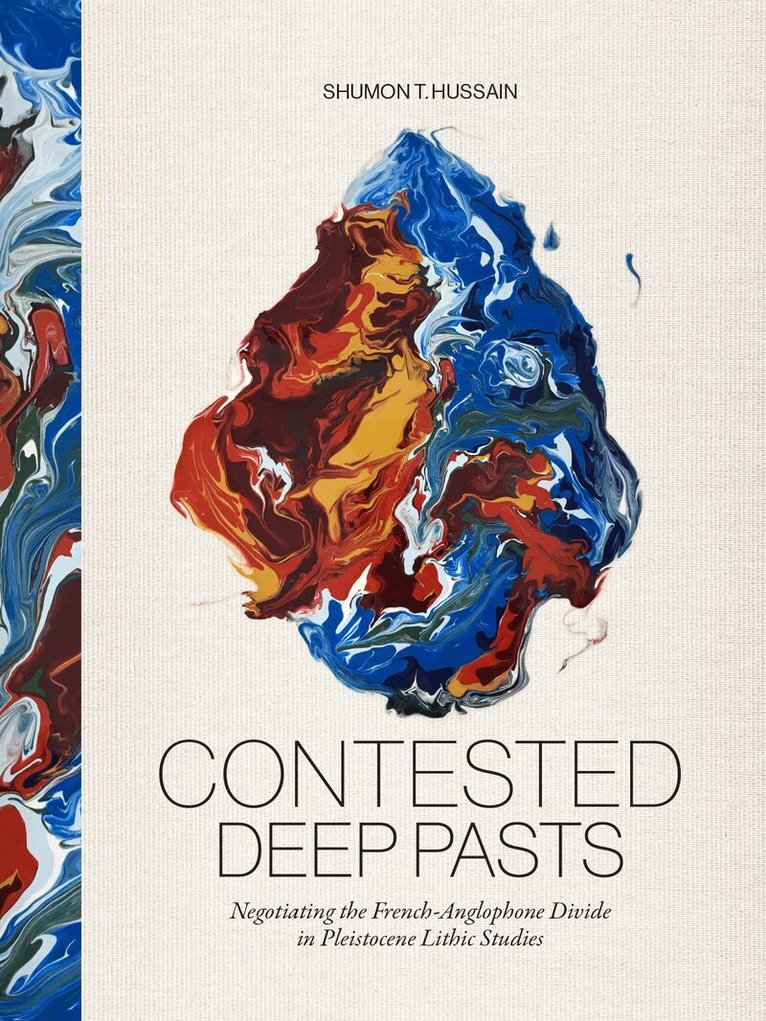
    Contested Deep Pasts

    Negotiating the French-Anglophone Divide in Pleistocene Lithic Studies

    AvShumon T. Hussain

    Inbunden, Engelska, 2026

    2 353 kr

    Kommande

    Fler format och utgåvor

    Häftad

    Kommande

    Beskrivning

    This book offers the first in-depth analysis of French-Anglophone research conflicts in Palaeolithic archaeology. By carefully examining a range of case studies and discursive contexts, the author shows that French and Anglophone approaches to the lithic evidence are anchored in opposing cognitive frameworks. The mainstays of this division are outlined by drawing on the work of American philosopher Stephen C. Pepper, who captured the totality of credible Western thought in terms of four equitable world hypotheses. The book demonstrates that French lithic research gravitates towards contextualistic and organicistic modes of inquiry, whereas Anglophone approaches tend to rely on formistic and mechanistic modes of inquiry. The implications of this difficult condition for mutual understanding and critical practice are explored and it is argued that the French-Anglophone divide can only be satisfactorily navigated if practitioners endorse scientific pluralism, cultivate a more reflexive stance towards their own work, and begin to seriously take into consideration the strengths and shortcomings of different cognitive frameworks. While the book seeks to clarify the methodological, theoretical and epistemological landscape of Palaeolithic stone artefact analysis and will therefore be of a key source for lithic specialists, it may also be of interest for a broader readership from Science and Technology Studies (STS), the history and philosophy of science, and nascent interdisciplinary science studies.

    Produktinformation

    • Utgivningsdatum:2026-02-28
    • Mått:210 x 280 x undefined mm
    • Format:Inbunden
    • Språk:Engelska
    • Antal sidor:380
    • Förlag:Sidestone Press
    • ISBN:9789464281125

    Utforska kategorier

    • Arkeologi inom Historia och arkeologi
    • Forntidens historia inom Historia och arkeologi
    • Europas historia inom Historia och arkeologi

    Mer om författaren

    Shumon T. Hussain is a transdisciplinary archaeologist with a research focus on Late Pleistocene and Early Holocene foragers, especially their stone artefact technologies and animal relationships. He is broadly interested in theoretical innovation and synthesis beyond archaeology as a disciplinary specialism, to better integrate data and perspectives across the humanities and sciences vis-à-vis question of the human deep past, and the epistemology and practice of science. He is currently based at the University of Cologne, Germany, where he is a senior researcher and lecturer at the newly established research hub MESH – Multidisciplinary Environmental Studies in the Humanities.

    Innehållsförteckning

    • AcknowledgementsAuthor’s prefaceForeword by Raymond CorbeyTerminology, definitions and key conceptsIntroductionChapter 1: The clash between French and Anglophone lithic research in Palaeolithic archaeology1.1 The problem of lithic knowledge1.2 The French-Anglophone divide1.3 Critical practice beyond partisanshipChapter 2: Pepper’s four world hypotheses as a new framework to examine the French-Anglophone divide2.1 Why Pepper?2.2 The landscape of Western thought2.3 Root metaphor theory2.4 Four distinct ways of marshalling evidence2.5 Affinities and trade-offs between world hypotheses2.6 The problem of knowledge corroboration2.7 Finding utility in world hypothesesChapter 3: The French-Anglophone divide and the analytic-synthetic polarity of world theories3.1 Pepper applied: a new hypothesis3.2 The structure of the French-Anglophone divide reconsideredChapter 4: Analyticity unpacked – Anglophone approaches between formism and mechanism4.1 Tropes of formism in Anglophone practice4.2 Tropes of mechanism in Anglophone practiceChapter 5: Syntheticity unpacked – French approaches between contextualism and organicism5.1 Tropes of contextualism in French practice5.2 Tropes of organicism in French practiceChapter 6: Conceptual equivocality, pluralism and critical practice at the French-Anglophone boundary6.1 A review of main findings and arguments6.2 Towards a new understanding of time-honoured problems6.3 The epistemological status of the divide6.4 A call for pluralism in lithic research6.5 The art of criticism6.6 Future perspectives: exploiting the world hypotheses interfaceEpilogueFAQBibliographyElectronic Appendix