Inbunden, Engelska, 2022
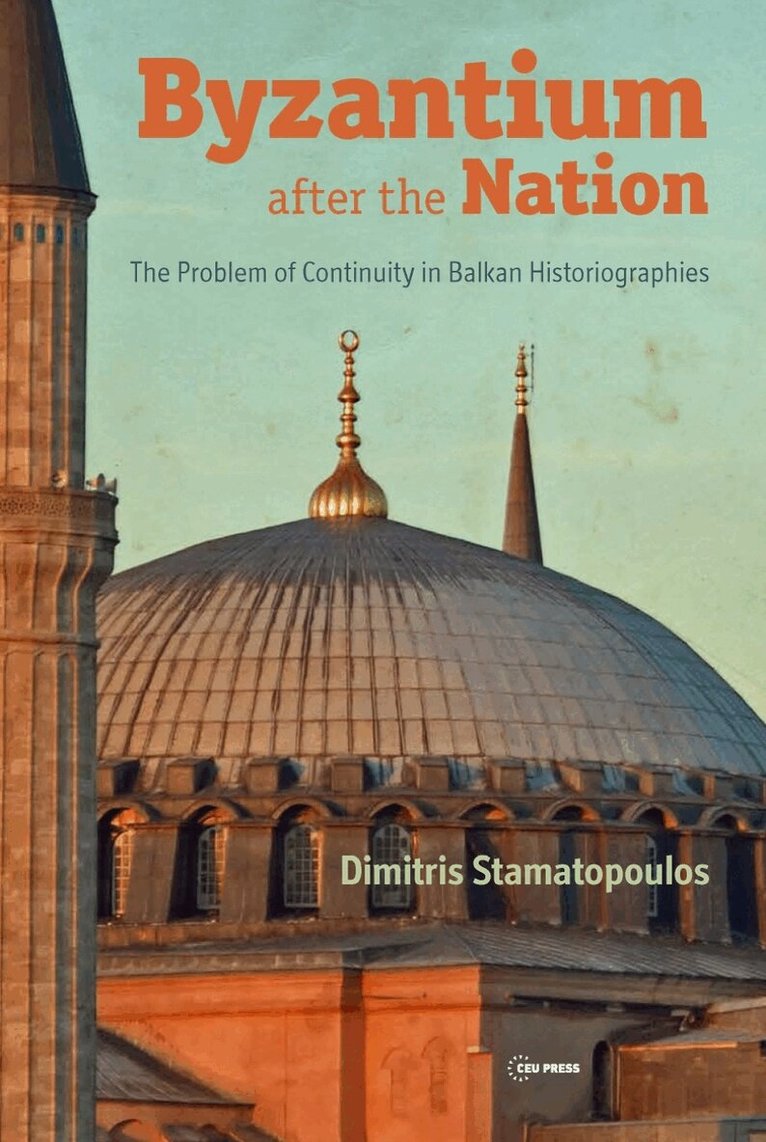
Byzantium after the Nation
The Problem of Continuity in Balkan Historiographies
2129 kr
Beställningsvara. Skickas inom 10-15 vardagar. Fri frakt över 249 kr.
Beskrivning
Produktinformation
- Utgivningsdatum: 2022-11-15
- Mått: 152 x 229 x 30 mm
- Vikt: 750 g
- Format: Inbunden
- Språk: Engelska
- Antal sidor: 410
- Förlag: Central European University Press
- ISBN: 9789633863077
Utforska kategorier
Mer om författaren
Dimitris Stamatopoulos is Associate Professor at the Department of Balkan, Slavic and Oriental Studies, University of Macedonia, Thessaloniki, Greece.
Recensioner i media
"It is the signal achievement of Dimitris Stamatopoulos’s Byzantium after the Nation to have excavated a nineteenth-century counter-tradition of imperial, ecumenist ‘historiographical divergences’ from ‘the national historiographical canon’. A revised translation of a study first published in Greek some fifteen years ago, Stamatopoulos’s work remains fresh and surprising. His study is exemplary in its careful reconstruction of the worldviews of late imperial intellectuals whose contributions have been submerged by the creation of national schools. It is also exemplary in its refusal to draw an absolute distinction between imperialism and nationalism in the late nineteenth and early twentieth centuries. A major step forward in the project of a critical historiography of Byzantine studies."https://academic.oup.com/ehr/advance-article/doi/10.1093/ehr/ceae159/7742107
Betyg & recensioner
0 recensioner
Inga recensioner tillgängliga.