• Fri frakt över 249 kr
  • •
  • Snabba leveranser
  • •
  • Billiga böcker
Kundservice

Du är på sajten för privatpersoner.

Företag, bibliotek eller offentlig verksamhet?

Du handlar på classic.bokus.com, där alla dina funktioner finns intakta.
Till classic.bokus.com
Bokus logotyp. Gå till startsidan.
  • Erbjudanden
  • Nyheter
  • Student
  • Topplistor
  • Barn & ungdom
  • Bokus Play
  • E-böcker
  • Pocketböcker
  • Spel & pussel

10% rabatt på allt med kod: NYSTART10 →

Sidfot

Mina sidor

    Hjälp

    • Kundservice
    • Vanliga frågor och svar
    • Frakt och leverans
    • Retur vid ångerrätt
    • Reklamera vara
    • Betalning
    • Köpvillkor
    • Allmänna villkor
    • Information om webbplatsens tillgänglighet

    Om Bokus

    • Om oss
    • Pressrum
    • För studenter
    • För företag
    • För bibliotek och offentlig verksamhet
    • För leverantörer
    • Hållbarhet

    Populärt

    • Aktuella erbjudanden
    • Presentkort
    • Studentlitteratur
    • Nya böcker
    • Topplistor
    • Signerade böcker
    • Engelska böcker

    Inspiration

    • Boktips
    • BookTok
    • Populära bokserier
    • Barnbokskaraktärer
    • Populära författare
    Logotyp för Bokus
    Följ oss på Facebook (extern länk)Följ oss på Instagram (extern länk)Följ oss på YouTube (extern länk)Följ oss på TikTok (extern länk)
    bokus @ CookiesAnpassa cookiesIntegritetspolicyKöpvillkor
    Till Citymail hemsida (extern länk)Till Budbee hemsida (extern länk)Till Postnord hemsida (extern länk)Till Schenker hemsida (extern länk)Till Early Bird hemsida (extern länk)Till Walleys hemsida (extern länk)
    1. Samhälle och politik
    2. Samhälle och kultur
    3. Sociala och etiska frågor
    4. Migration

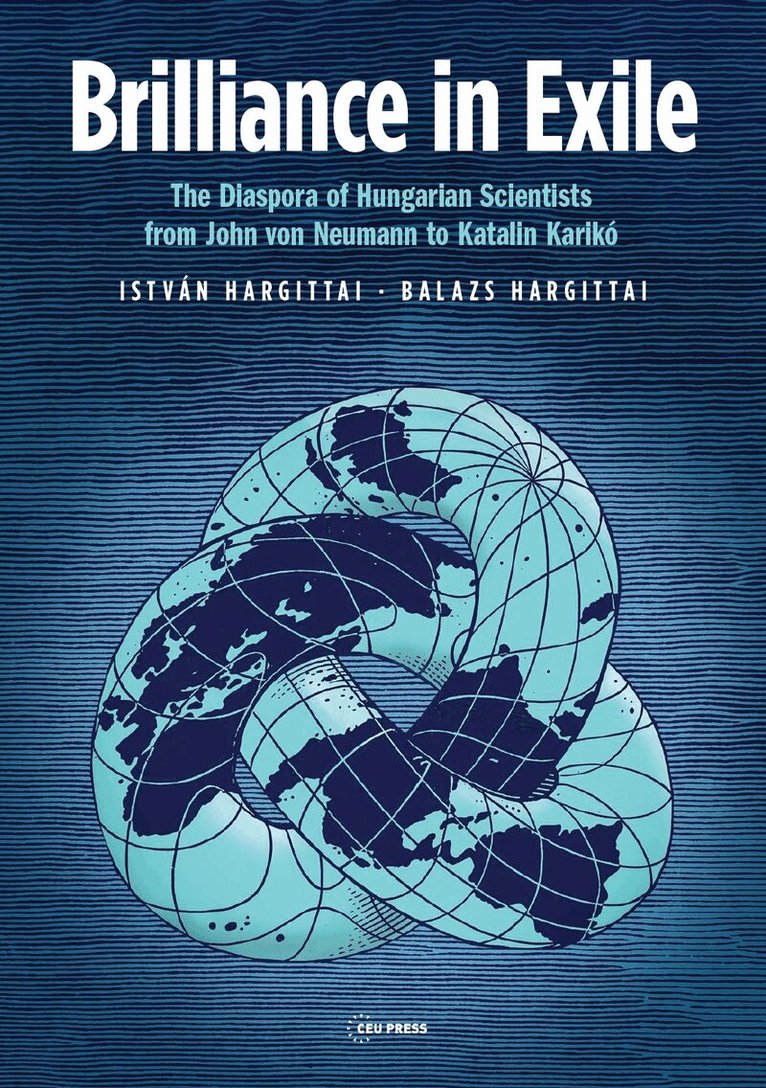
    Brilliance in Exile

    The Diaspora of Hungarian Scientists from John von Neumann to Katalin Karikó

    AvIstván Hargittai,Balazs Hargittai

    Inbunden, Engelska, 2023

    1 914 kr

    Beställningsvara. Skickas inom 10-15 vardagar. Fri frakt över 249 kr.

    Fler format och utgåvor

    Häftad

    379 kr

    Beskrivning

    By addressing the enigma of the exceptional success of Hungarian emigrant scientists and telling their life stories, Brilliance in Exile combines scholarly analysis with fascinating portrayals of uncommon personalities. István and Balazs Hargittai discuss the conditions that led to five different waves of emigration of scientists from the early twentieth century to the present. Although these exodes were driven by a broad variety of personal motivations, the attraction of an open society with inclusiveness, tolerance, and – needless to say – better circumstances for working and living, was the chief force drawing them abroad. While emigration from East to West is a general phenomenon, this book explains why and how the emigration of Hungarian scientists is distinctive. The high number of Nobel Prizes among this group is only one indicator. Multicultural tolerance, a quickly emerging, considerably Jewish, urban middle class, and a very effective secondary school system were positive legacies of the Austro-Hungarian Monarchy. Multiple generations, shaped by these conditions, suffered from the increasingly exclusionist, intolerant, antisemitic, and economically stagnating environment, and chose to go elsewhere. “I would rather have roots than wings, but if I cannot have roots, I shall use wings," explained Leo Szilard, one of the fathers of the Atom Bomb.

    Produktinformation

    • Utgivningsdatum:2023-03-15
    • Mått:152 x 229 x 26 mm
    • Vikt:652 g
    • Format:Inbunden
    • Språk:Engelska
    • Antal sidor:342
    • Förlag:Central European University Press
    • ISBN:9789633866252

    Utforska kategorier

    • Migration inom Samhälle och politik
    • Biografier inom Biografier
    • Naturvetenskapens historia inom Naturvetenskap och teknik

    Mer om författaren

    Istvan Hargittai, PhD, DSc, is a physical chemist, Professor Emeritus (active) of the Budapest University of Technology and Economics. Balazs Hargittai, PhD (University of Minnesota), is an organic chemist, Professor of Chemistry of Saint Francis University, Loretto, Pennsylvania. Ivan T. Berend is Distinguished Research Professor at the History Department of the University of California Los Angeles.

    Recensioner i media

    "Countless books have been written about Hungarian émigrés, and not just about the Martians but also about individual figures, generations, and the general climate of the country. What makes this volume special is its systematicity, treating all these waves in one volume and making it accessible to many readers. The book also provides few clues about the most important questions. Why have Hungarian scientists been so successful? And how was such a small country able to produce such a vast number of intellectuals and scholars that revolutionized physics, chemistry, biology, mathematics, and technological innovations?"http://www.h-net.org/reviews/showrev.php

    Innehållsförteckning

    • ForewordIvan T. BerendIntroductionPrefaceJoseph A. GalambPhilipp LenardPART I. Early 1920s Introduction: FleeingErvin BauerStephen BrunauerLadislaus FarkasDennis GaborGeorge de HevesyTheodore von KármánArthur KoestlerStephen W. KufflerNicholas KurtiCornelius LanczosJohn von NeumannEgon OrowanMichael PolanyiGeorge PólyaElizabeth RonaLeo SzilardMaria TelkesEdward TellerEugene P. Wigner“Control” – Imre BródyPART II. Late 1930s – Early 1940sIntroduction: Before It Is Too LateMichael and Alice BalintLadislao José BiroPaul ErdosJohn G. KemenyOlga KennardPeter D. LaxGeorge J. PopjakValentine L. TelegdiLaszlo TiszaPart III. Immediate Post-World War IIIntroduction: Post-War and Pre-Soviet Trauma,Endre A. BalazsZoltan BayGeorg von BékésyLars ErnsterJohn C. HarsanyiAvram HershkoGeorg and Eva KleinAlbert Szent-GyörgyiPart IV. 1956Introduction: In the Wake of Suppressed RevolutionLaszlo Z. BitoAndy GrovePeter LengyelJoseph NagyvaryGeorge A. OlahGabor A. SomorjaiPart V. 1957‒1989Introduction: Escape from “Paradise” Gyorgy BuzsakiGabor FodorKatalin KarikóCharles SimonyiAgnes Ullmann“Control”—Árpád FurkaConclusionThirty Years Later, and ContinuingAcknowledgmentsBibliographyIndex of Names