• Fri frakt över 249 kr
  • •
  • Snabba leveranser
  • •
  • Billiga böcker
Kundservice

Du är på sajten för privatpersoner.

Företag, bibliotek eller offentlig verksamhet?

Du handlar på classic.bokus.com, där alla dina funktioner finns intakta.
Till classic.bokus.com
Bokus logotyp. Gå till startsidan.
  • Erbjudanden
  • Nyheter
  • Student
  • Topplistor
  • Barn & ungdom
  • Bokus Play
  • E-böcker
  • Pocketböcker
  • Spel & pussel

10% rabatt på allt med kod NYSTART10 →

Sidfot

Mina sidor

    Hjälp

    • Kundservice
    • Vanliga frågor och svar
    • Frakt och leverans
    • Retur vid ångerrätt
    • Reklamera vara
    • Betalning
    • Köpvillkor
    • Allmänna villkor
    • Information om webbplatsens tillgänglighet

    Om Bokus

    • Om oss
    • Pressrum
    • För studenter
    • För företag
    • För bibliotek och offentlig verksamhet
    • För leverantörer
    • Hållbarhet

    Populärt

    • Aktuella erbjudanden
    • Presentkort
    • Studentlitteratur
    • Nya böcker
    • Topplistor
    • Signerade böcker
    • Engelska böcker

    Inspiration

    • Boktips
    • BookTok
    • Populära bokserier
    • Barnbokskaraktärer
    • Populära författare
    Logotyp för Bokus
    Följ oss på Facebook (extern länk)Följ oss på Instagram (extern länk)Följ oss på YouTube (extern länk)Följ oss på TikTok (extern länk)
    bokus @ CookiesAnpassa cookiesIntegritetspolicyKöpvillkor
    Till Citymail hemsida (extern länk)Till Budbee hemsida (extern länk)Till Postnord hemsida (extern länk)Till Schenker hemsida (extern länk)Till Early Bird hemsida (extern länk)Till Walleys hemsida (extern länk)
    1. Data och IT
    2. Programmeringsböcker

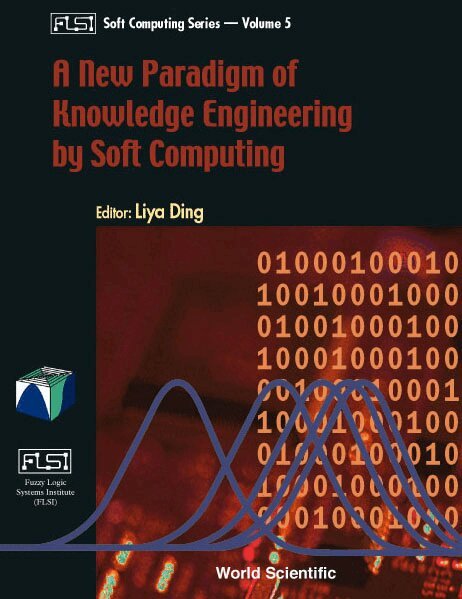
    NEW PARADIGM OF KNOWLEDGE ENGINEERING BY SOFT COMPUTING, A

    AvDING LIYA,Liya Ding

    Inbunden, Engelska, 2001

    Del 5 i serien FUZZY LOGIC SYSTEMS INSTITUTE (FLSI) SOFT COMPUTING SERIES

    2 625 kr

    Tillfälligt slut

    Beskrivning

    Soft computing (SC) consists of several computing paradigms, including neural networks, fuzzy set theory, approximate reasoning, and derivative-free optimization methods such as genetic algorithms. The integration of those constituent methodologies forms the core of SC. In addition, the synergy allows SC to incorporate human knowledge effectively, deal with imprecision and uncertainty, and learn to adapt to unknown or changing environments for better performance. Together with other modern technologies, SC and its applications exert unprecedented influence on intelligent systems that mimic human intelligence in thinking, learning, reasoning, and many other aspects.Knowledge engineering (KE), which deals with knowledge acquisition, representation, validation, inferencing, explanation, and maintenance, has made significant progress recently, owing to the indefatigable efforts of researchers. Undoubtedly, the hot topics of data mining and knowledge/data discovery have injected new life into the classical AI world.This book tells readers how KE has been influenced and extended by SC and how SC will be helpful in pushing the frontier of KE further. It is intended for researchers and graduate students to use as a reference in the study of knowledge engineering and intelligent systems. The reader is expected to have a basic knowledge of fuzzy logic, neural networks, genetic algorithms, and knowledge-based systems.

    Produktinformation

    • Utgivningsdatum:2001-03-12
    • Mått:156 x 223 x 41 mm
    • Vikt:685 g
    • Format:Inbunden
    • Språk:Engelska
    • Serie:FUZZY LOGIC SYSTEMS INSTITUTE (FLSI) SOFT COMPUTING SERIES
    • Antal sidor:388
    • Förlag:World Scientific Publishing Co Pte Ltd
    • ISBN:9789810245177

    Utforska kategorier

    • Programmeringsböcker inom Data och IT
    • Programvaruutveckling inom Data och IT
    • Systemvetenskap och AI inom Data och IT

    Innehållsförteckning

    • Knowledge engineering and soft computing - an introduction, L.-Y. Ding. Part 1 Fuzzy knowledge-based systems: linguistic integrity - a framework for fuzzy modelling, AFRELI algorithm, J. Espinosa and J. Vandewalle; a new approach to acquisition of comprehensible fuzzy rules, H. Ohno and T. Furuhashi; fuzzy rule generation with fuzzy singleton-type reasoning method, Y. Shi and M. Mizumoto; antecedent validity adaptation principle for table look-up scheme, P.-T. Chan and A.B. Rad; fuzzy spline interpolation in sparse fuzzy rule bases, M.F. Kawaguchi and M. Miyakoshi; revision principles applied for approximate reasoning, L.-Y. Ding et al; handling null queries with compound fuzzy attributes, S.-L. Wang and Y.-J. Tsai; fuzzy system description language, K. Otsuka et al. Part 2 Knowledge representation, integration and discovery by soft computing: knowledge representation and similarity measures in learning a vague legal concept, M.Q. Xu et al; trend fuzzy sets and recurrent fuzzy rules for ordered dataset modelling, J.F. Baldwin et al; approaches to the design of classification systems from numerical data and linguistic knowledge, H. Ishibuchi et al; a clustering based on self-organizing map and knowledge discovery by neural network, K. Nakagawa et al; probabilistic rough induction, J.-Z. Dong et al; data mining via linguistic summaries of databases - an interactive approach, J. Kacprzyk and S. Zadrozny. (Part contents).