• Fri frakt över 249 kr
  • •
  • Snabba leveranser
  • •
  • Billiga böcker
Kundservice

Du är på sajten för privatpersoner.

Företag, bibliotek eller offentlig verksamhet?

Du handlar på classic.bokus.com, där alla dina funktioner finns intakta.
Till classic.bokus.com
Bokus logotyp. Gå till startsidan.
  • Erbjudanden
  • Nyheter
  • Student
  • Topplistor
  • Barn & ungdom
  • Bokus Play
  • E-böcker
  • Pocketböcker
  • Spel & pussel

10% rabatt på allt med kod: NYSTART10 →

Sidfot

Mina sidor

    Hjälp

    • Kundservice
    • Vanliga frågor och svar
    • Frakt och leverans
    • Retur vid ångerrätt
    • Reklamera vara
    • Betalning
    • Köpvillkor
    • Allmänna villkor
    • Information om webbplatsens tillgänglighet

    Om Bokus

    • Om oss
    • Pressrum
    • För studenter
    • För företag
    • För bibliotek och offentlig verksamhet
    • För leverantörer
    • Hållbarhet

    Populärt

    • Aktuella erbjudanden
    • Presentkort
    • Studentlitteratur
    • Nya böcker
    • Topplistor
    • Signerade böcker
    • Engelska böcker

    Inspiration

    • Boktips
    • BookTok
    • Populära bokserier
    • Barnbokskaraktärer
    • Populära författare
    Logotyp för Bokus
    Följ oss på Facebook (extern länk)Följ oss på Instagram (extern länk)Följ oss på YouTube (extern länk)Följ oss på TikTok (extern länk)
    bokus @ CookiesAnpassa cookiesIntegritetspolicyKöpvillkor
    Till Citymail hemsida (extern länk)Till Budbee hemsida (extern länk)Till Postnord hemsida (extern länk)Till Schenker hemsida (extern länk)Till Early Bird hemsida (extern länk)Till Walleys hemsida (extern länk)
    1. Naturvetenskap och teknik
    2. Teknik och industri
    3. Elektronik och kommunikationer

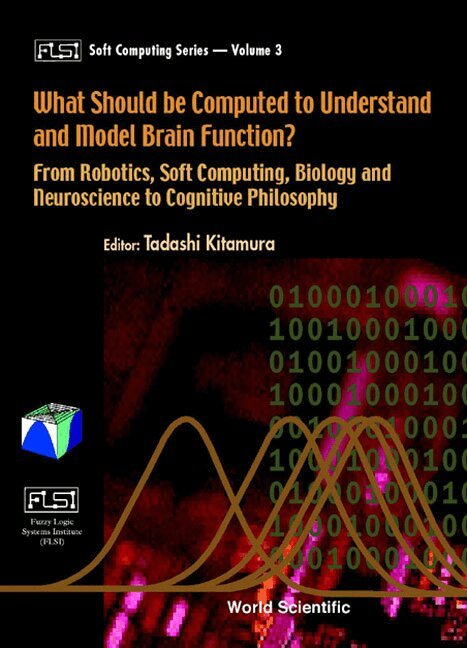
    What Should Be Computed To Understand And Model Brain Function?: From Robotics, Soft Computing, Biology And Neuroscience To Cognitive Philosophy

    AvKITAMURA TADASHI,Tadashi Kitamura

    Inbunden, Engelska, 2001

    Del 3 i serien Fuzzy Logic Systems Institute (Flsi) Soft Computing Series

    2 139 kr

    Tillfälligt slut

    Beskrivning

    This volume is a guide to two types of transcendence of academic borders which seem necessary for understanding and modelling brain function. The first type is technical transcendence needed to make intelligent machines such as a humanoid robot, an animal-like behavior architecture, an interpreter of fiction, and an evolving learning machine. This technical erosion is conducted into areas such as biology, ethology, neuroscience and psychology, as well as robotics and soft computing. The second type of transcendence of cross-disciplinary boundaries cuts across scientific areas such as biology and cognitive science/philosophy, into comprehensive, less technical and more abstract aspects of brain function. These aspects enable us to know in what direction and how far an intelligent machine will go.

    Produktinformation

    • Utgivningsdatum:2001-03-01
    • Mått:161 x 223 x 23 mm
    • Vikt:585 g
    • Format:Inbunden
    • Språk:Engelska
    • Serie:Fuzzy Logic Systems Institute (Flsi) Soft Computing Series
    • Antal sidor:324
    • Förlag:World Scientific Publishing Co Pte Ltd
    • ISBN:9789810245184

    Utforska kategorier

    • Elektronik och kommunikationer inom Naturvetenskap och teknik
    • Artificiell intelligens inom Data och IT

    Innehållsförteckning

    • Consideration of emotion model and primitive language of robots, T. Ogata and S. Sugano; an architecture for animal-like behaviour selection, T. Kitamura; a computation literary theory -the ultimate products of the brain/mind machine, A. Tokosumi; cooperation between neural networks within the brain, M. Dufosse et al; brain-like functions in evolving connectionist systems for on-line, knowledge-based learning, N. Kasabov; interrelationships, communication, semiotics and artificial consciousness, H.-N.L. Teodorescu; time emerges from incomplete clock, based on internal measurement, Y.-P. Gunji et al; the logical jump in shell changing in hermit crab and tool experiment in ants, M. Kitabayashi et al; the neurobiology of semantics - how can machines be designed to have meanings, W.J. Freeman; the emergence of contentful experience, M.H. Bickhard; intentionality and foundations of logic - a new approach to neurocomputation, G. Basti.