Häftad, Engelska, 2019
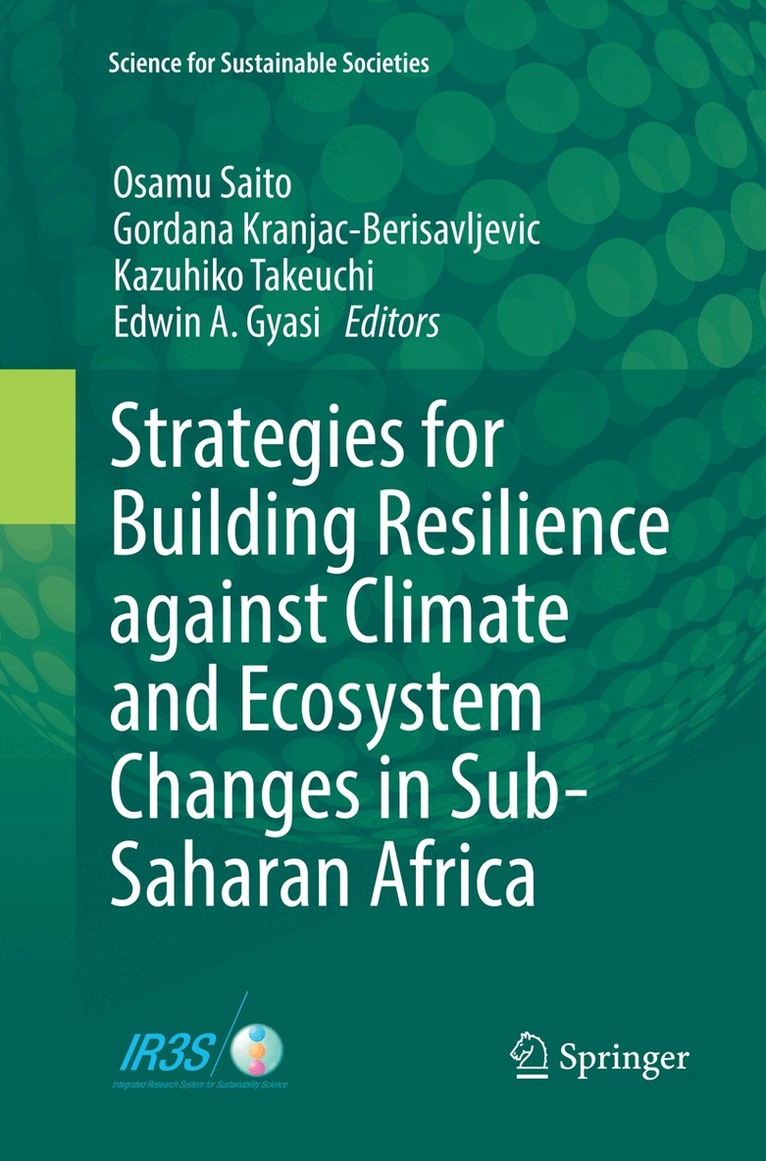
Strategies for Building Resilience against Climate and Ecosystem Changes in Sub-Saharan Africa
Av Osamu Saito, Gordana Kranjac-Berisavljevic, Kazuhiko Takeuchi, Edwin A. Gyasi
1199 kr
Beställningsvara. Skickas inom 11-20 vardagar. Fri frakt över 249 kr.
Beskrivning
This book summarizes studies on climate and ecosystem change adaptation and resilience in Africa (CECAR-Africa), a collaboration with the goal of creating an integrated resilience enhancement strategy as a potential model for semi-arid regions across Sub-Saharan Africa by combining climate change and ecosystem change research. The case studies were conducted at multiple scales – local, national, and regional – and incorporate the natural sciences, social sciences and engineering in a transdisciplinary manner while also integrating the needs of local communities. The book chiefly addresses three thematic areas, namely: Forecast and assessment of climate change impacts on agro-ecosystems; Risk assessment of extreme weather hazards and development of adaptive resource management methods; and Implementing capacity development programs for local leaders and practitioners. The collaborative nature of the project and the use of various quantitative and qualitative research techniques and methods – such as field surveys, questionnaires, focus group discussions, land use and cover change analysis, and climate downscaled modeling – make the book truly unique. Especially at a time when both long-term climate change and short-term extreme weather events such as droughts and floods are worsening, this book offers potential approaches to developing an integrated framework for assessing the local ability to cope with floods and droughts, and for enhancing the resilience of farming communities in developing countries, which are the most vulnerable to these changes and extreme weather events. As such, it will be of interest to a wider audience, including academics, professionals, and government officials alike.
Produktinformation
- Utgivningsdatum: 2019-01-30
- Mått: 155 x 235 x 19 mm
- Vikt: 615 g
- Format: Häftad
- Språk: Engelska
- Serie: Science for Sustainable Societies
- Antal sidor: 343
- Förlag: Springer Verlag, Singapore
- ISBN: 9789811352331
Utforska kategorier
Betyg & recensioner
0 recensioner
Inga recensioner tillgängliga.