• Fri frakt över 249 kr
  • •
  • Snabba leveranser
  • •
  • Billiga böcker
Kundservice

Du är på sajten för privatpersoner.

Företag, bibliotek eller offentlig verksamhet?

Du handlar på classic.bokus.com, där alla dina funktioner finns intakta.
Till classic.bokus.com
Bokus logotyp. Gå till startsidan.
  • Erbjudanden
  • Nyheter
  • Student
  • Topplistor
  • Barn & ungdom
  • Bokus Play
  • E-böcker
  • Pocketböcker
  • Spel & pussel

10% rabatt på allt med kod: NYSTART10 →

Sidfot

Mina sidor

    Hjälp

    • Kundservice
    • Vanliga frågor och svar
    • Frakt och leverans
    • Retur vid ångerrätt
    • Reklamera vara
    • Betalning
    • Köpvillkor
    • Allmänna villkor
    • Information om webbplatsens tillgänglighet

    Om Bokus

    • Om oss
    • Pressrum
    • För studenter
    • För företag
    • För bibliotek och offentlig verksamhet
    • För leverantörer
    • Hållbarhet

    Populärt

    • Aktuella erbjudanden
    • Presentkort
    • Studentlitteratur
    • Nya böcker
    • Topplistor
    • Signerade böcker
    • Engelska böcker

    Inspiration

    • Boktips
    • BookTok
    • Populära bokserier
    • Barnbokskaraktärer
    • Populära författare
    Logotyp för Bokus
    Följ oss på Facebook (extern länk)Följ oss på Instagram (extern länk)Följ oss på YouTube (extern länk)Följ oss på TikTok (extern länk)
    bokus @ CookiesAnpassa cookiesIntegritetspolicyKöpvillkor
    Till Citymail hemsida (extern länk)Till Budbee hemsida (extern länk)Till Postnord hemsida (extern länk)Till Schenker hemsida (extern länk)Till Early Bird hemsida (extern länk)Till Walleys hemsida (extern länk)
    1. Naturvetenskap och teknik
    2. Geovetenskap
    3. Miljövetenskap och miljöpolitik

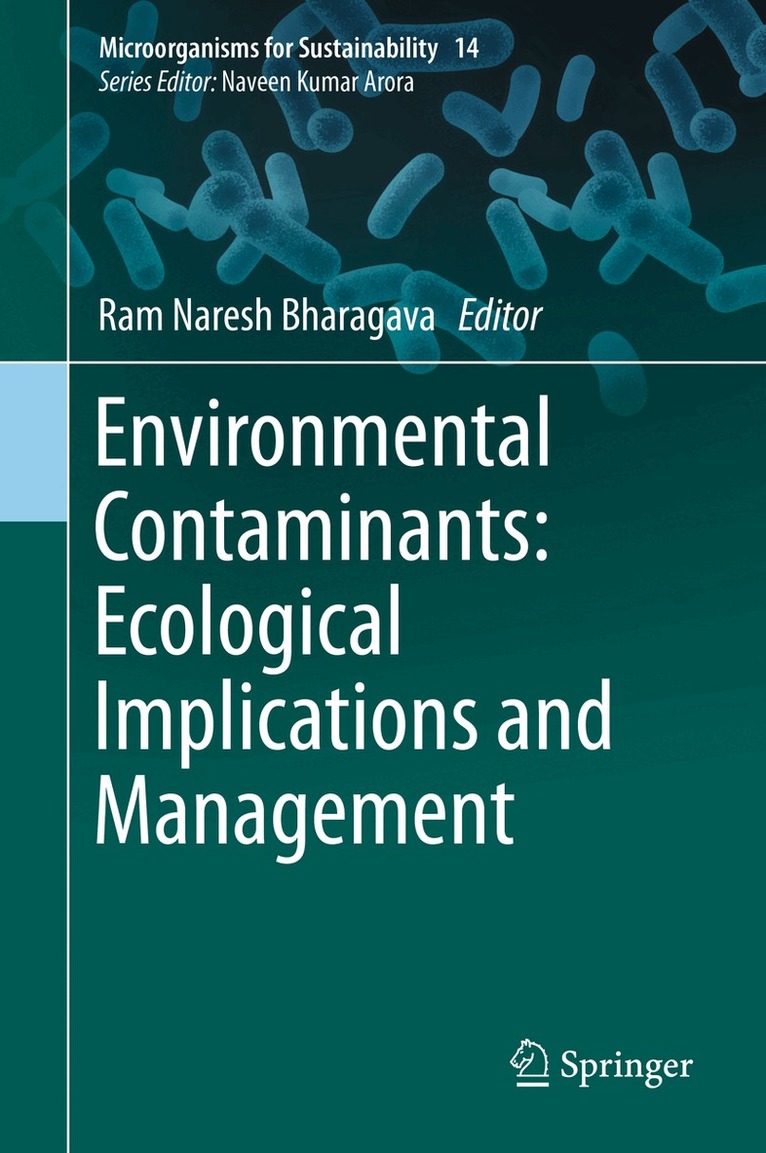
    Environmental Contaminants: Ecological Implications and Management

    AvRam Naresh Bharagava

    Inbunden, Engelska, 2019

    Del 14 i serien Microorganisms for Sustainability

    1 086 kr

    Beställningsvara. Skickas inom 10-15 vardagar. Fri frakt över 249 kr.

    Beskrivning

    As we know, rapid industrialization is a serious concern in the context of a healthy environment. Various physico-chemical and biological approaches for the removal of toxic pollutants are available, but unfortunately these are not very effective. Biological approaches using microorganisms (bacterial/fungi/algae), green plants or their enzymes to degrade/detoxify environmental contaminants such as endocrine disrupting chemicals, toxic metals, pesticides, dyes, petroleum hydrocarbons and phenolic compounds are eco-friendly and low cost. This book provides a much-needed, comprehensive overview of the various types of contaminants, their toxicological effects on the environment, humans, animals and plants as well as various eco-friendly approaches for their management (degradation/detoxification). As such it is a valuable resource for a wide range of students, scientists and researchers in microbiology, biotechnology, environmental sciences.

    Produktinformation

    • Utgivningsdatum:2019-11-18
    • Mått:155 x 235 x 21 mm
    • Vikt:456 g
    • Format:Inbunden
    • Språk:Engelska
    • Serie:Microorganisms for Sustainability
    • Antal sidor:340
    • Förlag:Springer Verlag, Singapore
    • ISBN:9789811379031

    Utforska kategorier

    • Miljövetenskap och miljöpolitik inom Naturvetenskap och teknik
    • Biokemisk teknik inom Naturvetenskap och teknik
    • Miljöteknik inom Naturvetenskap och teknik

    Mer om författaren

    Dr. Ram Naresh Bharagava was born in 1977. He received his B.Sc. degree (1998) in Zoology, Botany and Chemistry from the University of Lucknow, India, and M.Sc. degree (2004) in Molecular Biology and Biotechnology from Govind Ballabh Pant University of Agriculture & Technology (GBPUAT), India. He received his Ph.D. degree (2010) in the area of Microbiology jointly from Environmental Microbiology Division, Council of Scientific and Industrial Research (CSIR)-Indian Institute of Toxicology Research (IITR), Lucknow and Pt. Ravishankar Shukla University, Raipur, Chhattisgarh, India. He was a Junior Research Fellow (JRF) during his Ph.D., and passed the CSIR-National Eligibility Test (NET) twice and the Graduate Aptitude Test in Engineering (GATE) once. He has written one book entitled “Bacterial Metabolism of Melanoidins from distillery Effluent” and edited six books entitled “Bioremediation of Industrial Pollutants”, “Environmental Pollutants and their Bioremediation Approaches”, Ecofriendly and Emerging Approaches for Waste Minimization”, “Recent Trends in Environmental Management and Bioremediation of Industrial Waste for Environmental Safety: Industrial Waste and Its Management (Volume I & II). He has also authored and coauthored numerous research/review papers and two book reviews in respected national and international journals. He has also written several chapters for national and international edited books as well as a number of scientific articles, and has presented papers at national and international con­ferences. Further, he is a reviewer for various national and interna­tional journals. After a postdoctoral appointment at CSIR-IITR, Lucknow, he joined Babasaheb Bhimrao Ambedkar (Central) University, where he is currently an Assistant Professor of Microbiology and actively engaged in teaching at postgraduate and doctoral level as well as research on various Government of India (GOI) sponsored research projects in the field of Environmental Toxicology and Bioremediation. His major areas of research are the biodegradation and bioremediation of environmental pollutants in industrial wastewaters, metagenomics and wastewater microbiology. He is a member of the Academy of Environmental Biology (AEB), Association of Microbiologists of India (AMI), and Biotech Research Society (BRSI), Indian Science Congress Association (ISCA), India.

    Innehållsförteckning

    • 1. Agroindustrial wastes: Environmental toxicology, risks and biological treatment approaches.- 2. Remediation and management of petrochemical polluted sites under climate change conditions.- 3. Phycoremediation: Role of algae in waste management.- 4. Aspects of CO2 injection in geological formations and its risk assessment.- 5. Microbial degradation of polyaromatic hydrocarbons (PAHs).- 6. Splendid role of nanoparticles as antimicrobial agents in wastewater treatment.- 7. Metagenomics for novel enzymes: A Current Perspective.- 8. Cyanobacteria: The ecofriendly tools for the treatment of industrial wastewaters.- 9. Constructed wetlands: a green technology for industrial wastewaters treatment.- 10. Microplastics: A Snapshot on Emerging Environmental Pollutant and their Environmental Impact.- 11. Biosorption of heavy metals: potential and applications of yeast cells for cadmium removal.- 12. Toxic elements in Bangladesh’s drinking water.- 13. Bacterial conversion of waste products into degradable plastics: An inexpensive yet eco-friendly approach.- 14. Treatment of leather industry wastewater and recovery of valuable substances to solve waste management problem in Environment.