• Fri frakt över 249 kr
  • •
  • Snabba leveranser
  • •
  • Billiga böcker
Kundservice

Du är på sajten för privatpersoner.

Företag, bibliotek eller offentlig verksamhet?

Du handlar på classic.bokus.com, där alla dina funktioner finns intakta.
Till classic.bokus.com
Bokus logotyp. Gå till startsidan.
  • Erbjudanden
  • Nyheter
  • Student
  • Topplistor
  • Barn & ungdom
  • Bokus Play
  • E-böcker
  • Pocketböcker
  • Spel & pussel

10% rabatt på allt med kod NYSTART10 →

Sidfot

Mina sidor

    Hjälp

    • Kundservice
    • Vanliga frågor och svar
    • Frakt och leverans
    • Retur vid ångerrätt
    • Reklamera vara
    • Betalning
    • Köpvillkor
    • Allmänna villkor
    • Information om webbplatsens tillgänglighet

    Om Bokus

    • Om oss
    • Pressrum
    • För studenter
    • För företag
    • För bibliotek och offentlig verksamhet
    • För leverantörer
    • Hållbarhet

    Populärt

    • Aktuella erbjudanden
    • Presentkort
    • Studentlitteratur
    • Nya böcker
    • Topplistor
    • Signerade böcker
    • Engelska böcker

    Inspiration

    • Boktips
    • BookTok
    • Populära bokserier
    • Barnbokskaraktärer
    • Populära författare
    Logotyp för Bokus
    Följ oss på Facebook (extern länk)Följ oss på Instagram (extern länk)Följ oss på YouTube (extern länk)Följ oss på TikTok (extern länk)
    bokus @ CookiesAnpassa cookiesIntegritetspolicyKöpvillkor
    Till Citymail hemsida (extern länk)Till Budbee hemsida (extern länk)Till Postnord hemsida (extern länk)Till Schenker hemsida (extern länk)Till Early Bird hemsida (extern länk)Till Walleys hemsida (extern länk)
    1. Djur och Natur
    2. Naturböcker
    3. Växtböcker

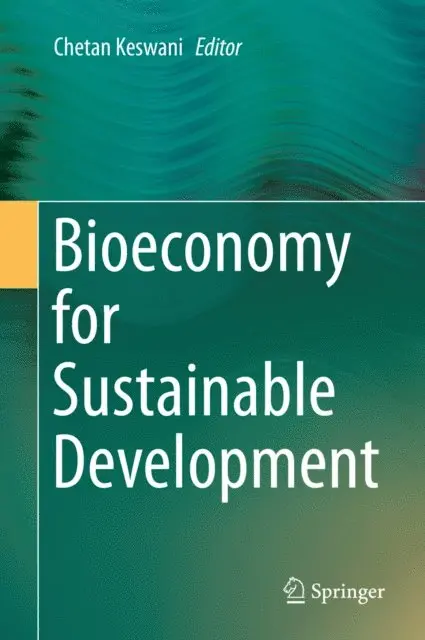
    Bioeconomy for Sustainable Development

    AvChetan Keswani

    Häftad, Engelska, 2020

    1 841 kr

    Beställningsvara. Skickas inom 10-15 vardagar. Fri frakt över 249 kr.

    Beskrivning

    The current era of incredible innovations has made science and technology one of the most powerful tools to meet the goals of incremental prosperity for humans and sustainable development. The development of the biotech industry in any given country is shaped by the characteristics of the technology—particularly its close relation to scientific knowledge—and by country-specific factors—the level and nature of the scientific knowledge base, the institutional set-up, and the role assumed by the government—which influence the country's ability to exploit new opportunities and appropriate the respective results.This book presents an integrated approach for sustained innovation in various areas of biotechnology. Focusing mainly on the industrial, socio-economic and legal implications of biotechnological advances, it examines in detail not only the implications of IPR in omics-based research but also the ethical and intellectual standards and how these can be developed for sustained innovation.Integrating science and business, it offers a peek behind the scenes of the biotech industry and provides a comprehensive analysis of the foundations of the present day industry for students and professionals alike. The book is divided into three parts: Food and Agricultural BiotechnologyIndustrial BiotechnologyPharmaceutical Biotechnology

    Produktinformation

    • Utgivningsdatum:2020-10-25
    • Mått:155 x 235 x 21 mm
    • Vikt:702 g
    • Format:Häftad
    • Språk:Engelska
    • Antal sidor:388
    • Förlag:Springer Verlag, Singapore
    • ISBN:9789811394331

    Utforska kategorier

    • Växtböcker inom Djur och Natur
    • Botanik inom Naturvetenskap och teknik
    • Miljövetenskap och miljöpolitik inom Naturvetenskap och teknik

    Mer om författaren

    Chetan Keswani is a Postdoctoral Fellow at the Department of Biochemistry, Institute of Science, Banaras Hindu University, India. He has keen interest in the intellectual property, regulatory and commercialisation issues of agriculturally important microorganisms. He is an elected Fellow of the Linnaean Society of London, UK. He received Best Ph.D. Thesis Award from the Uttar Pradesh Academy of Agricultural Sciences, India in 2015. He is an editorial board member of several reputed agricultural microbiology journals.

    Innehållsförteckning

    • Chapter 1: Understanding Bioeconomy Systems: Integrating Economic, Organisational and Policy Concepts.- Chapter 2: Agrobiotechnology: Legal and Economic Aspects of Using GMOs in EU.- Chapter 3: Agricultural Biotechnology in the Philippines: Prospects and Challenges.- Chapter 4: Biological Control as Tool for Sustainable Development: Increasing the Distribution and Income Generation.- Chapter 5: Applications of remote sensing in pest monitoring and crop management.- Chapter 6: Biopesticides: Current Status and Future Prospects in India.- Chapter 7: From Genetic Modification to Gene Editing: Harnessing Advances in Biology for National Economic Development.- Chapter 8: Biotechnology Directive: A Major Step in Biotechnology Patent Law in Europe.- Chapter 9: Assessing the Emergence of Bioeconomy in Transition Economies By A Future-Oriented Approach - The Case of Poland.- Chapter 10: Enabling Bioeconomy with Offshore Macroalgae Biorefineries.- Chapter 11: Integrated Bio-Cycles System for Sustainable and Productive Tropical Natural Resources Management in Indonesia.- Chapter 12: Biosynthesized Secondary Metabolites for Plant Growth Promotion.- Chapter 13: Potential of bioeconomy in urban green infrastructure.- Chapter 14: Vaccines: Biotechnology Market, Coverage and Regulatory Challenges for Achieving Sustainable Development Goals.- Chapter 15: Achieving Sustainable Drug development through CSR: possibility or utopia.- Chapter 16: Function of the Medicinal Plants of the Mangroves in a Society of High Marginalization in Tabasco, Mexico.- Chapter 17: The Global Economic Impact of Neurodegenerative diseases: Opportunities and Challenges.- Chapter 18: Conjugated recombinant Proteins as emerging new drugs.- Chapter 19: Economic Importance of Medicinal Plants in Asian Countries.- Chapter 20: Chemotherapeutic Drugs and Gallbladder Cancer: Market Potential in India.