• Fri frakt över 249 kr
  • •
  • Snabba leveranser
  • •
  • Billiga böcker
Kundservice

Du är på sajten för privatpersoner.

Företag, bibliotek eller offentlig verksamhet?

Du handlar på classic.bokus.com, där alla dina funktioner finns intakta.
Till classic.bokus.com
Bokus logotyp. Gå till startsidan.
  • Erbjudanden
  • Nyheter
  • Student
  • Topplistor
  • Barn & ungdom
  • Bokus Play
  • E-böcker
  • Pocketböcker
  • Spel & pussel

10% rabatt på allt med kod: NYSTART10 →

Sidfot

Mina sidor

    Hjälp

    • Kundservice
    • Vanliga frågor och svar
    • Frakt och leverans
    • Retur vid ångerrätt
    • Reklamera vara
    • Betalning
    • Köpvillkor
    • Allmänna villkor
    • Information om webbplatsens tillgänglighet

    Om Bokus

    • Om oss
    • Pressrum
    • För studenter
    • För företag
    • För bibliotek och offentlig verksamhet
    • För leverantörer
    • Hållbarhet

    Populärt

    • Aktuella erbjudanden
    • Presentkort
    • Studentlitteratur
    • Nya böcker
    • Topplistor
    • Signerade böcker
    • Engelska böcker

    Inspiration

    • Boktips
    • BookTok
    • Populära bokserier
    • Barnbokskaraktärer
    • Populära författare
    Logotyp för Bokus
    Följ oss på Facebook (extern länk)Följ oss på Instagram (extern länk)Följ oss på YouTube (extern länk)Följ oss på TikTok (extern länk)
    bokus @ CookiesAnpassa cookiesIntegritetspolicyKöpvillkor
    Till Citymail hemsida (extern länk)Till Budbee hemsida (extern länk)Till Postnord hemsida (extern länk)Till Schenker hemsida (extern länk)Till Early Bird hemsida (extern länk)Till Walleys hemsida (extern länk)
    1. Djur och Natur
    2. Naturböcker
    3. Växtböcker

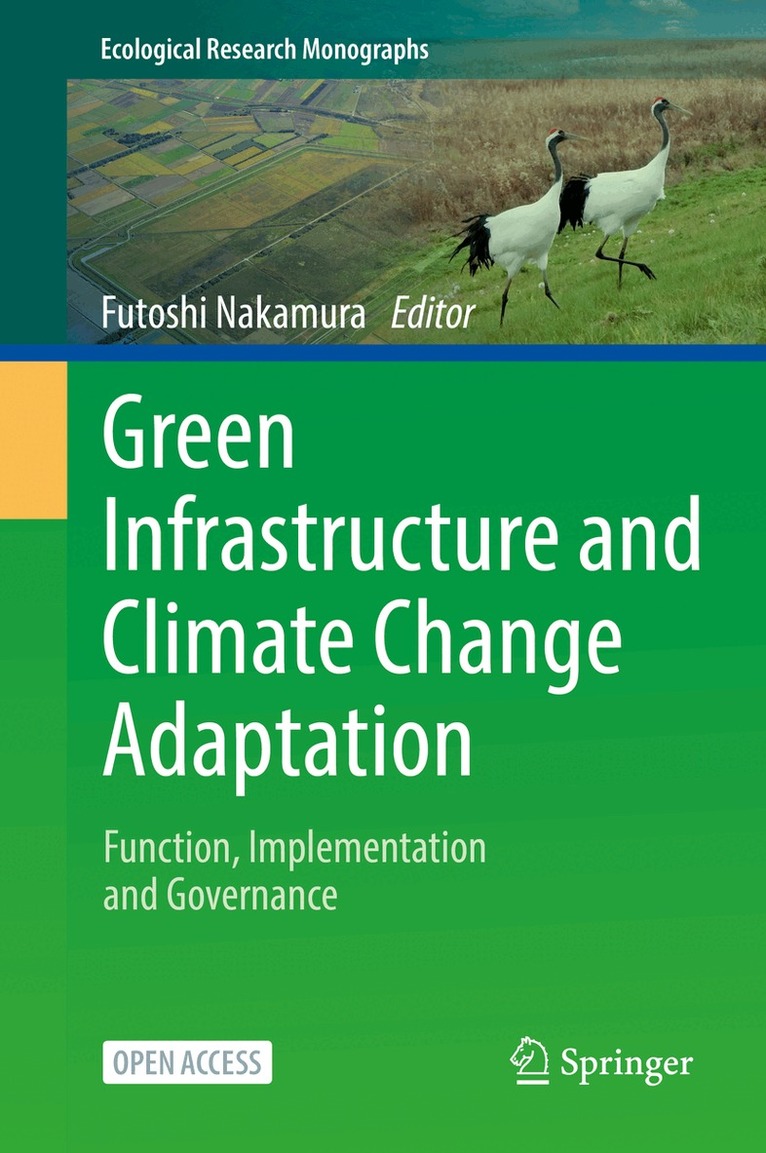
    Green Infrastructure and Climate Change Adaptation

    Function, Implementation and Governance

    AvFutoshi Nakamura

    Inbunden, Engelska, 2022

    Del i serien Ecological Research Monographs

    547 kr

    Beställningsvara. Skickas inom 10-15 vardagar. Fri frakt över 249 kr.

    Beskrivning

    This open access book introduces the function, implementation and governance of green infrastructure in Japan and other countries where lands are geologically fragile and climatologically susceptible to climate change. It proposes green infrastructure as an adaptation strategy for climate change and biodiversity conservation.In the face of climate change, dams, levees and floodways built as disaster prevention facilities do not sufficiently function against extraordinary events such as mega-floods and tsunami disasters. To prevent those disasters and loss of biodiversity in various ecosystems, we should shift from conventional hard measures to more adaptive strategies using various functions that natural and semi-natural ecosystems provide. Green infrastructure is an interconnected network of waterways, wetlands, woodlands, wildlife habitats and other natural areas that support native species, maintain natural ecological processes, sustain air and water resources and contribute to the health and quality of life for communities and people. Green infrastructure has mainly been discussed from adaptation strategy perspectives in cities and urban areas. However, to protect cities, which are generally situated at downstream lower elevations, we explore the preservation and restoration of forests at headwater basins and wetlands along rivers from a catchment perspective. In addition, the quantitative examination of flood risk, biodiversity, and social-economic benefits described in this book brings new perspectives to the discussion.The aim of this book is to accelerate the transformative changes from gray-based adaptation strategies to green- or hybrid-based strategies to adapt to climate change. The book provides essential information on the structure, function, and maintenance of green infrastructure for scientists, university students, government officers, and practitioners.

    Produktinformation

    • Utgivningsdatum:2022-01-26
    • Mått:155 x 235 x 32 mm
    • Vikt:1 034 g
    • Format:Inbunden
    • Språk:Engelska
    • Serie:Ecological Research Monographs
    • Antal sidor:506
    • Förlag:Springer Verlag, Singapore
    • ISBN:9789811667909

    Utforska kategorier

    • Växtböcker inom Djur och Natur
    • Botanik inom Naturvetenskap och teknik
    • Miljövetenskap och miljöpolitik inom Naturvetenskap och teknik

    Mer om författaren

    Futoshi NakamuraEcosystem management and landscape ecology, Hokkaido University, Japan

    Innehållsförteckning

    • Chapter 1: Introduction.- Part 1: Concept and synthesis.- Chapter 2: Concept and application of hybrid infrastructure.- Chapter 3: An Economic Analysis of Optimal Hybrid Infrastructure: A Theoretical Approach in a Hydro-Economic Model.- Chapter 4: Flood Management Policy in Shiga Prefecture, Japan: Implementation Approach of a Risk-Based Flood Management System at Catchment Scale.- Chapter 5: Toward social infrastructure: typological idea for evaluating implementation potential of green infrastructure.- Part 2: Forest ecosystem.- Chapter 6: Riparian Forests and Climate Change: Interactive Zone of Green and Blue Infrastructure.- Chapter 7: Improvement of the flood-reduction function of forests based on their interception evaporation and surface storage capacities.- Chapter 8: Forests for water: A step-by-step guide for payment schemes.- Part 3: River and floodplain ecosystem (including paddy field and other farmlands).- Chapter 9: Wetland Paddy Fields as Green Infrastructure against Flood.- Chapter 10: Change in Floodwater Retention Function of a Paddy Field due to Cultivation Abandonment in a Depopulating Rural Region in Japan.- Chapter 11: Paddy field as a green inflastructure: their ecosystem services and threatening drivers.- Part 4: Wetland ecosystem (including flood-control pond).- Chapter 12: Flood-control basins as green infrastructures: flood-risk reduction, biodiversity conservation and sustainable management in Japan.- Chapter 13: Natural Succession of Wetland Vegetation in a Flood-control Pond Constructed on Abandoned Farmland.- Chapter 14: Biodiversity Conservation through Various Citizen Activities in a Flood Control Basin.- Part 5: Urban and city ecosystem.- Chapter 15: Toward holistic Urban Green Infrastructure Implementation.- Chapter 16: Changes in the Use of Green Spaces by Citizens before and during the First COVID-19 Pandemic: A Big data analysis usingmobile-tracking GPS data in Kanazawa, Japan.- Chapter 17: Land Use Planning as a Green Infrastructure in a Rural Japanese Depopulated Town.- Chapter 16: Towards an Equitable Distribution of Urban Green Spaces for People and Landscapes; An opportunity for Portland's Green Grid.- Part 6: Coast and estuary ecosystem.- Chapter 19: "Effectiveness and Sustainability of Coastal Hybrid Infrastructures for Low-Frequency Large-Scale Disasters.- A Case Study of Coastal Disaster Assessment for a Complex Disaster".- Chapter 20: Challenging a Hybrid between Green and Gray Infrastructure – Coastal Sand-covered Embankments.- Chapter 21: Green Infrastructures in Megacity Jakarta: Current Status and Possibilities of Mangroves for Flood Damage Mitigation.- Chapter 22: Implementation of Japanese Blue Carbon Offset Crediting Projects.- Part 7: Economic evaluation.- Chapter 23: Understanding Preference Differences among Individuals for the Reduction in Flood Risk by Green Infrastructure.- Chapter 24: Assessing Public Preference for Construction of Giant Seawalls Using the Best–Worst Scaling Approach.- Chapter 25: "Coastal communities’ preferences of grey, green and hybrid infrastructure against unexpected catastrophes: A case study of Japan".- Chapter 26: Carbon storage  and substitution benefits of harvested wood products.- Part 8: Governance.- Chapter 27: Social System in Collaborative Activities for Conserving Coastal Pine Forest in Karatsu City, Kyusyu, Japan.- Chapter 28: Governance for realizing multifunctional floodplain; flood control, agriculture, and biodiversity in Yolo Bypass Wildlife Area, California, USA.- Chapter 29: Analysis of the description of the multifunctionality of farmland in the administrative plans of local municipalities.