• Fri frakt över 249 kr
  • •
  • Snabba leveranser
  • •
  • Billiga böcker
Kundservice

Du är på sajten för privatpersoner.

Företag, bibliotek eller offentlig verksamhet?

Du handlar på classic.bokus.com, där alla dina funktioner finns intakta.
Till classic.bokus.com
Bokus logotyp. Gå till startsidan.
  • Erbjudanden
  • Nyheter
  • Student
  • Topplistor
  • Barn & ungdom
  • Bokus Play
  • E-böcker
  • Pocketböcker
  • Spel & pussel

10% rabatt på allt med kod: NYSTART10 →

Sidfot

Mina sidor

    Hjälp

    • Kundservice
    • Vanliga frågor och svar
    • Frakt och leverans
    • Retur vid ångerrätt
    • Reklamera vara
    • Betalning
    • Köpvillkor
    • Allmänna villkor
    • Information om webbplatsens tillgänglighet

    Om Bokus

    • Om oss
    • Pressrum
    • För studenter
    • För företag
    • För bibliotek och offentlig verksamhet
    • För leverantörer
    • Hållbarhet

    Populärt

    • Aktuella erbjudanden
    • Presentkort
    • Studentlitteratur
    • Nya böcker
    • Topplistor
    • Signerade böcker
    • Engelska böcker

    Inspiration

    • Boktips
    • BookTok
    • Populära bokserier
    • Barnbokskaraktärer
    • Populära författare
    Logotyp för Bokus
    Följ oss på Facebook (extern länk)Följ oss på Instagram (extern länk)Följ oss på YouTube (extern länk)Följ oss på TikTok (extern länk)
    bokus @ CookiesAnpassa cookiesIntegritetspolicyKöpvillkor
    Till Citymail hemsida (extern länk)Till Budbee hemsida (extern länk)Till Postnord hemsida (extern länk)Till Schenker hemsida (extern länk)Till Early Bird hemsida (extern länk)Till Walleys hemsida (extern länk)
    1. Samhälle och politik
    2. Politik och statsskick
    3. Statsskick och politiska processer

    Post-Disaster Governance in Southeast Asia

    Response, Recovery, and Resilient Societies

    AvAndri N.R. Mardiah,Robert B. Olshansky

    Inbunden, Engelska, 2021

    Del i serien Disaster Risk Reduction

    1 626 kr

    Beställningsvara. Skickas inom 10-15 vardagar. Fri frakt över 249 kr.

    Beskrivning

    This book aims to provide insight into how Southeast Asian countries have responded to disasters, recovered, and rebuilt. It investigates emergency response and disaster recovery cases at national levels and from regional perspectives. Recovery from great disasters poses great challenges to affected countries in terms of organization, financing, and opportunities for post-disaster betterment. Importantly, disasters are critical moments in which to achieve disaster risk reduction, especially in the context of climate change and Sustainable Development Goals. Insights from these cases can help other countries better prepare for response and recovery before the next disaster strikes. While the experiences of disaster risk reduction and climate change implementation in Southeast Asian countries have been well documented, tacit knowledge from emergency response and recovery from these countries has not been transformed into explicit knowledge. There are only a few books that integrate information and lessons from post-disaster governance in Southeast Asia as a region, and because of the importance of providing real and recent situations, this book will interest many policymakers, practitioners, and academics. The information presented here will lead to a better understanding of how to plan for future disasters and improve governance to ensure effective emergency response as well as encouraging a build back better and safer towards a more resilient and sustained recovery.

    Produktinformation

    • Utgivningsdatum:2021-12-04
    • Mått:155 x 235 x 24 mm
    • Vikt:653 g
    • Format:Inbunden
    • Språk:Engelska
    • Serie:Disaster Risk Reduction
    • Antal sidor:307
    • Förlag:Springer Verlag, Singapore
    • ISBN:9789811674006

    Utforska kategorier

    • Statsskick och politiska processer inom Samhälle och politik
    • Miljövetenskap och miljöpolitik inom Naturvetenskap och teknik

    Mer om författaren

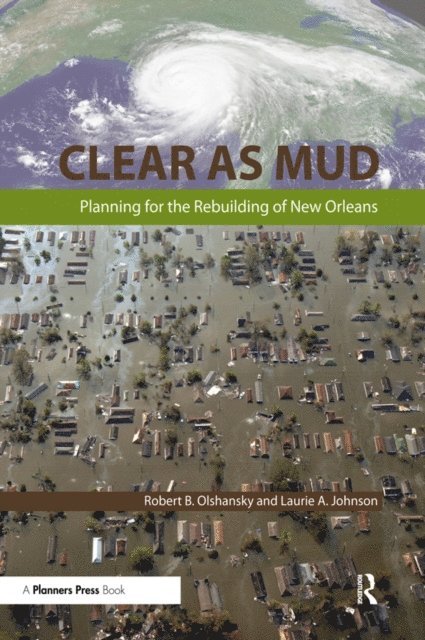
    Andri N.R. Mardiah, Ph.D., is a career bureaucrat at National Development Planning Agency/BAPPENAS, Indonesia; and currently serves as Senior Planner for Region I (Sumatra). Working for nearly 20 years, she has been actively involved in research and policy papers formulation in disaster studies and post-disaster development contexts, including the most recent policy papers on Disaster Management Law and emergency response studies during the Covid-19 Pandemic. Andri holds a PhD from School of Geography, University of Leeds, focusing in disaster recovery studies. She also earned degree from Monash University (Business and Economics) and Bandung Institute of Technology (Urban and Regional Planning). Andri is the founder of Indonesia Disaster Research Network, a member of the Indonesian Disaster Expert Association (IABI) and Indonesian Development Planner Association (PPPI), as well as editor for several academic journals. She is interested in the interdisciplinary research of collaborative governance and disaster resilience, local economy and livelihood recovery, spatial/regional economies and development, climate change and sustainable development.Robert B. Olshansky, Ph.D., FAICP, is professor emeritus of urban and regional planning at the University of Illinois at Urbana-Champaign, where he taught environmental planning and natural hazards planning for 28 years. Professor Olshansky has studied recovery planning and management following numerous major disasters around the world, including ones in the United States, Japan, China, New Zealand, Taiwan, India, Indonesia, and Haiti. His research has been funded by the National Science Foundation and the Lincoln Institute of Land Policy, and in 2004–2005 and 2012–2013 he was a visiting professor at the Disaster Prevention Research Institute at Kyoto University. Along with Laurie Johnson he co-authored Opportunity in Chaos: Rebuilding After the 1994 Northridge and 1995 Kobe Earthquakes (available online), Clear as Mud: Planning for the Rebuilding of New Orleans (APA Press, 2010), and After Great Disasters: An In-depth Analysis of How Six Countries Managed Community Recovery (Lincoln Institute, 2017). In 2014 he co-edited a special issue of the Journal of the American Planning Association on Planning for Disaster Recovery.Mizan B.F. Bisri, Ph.D., is a JSPS-UNU Postdoctoral Fellow at the United Nations University-Institute for the Advanced Study of Sustainability (UNU-IAS) and Integrated Research System for Sustainability Science (IR3S), the University of Tokyo. He received PhD and MA in political science from Kobe University, Japan, as well as MSc and BSc in Urban and Regional Planning from Bandung Institute of Technology (ITB), Indonesia. Prior to joining UNU-IAS, he served as Disaster Monitoring and Analysis Officer at ASEAN Coordinating Centre for Humanitarian Assistance on disaster management (AHA Centre). His research and professional interests are ranging from disaster management, disaster education, humanitarian studies and humanitarian operations, climate change adaptation, and urban planning. Mizan is also a certified disaster responder as part of Asia-Pacific roster of United Nations Disaster Assessment and Coordination (UNDAC) and ASEAN Emergency Response and Assessment Team (ERAT).

    Innehållsförteckning

    • From Post-Disaster Collaborative Governance Toward Resilient Societies.- National Response to the Global Pandemic of COVID-19: Evidence from Malaysia, Vietnam, and Indonesia.- Post-Haiyan: Alternatives for Disaster Management Law and Governance in the Philippines.- Improving Disaster Recovery Governance: Lessons from the Two Ad-Hoc Recovery Agencies.- Transformation of Post-Disaster Governance of Indonesian Peatland Wildfires.- Assessing the Value of Localization and New Actors using Network Approach: Evidence from Shelter Clusters in ASEAN.- The Role of Institutional Vulnerability in the Adoption of ASEAN Agreement on Disaster Management and Emergency Response (AADMER) at Local Level.- Post-tsunami Indonesia: An enquiry into the success of interface in Indonesian tsunami early warning system.- Localising Disability-inclusive Disaster Response in Indonesia.- The Cultural-Based Model of Community Disaster Resilience in Merapi Communities, Indonesia.- Livelihood and Resiliency: An Entrepreneurship of West Sumatran SMEs aftermath Disasters.- The Use of ‘Village Funds’ for Community-Based Disaster Risk Financing: Best Practices from Kupang, Nusa Tenggara Timur, Indonesia.- Fighting the Global Pandemic with Local Actions: Media Analysis on Solidarity and Local Community Response in Indonesia.- Where Do We Go from Here? Key Takeaway Messages for the Better Future Disaster Response and Recovery.