• Fri frakt över 249 kr
  • •
  • Snabba leveranser
  • •
  • Billiga böcker
Kundservice

Du är på sajten för privatpersoner.

Företag, bibliotek eller offentlig verksamhet?

Du handlar på classic.bokus.com, där alla dina funktioner finns intakta.
Till classic.bokus.com
Bokus logotyp. Gå till startsidan.
  • Erbjudanden
  • Nyheter
  • Student
  • Topplistor
  • Barn & ungdom
  • Bokus Play
  • E-böcker
  • Pocketböcker
  • Spel & pussel

10% rabatt på allt med kod NYSTART10 →

Sidfot

Mina sidor

    Hjälp

    • Kundservice
    • Vanliga frågor och svar
    • Frakt och leverans
    • Retur vid ångerrätt
    • Reklamera vara
    • Betalning
    • Köpvillkor
    • Allmänna villkor
    • Information om webbplatsens tillgänglighet

    Om Bokus

    • Om oss
    • Pressrum
    • För studenter
    • För företag
    • För bibliotek och offentlig verksamhet
    • För leverantörer
    • Hållbarhet

    Populärt

    • Aktuella erbjudanden
    • Presentkort
    • Studentlitteratur
    • Nya böcker
    • Topplistor
    • Signerade böcker
    • Engelska böcker

    Inspiration

    • Boktips
    • BookTok
    • Populära bokserier
    • Barnbokskaraktärer
    • Populära författare
    Logotyp för Bokus
    Följ oss på Facebook (extern länk)Följ oss på Instagram (extern länk)Följ oss på YouTube (extern länk)Följ oss på TikTok (extern länk)
    bokus @ CookiesAnpassa cookiesIntegritetspolicyKöpvillkor
    Till Citymail hemsida (extern länk)Till Budbee hemsida (extern länk)Till Postnord hemsida (extern länk)Till Schenker hemsida (extern länk)Till Early Bird hemsida (extern länk)Till Walleys hemsida (extern länk)
    1. Samhälle och politik
    2. Samhälle och kultur
    3. Kultur och medier
    4. Referensverk och tvärvetenskap

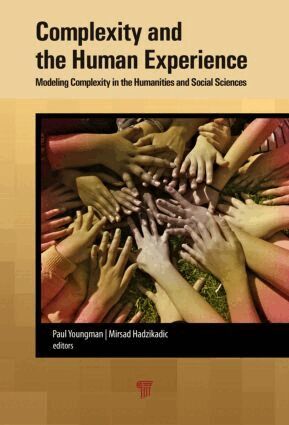
    Complexity and the Human Experience

    Modeling Complexity in the Humanities and Social Sciences

    AvPaul A. Youngman,Mirsad Hadzikadic

    Inbunden, Engelska, 2014

    1 622 kr

    Beställningsvara. Skickas inom 5-8 vardagar. Fri frakt över 249 kr.

    Beskrivning

    Questions of values, ontologies, ethics, aesthetics, discourse, origins, language, literature, and meaning do not lend themselves readily, or traditionally, to equations, probabilities, and models. However, with the increased adoption of natural science tools in economics, anthropology, and political science—to name only a few social scientific fields highlighted in this volume—quantitative methods in the humanities are becoming more common. The theory of complexity holds significant promise for better understanding social and human phenomena based on interactions among the participating "agents," whatever they may be: a thought, a person, a conversation, a sentence, or an email. Such systems can exhibit phase transitions, feedback loops, self-organization, and emergent properties. These dynamic systems lend themselves naturally to the kind of analysis made possible by models and simulations developed with complex science tools. This volume offers a tour of quantitative analyses, models, and simulations of humanities and social science phenomena that have been historically the purview of qualitative methods.

    Produktinformation

    • Utgivningsdatum:2014-05-22
    • Mått:152 x 229 x 23 mm
    • Vikt:560 g
    • Format:Inbunden
    • Språk:Engelska
    • Antal sidor:304
    • Förlag:Pan Stanford Publishing Pte Ltd
    • ISBN:9789814463263

    Utforska kategorier

    • Referensverk och tvärvetenskap inom Samhälle och politik
    • Sociologi inom Samhälle och politik

    Mer om författaren

    Paul A. Youngman is associate professor of German studies at Washington and Lee University, USA, and a faculty associate at the Complex Systems Institute, University of North Carolina at Charlotte (UNC Charlotte), USA. He is author of Black Devil and Iron Angel, an analysis of the aesthetic reception of the railway in nineteenth-century Germany, and We Are the Machine, a study of computers, the Internet, and information in contemporary Germany. Prof. Youngman has also authored numerous articles on technology and culture. Mirsad Hadzikadic has over 30 years of information technology experience combining business and academic environments. He currently serves as the founding director of the Complex Systems Institute at UNC Charlotte. Dr. Hadzikadic’s research interests include data mining, health informatics, complexity theory, brain informatics, and a systems view of policies in financial services, economics, defense, healthcare, and political science.

    Recensioner i media

    "This volume makes a unique contribution in advancing the case for modeling in the humanities. Contemporary research is increasingly multidisciplinary and enriched by models that cross boundaries whenever dynamically similar phenomena emerge. Until recently, the humanities have stood outside of this development. This work documents pioneering explorations of models, networks, and methodological principles, most significantly, those that consolidate the conceptual, empirical, and practical aspects of inquiry within the humanities."Prof. Marvin J. Croy, University of North Carolina at Charlotte, USA"Being able to understand and explain complex ideas in the humanities and social sciences is increasingly important, given the current directions and pace of research and understanding in those fields. The works in this volume show that by applying quantitative methods, such as explanation through use of models, computer simulations, and artificial agents, not only is understanding of complexity assisted, but the visualization of complex phenomena, and the ability to explain and teach complex ideas, is now shown to be within the reach of researchers in fields previously not given to such techniques."Prof. Charles D. Turnitsa, Columbus State University, USA

    Innehållsförteckning

    • Preface, Introduction: Computer Modeling in Humanities and Social Sciences, Part 1: Complex Adaptive Systems in the Humanities, Part 2: Complex Adaptive Systems in the Social Sciences, Index