• Fri frakt över 249 kr
  • •
  • Snabba leveranser
  • •
  • Billiga böcker
Kundservice

Du är på sajten för privatpersoner.

Företag, bibliotek eller offentlig verksamhet?

Du handlar på classic.bokus.com, där alla dina funktioner finns intakta.
Till classic.bokus.com
Bokus logotyp. Gå till startsidan.
  • Erbjudanden
  • Nyheter
  • Student
  • Topplistor
  • Barn & ungdom
  • Bokus Play
  • E-böcker
  • Pocketböcker
  • Spel & pussel

10% rabatt på allt med kod: NYSTART10 →

Sidfot

Mina sidor

    Hjälp

    • Kundservice
    • Vanliga frågor och svar
    • Frakt och leverans
    • Retur vid ångerrätt
    • Reklamera vara
    • Betalning
    • Köpvillkor
    • Allmänna villkor
    • Information om webbplatsens tillgänglighet

    Om Bokus

    • Om oss
    • Pressrum
    • För studenter
    • För företag
    • För bibliotek och offentlig verksamhet
    • För leverantörer
    • Hållbarhet

    Populärt

    • Aktuella erbjudanden
    • Presentkort
    • Studentlitteratur
    • Nya böcker
    • Topplistor
    • Signerade böcker
    • Engelska böcker

    Inspiration

    • Boktips
    • BookTok
    • Populära bokserier
    • Barnbokskaraktärer
    • Populära författare
    Logotyp för Bokus
    Följ oss på Facebook (extern länk)Följ oss på Instagram (extern länk)Följ oss på YouTube (extern länk)Följ oss på TikTok (extern länk)
    bokus @ CookiesAnpassa cookiesIntegritetspolicyKöpvillkor
    Till Citymail hemsida (extern länk)Till Budbee hemsida (extern länk)Till Postnord hemsida (extern länk)Till Schenker hemsida (extern länk)Till Early Bird hemsida (extern länk)Till Walleys hemsida (extern länk)
    1. Samhälle och politik
    2. Samhälle och kultur
    3. Kultur och medier
    4. Referensverk och tvärvetenskap

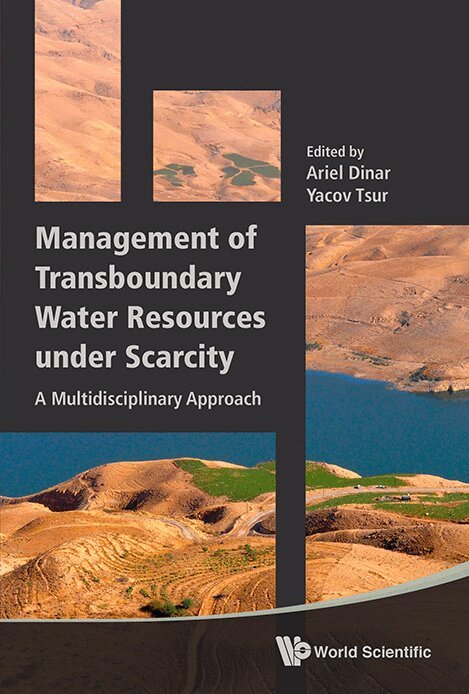
    MANAGEMENT OF TRANSBOUNDARY WATER RESOURCES UNDER SCARCITY: A MULTIDISCIPLINARY APPROACH

    AvDinar Ariel,Ariel Dinar

    Inbunden, Engelska, 2017

    2 208 kr

    Beställningsvara. Skickas inom 5-8 vardagar. Fri frakt över 249 kr.

    Beskrivning

    Water scarcity due to climate change, population growth, and economic development is a critical issue in many semi-arid and arid regions around the world. Water scarcity is especially critical in regions where water is shared by several riparian states and used for competing purposes (irrigation, domestic, industry, environment, and hydropower). There is evidence that water scarcity may give rise to conflicts among the riparian states that share water basins. At the same time, there is evidence that proper arrangements among riparian states create a basis for cooperation, which is a necessary condition for economic development, food production, environmental sustainability, and poverty reduction. This book presents a collection of work presented by a group of academics and policy experts dealing with the impact of water scarcity and variability on the ability to jointly manage shared water and the derived welfare of international states and nations sharing international river basins, consisting of economics, technology, law and institutions, geography, and international relations.The book covers theoretical aspects of management of transboundary water as well as case studies from hotspots around the world. The unique aspect of this book is the multidisciplinary nature of the chapters, reflecting a new field of research that will gain popularity as water scarcity will increase over time and across regions.The chapters from the book were presented at the "Management of Transboundary Water Resources under Scarcity: Perspectives on Agriculture and Food Security" workshop held at The Hebrew University of Jerusalem, Israel, from June 22 to 23, 2015.

    Produktinformation

    • Utgivningsdatum:2017-05-23
    • Mått:157 x 235 x 26 mm
    • Vikt:725 g
    • Format:Inbunden
    • Språk:Engelska
    • Antal sidor:396
    • Förlag:World Scientific Publishing Co Pte Ltd
    • ISBN:9789814740043

    Utforska kategorier

    • Referensverk och tvärvetenskap inom Samhälle och politik
    • Miljövetenskap och miljöpolitik inom Naturvetenskap och teknik
    • Internationella relationer inom Samhälle och politik

    Innehållsförteckning

    • Foreword Climate Change, Institutions and Transboundary Water (Aaron Wolf); Introduction (Ariel Dinar and Yacov Tsur); Economic, Institutional and Technological Aspects in Management of Transboundary Water under Scarcity:The Economics of Transboundary River Management (Erik Ansink and Harold Houba); Managing Water Scarcity in the Jordan River Basin (Yacov Tsur); Distributional Aspects of Damming the Blue Nile (Getachew Nigatu and Ariel Dinar); Issue Linkage as a Mechanism for Conflict Management in the Mekong Basin (Kim Hang Pham Do and Ariel Dinar); Water Treaty Models:New International Legal and Institutional Framework to Manage Surface Water and Groundwater in Conjunctive Use with Specific Regulation for Fossil Aquifers Along the United States - Mexico Border Region: A Water Banking Respective (Maria Milanes-murcia); Changing the Nature of Transboundary Water Agreements: The Israeli-Palestinian Case (David B Brooks and Julie Trottier); Israel and the Palestinian Authority: Water Governance and Pollution Prevention:A Watershed-based Approach to Mitigating Transboundary Wastewater Conflicts between Israel and the Palestinian Authority (Clive Lipchin and David Lehrer); Environmental Restoration as a Basis for Israeli-Palestinian Cooperation: Method and Examples from Two Transboundary Streams (Nir Becker); Regional Case Studies:Climate Change, Transboundary Water and Security in the Middle East (Eran Feitelson); Disputes over Shared Waters: Can River Basin Organizations make a Difference? (Susanne Schmeier and Sabine Schulze); Transboundary Water Management along the Tagus River Basin in the Iberian Peninsula: Sustainable Water Allocation of the Tagus-Segura Aqueduct (Maria Milanes-murcia); Institutional Settings in Transboundary Water Management: Lessons from the Fergana Valley and the Lower Jordan Basin (Christine Bismuth and Bernd Hansjurgens); Cooperation in Transboundary Water Sharing with Issue Linkage: A Game-Theoretical Case Study in the Aral Sea(Anik Bhaduri and Jens Liebe); Conclusion and Future Research Needs (Yacov Tsur and Ariel Dinar);