Yacov Tsur – författare
Visar alla böcker från författaren Yacov Tsur. Handla med fri frakt och snabb leverans.
10 produkter
10 produkter
Del 10 - Natural Resource Management and Policy
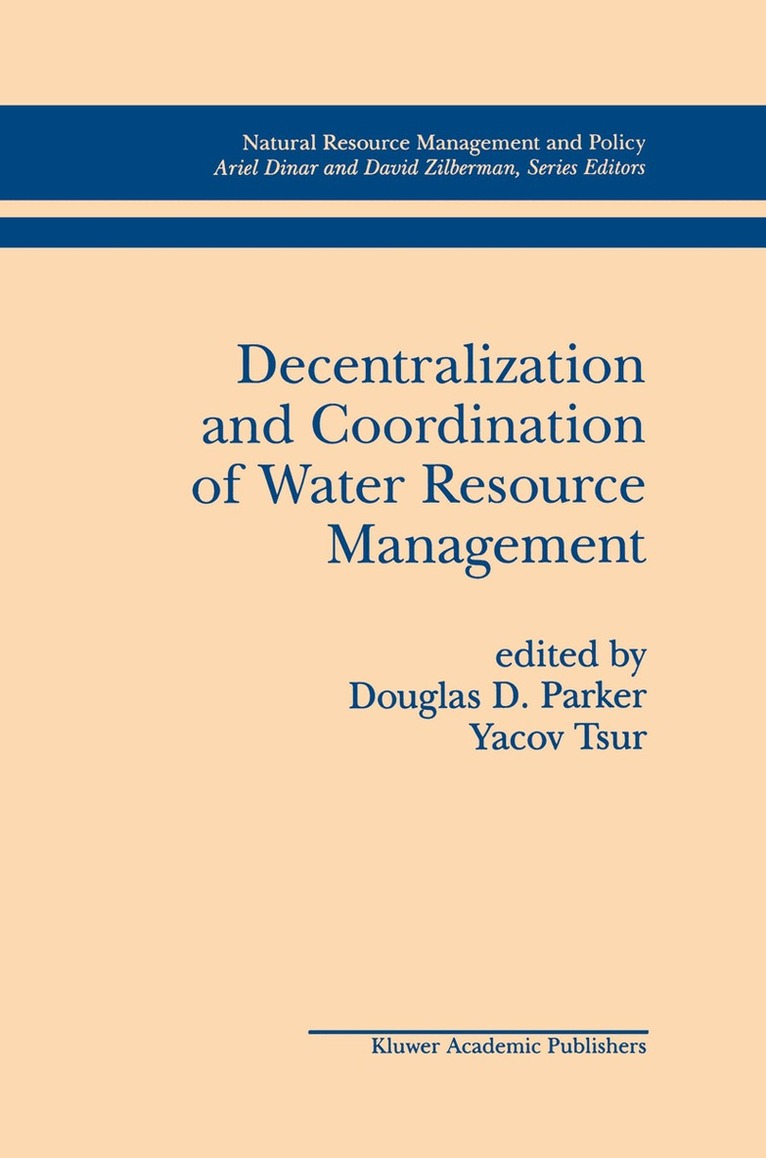
Decentralization and Coordination of Water Resource Management
Inbunden, Engelska, 1997
1 631 kr
Skickas inom 10-15 vardagar
Centralized, top-down management of water resources through regulations has created unnecessary economic burdens upon users. More flexible decentralized controls through the use of economic incentives have gained acceptance over the past decade. The theme of this book is the increasing efforts throughout water-scarce regions to rely upon economic incentives and decentralized mechanisms for efficient water management and allocation. The book begins with a section of introductory chapters describing water systems, institutions, constraints, and similarities in the following regions: Israel and the Middle East, Turkey, California, Florida, and Australia. Four of these regions face similar climates with wet winters and dry summers. Florida has a more even seasonal distribution of rainfall, yet it uses similar management strategies in controlling groundwater demand and water quality. The book concludes with a section on water management case studies. These case studies examine issues of conflict related to both water quality and water quantity. While the case studies address both international and intranational concerns in specific regions of the world, they portray broad principles that are applicable to many regions.
Inbunden, Engelska, 2021
1 023 kr
Skickas inom 7-10 vardagar
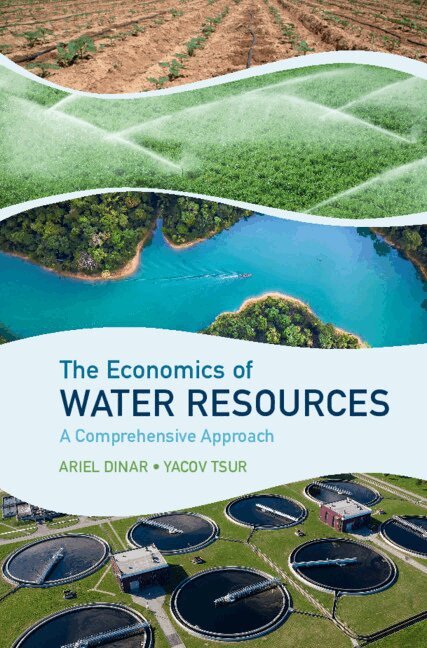
Population growth and rising living standards, on the one hand, and changing climate, on the other hand, have exacerbated water scarcity worldwide. To address this problem, policymakers need to take a wide view of the water economy - a complex structure involving environmental, social, economic, legal, and institutional aspects. A coherent water policy must look at the water economy as a whole and apply a comprehensive approach to policy interventions. Written by two of the world's leading scholars on economics of water, this is the first graduate-level textbook on the topic. The book discusses water resource management within a comprehensive framework that integrates the different, yet highly entwined, elements of a water economy. It follows the steps needed to develop a well-designed set of policies based on detailed analyses of intervention measures, using multi-sectoral and economy-wide examples from a variety of locations and situations around the world.
E-bok
Engelska, 20101 460 kr
Läs direkt efter köp
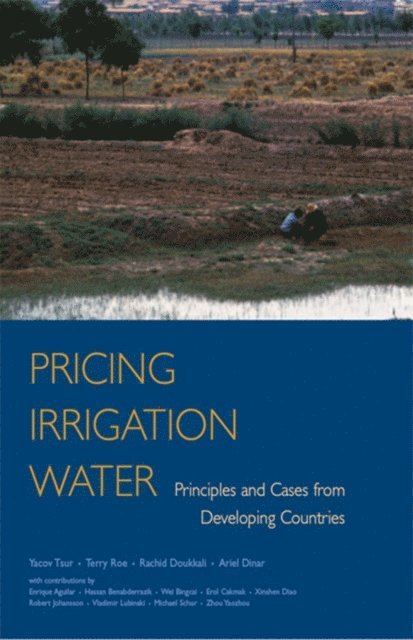
As globalization links economies, the value of a country''s irrigation water becomes increasingly sensitive to competitive forces in world markets. Water policy at the national and regional levels will need to accommodate these forces or water is likely to become undervalued. The inefficient use of this resource will lessen a country''s comparative advantage in world markets and slow its transition to higher incomes, particularly in rural households. While professionals widely agree on what constitutes sound water resource management, they have not yet reached a consensus on the best ways of implementing policies. Policymakers have considered pricing water - a debated intervention - in many variations. Setting the price ''right,'' some say, may guide different types of users in efficient water use by sending a signal about the value of this resource. Aside from efficiency, itself an important policy objective, equity, accessibility, and implementation costs associated with the right pricing must be considered. Focusing on the examples of China, Mexico, Morocco, South Africa, and Turkey, Pricing Irrigation Water provides a clear methodology for studying farm-level demand for irrigation water. This book is the first to link the macroeconomics of policies affecting trade to the microeconomics of water demand for irrigation and, in the case of Morocco, to link these forces to the creation of a water user-rights market. This type of market reform, the contributors argue, will result in growing economic benefits to both rural and urban households.
E-bok
PDF, Engelska, 20101 460 kr
Läs direkt efter köp
As globalization links economies, the value of a country''s irrigation water becomes increasingly sensitive to competitive forces in world markets. Water policy at the national and regional levels will need to accommodate these forces or water is likely to become undervalued. The inefficient use of this resource will lessen a country''s comparative advantage in world markets and slow its transition to higher incomes, particularly in rural households. While professionals widely agree on what constitutes sound water resource management, they have not yet reached a consensus on the best ways of implementing policies. Policymakers have considered pricing water - a debated intervention - in many variations. Setting the price ''right,'' some say, may guide different types of users in efficient water use by sending a signal about the value of this resource. Aside from efficiency, itself an important policy objective, equity, accessibility, and implementation costs associated with the right pricing must be considered. Focusing on the examples of China, Mexico, Morocco, South Africa, and Turkey, Pricing Irrigation Water provides a clear methodology for studying farm-level demand for irrigation water. This book is the first to link the macroeconomics of policies affecting trade to the microeconomics of water demand for irrigation and, in the case of Morocco, to link these forces to the creation of a water user-rights market. This type of market reform, the contributors argue, will result in growing economic benefits to both rural and urban households.
Häftad, Engelska, 2021
429 kr
Skickas inom 7-10 vardagar
Population growth and rising living standards, on the one hand, and changing climate, on the other hand, have exacerbated water scarcity worldwide. To address this problem, policymakers need to take a wide view of the water economy - a complex structure involving environmental, social, economic, legal, and institutional aspects. A coherent water policy must look at the water economy as a whole and apply a comprehensive approach to policy interventions. Written by two of the world's leading scholars on economics of water, this is the first graduate-level textbook on the topic. The book discusses water resource management within a comprehensive framework that integrates the different, yet highly entwined, elements of a water economy. It follows the steps needed to develop a well-designed set of policies based on detailed analyses of intervention measures, using multi-sectoral and economy-wide examples from a variety of locations and situations around the world.
E-bok
PDF, Engelska, 2021519 kr
Läs direkt efter köp
Population growth and rising living standards, on the one hand, and changing climate, on the other hand, have exacerbated water scarcity worldwide. To address this problem, policymakers need to take a wide view of the water economy – a complex structure involving environmental, social, economic, legal, and institutional aspects. A coherent water policy must look at the water economy as a whole and apply a comprehensive approach to policy interventions. Written by two of the world''s leading scholars on economics of water, this is the first graduate-level textbook on the topic. The book discusses water resource management within a comprehensive framework that integrates the different, yet highly entwined, elements of a water economy. It follows the steps needed to develop a well-designed set of policies based on detailed analyses of intervention measures, using multi-sectoral and economy-wide examples from a variety of locations and situations around the world.
E-bok
Engelska, 2021519 kr
Läs direkt efter köp
Population growth and rising living standards, on the one hand, and changing climate, on the other hand, have exacerbated water scarcity worldwide. To address this problem, policymakers need to take a wide view of the water economy – a complex structure involving environmental, social, economic, legal, and institutional aspects. A coherent water policy must look at the water economy as a whole and apply a comprehensive approach to policy interventions. Written by two of the world''s leading scholars on economics of water, this is the first graduate-level textbook on the topic. The book discusses water resource management within a comprehensive framework that integrates the different, yet highly entwined, elements of a water economy. It follows the steps needed to develop a well-designed set of policies based on detailed analyses of intervention measures, using multi-sectoral and economy-wide examples from a variety of locations and situations around the world.
Del 10 - Natural Resource Management and Policy
Decentralization and Coordination of Water Resource Management
Häftad, Engelska, 2012
1 634 kr
Skickas inom 10-15 vardagar
Centralized, top-down management of water resources through regulations has created unnecessary economic burdens upon users. More flexible decentralized controls through the use of economic incentives have gained acceptance over the past decade. The theme of this book is the increasing efforts throughout water-scarce regions to rely upon economic incentives and decentralized mechanisms for efficient water management and allocation. The book begins with a section of introductory chapters describing water systems, institutions, constraints, and similarities in the following regions: Israel and the Middle East, Turkey, California, Florida, and Australia. Four of these regions face similar climates with wet winters and dry summers. Florida has a more even seasonal distribution of rainfall, yet it uses similar management strategies in controlling groundwater demand and water quality. The book concludes with a section on water management case studies. These case studies examine issues of conflict related to both water quality and water quantity. While the case studies address both international and intranational concerns in specific regions of the world, they portray broad principles that are applicable to many regions.
E-bok
PDF, Engelska, 20111 995 kr
Läs direkt efter köp
Centralized, top-down management of water resources through regulations has created unnecessary economic burdens upon users. More flexible decentralized controls through the use of economic incentives have gained acceptance over the past decade. The theme of this book is the increasing efforts throughout water-scarce regions to rely upon economic incentives and decentralized mechanisms for efficient water management and allocation. The book begins with a section of introductory chapters describing water systems, institutions, constraints, and similarities in the following regions: Israel and the Middle East, Turkey, California, Florida, and Australia. Four of these regions face similar climates with wet winters and dry summers. Florida has a more even seasonal distribution of rainfall, yet it uses similar management strategies in controlling groundwater demand and water quality. The book concludes with a section on water management case studies. These case studies examine issues of conflict related to both water quality and water quantity. While the case studies address both international and intranational concerns in specific regions of the world, they portray broad principles that are applicable to many regions.
Inbunden, Engelska, 2017
2 137 kr
Skickas inom 5-8 vardagar
Water scarcity due to climate change, population growth, and economic development is a critical issue in many semi-arid and arid regions around the world. Water scarcity is especially critical in regions where water is shared by several riparian states and used for competing purposes (irrigation, domestic, industry, environment, and hydropower). There is evidence that water scarcity may give rise to conflicts among the riparian states that share water basins. At the same time, there is evidence that proper arrangements among riparian states create a basis for cooperation, which is a necessary condition for economic development, food production, environmental sustainability, and poverty reduction. This book presents a collection of work presented by a group of academics and policy experts dealing with the impact of water scarcity and variability on the ability to jointly manage shared water and the derived welfare of international states and nations sharing international river basins, consisting of economics, technology, law and institutions, geography, and international relations.The book covers theoretical aspects of management of transboundary water as well as case studies from hotspots around the world. The unique aspect of this book is the multidisciplinary nature of the chapters, reflecting a new field of research that will gain popularity as water scarcity will increase over time and across regions.The chapters from the book were presented at the "Management of Transboundary Water Resources under Scarcity: Perspectives on Agriculture and Food Security" workshop held at The Hebrew University of Jerusalem, Israel, from June 22 to 23, 2015.