• Fri frakt över 249 kr
  • •
  • Snabba leveranser
  • •
  • Billiga böcker
Kundservice

Du är på sajten för privatpersoner.

Företag, bibliotek eller offentlig verksamhet?

Du handlar på classic.bokus.com, där alla dina funktioner finns intakta.
Till classic.bokus.com
Bokus logotyp. Gå till startsidan.
  • Erbjudanden
  • Nyheter
  • Student
  • Topplistor
  • Barn & ungdom
  • Bokus Play
  • E-böcker
  • Pocketböcker
  • Spel & pussel

10% rabatt på allt med kod NYSTART10 →

Sidfot

Mina sidor

    Hjälp

    • Kundservice
    • Vanliga frågor och svar
    • Frakt och leverans
    • Retur vid ångerrätt
    • Reklamera vara
    • Betalning
    • Köpvillkor
    • Allmänna villkor
    • Information om webbplatsens tillgänglighet

    Om Bokus

    • Om oss
    • Pressrum
    • För studenter
    • För företag
    • För bibliotek och offentlig verksamhet
    • För leverantörer
    • Hållbarhet

    Populärt

    • Aktuella erbjudanden
    • Presentkort
    • Studentlitteratur
    • Nya böcker
    • Topplistor
    • Signerade böcker
    • Engelska böcker

    Inspiration

    • Boktips
    • BookTok
    • Populära bokserier
    • Barnbokskaraktärer
    • Populära författare
    Logotyp för Bokus
    Följ oss på Facebook (extern länk)Följ oss på Instagram (extern länk)Följ oss på YouTube (extern länk)Följ oss på TikTok (extern länk)
    bokus @ CookiesAnpassa cookiesIntegritetspolicyKöpvillkor
    Till Citymail hemsida (extern länk)Till Budbee hemsida (extern länk)Till Postnord hemsida (extern länk)Till Schenker hemsida (extern länk)Till Early Bird hemsida (extern länk)Till Walleys hemsida (extern länk)
    1. Naturvetenskap och teknik
    2. Teknik och industri
    3. Maskinteknik och material

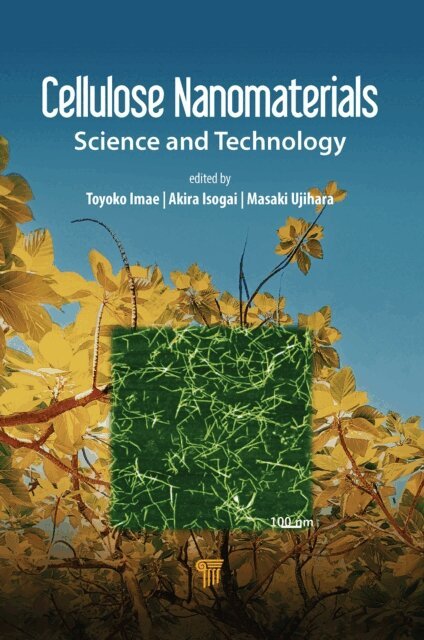
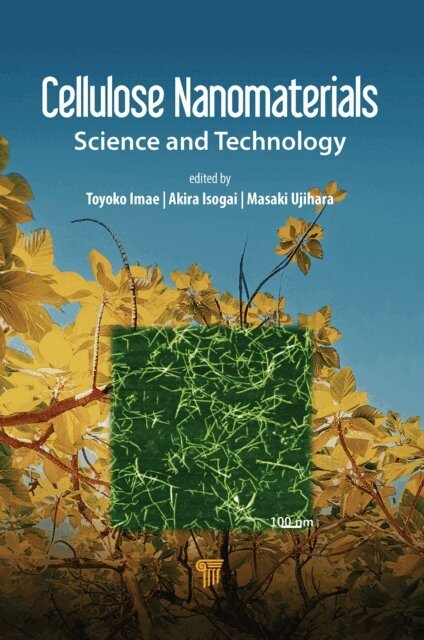
    Cellulose Nanomaterials

    Science and Technology

    AvToyoko Imae,Akira Isogai

    Inbunden, Engelska, 2026

    2 718 kr

    Beställningsvara. Skickas inom 10-15 vardagar. Fri frakt över 249 kr.

    Beskrivning

    In today’s world, where achieving carbon neutrality and being microplastic-free is imperative, the pursuit of renewable and sustainable materials has become essential. Cellulose nanomaterials (CNs), including cellulose nanofibers (CNFs) and cellulose nanocrystals (CNCs), are nanoscaled materials derived from industrial cellulose fibers (such as paper and dissolving pulps), abundant plants, and other cellulose resources. They are typically produced in water, with or without pretreatment, through downsizing or mechanical fibrillation. CNs retain their original crystal structures, which confer high mechanical strengths and thermal stabilities. In addition, they provide abundant reaction sites for further functionalization, enabling the incorporation of unique properties, such as catalytic activities, anti-microbial effects, hydrophobicity, water resistance, and gas-barrier performance, as well as electronic and thermal functionalities. Thus, CNs represent promising bio-nanomaterials that are biocompatible, biodegradable, sustainable, and renewable. They are abundantly produced by plants through biosynthesis, utilizing atmospheric CO2 and water as primary resources. This book provides a comprehensive overview of CNs, covering their history, chemical structures, morphologies, characteristics, and applications. CNs are expected to be used in food and daily necessities as well as medical, luminescent, electronic, and electrical materials. The book serves as a comprehensive resource not only for university students and researchers, but also for companies and their affiliated engineers as well as for anyone interested in advancing research and developing practical applications of CNs.

    Produktinformation

    • Utgivningsdatum:2026-06-15
    • Mått:152 x 229 x 21 mm
    • Vikt:830 g
    • Format:Inbunden
    • Språk:Engelska
    • Antal sidor:350
    • Förlag:Jenny Stanford Publishing
    • ISBN:9789815352078

    Utforska kategorier

    • Maskinteknik och material inom Naturvetenskap och teknik
    • Organisk kemi inom Naturvetenskap och teknik
    • Teknik: allmänt inom Naturvetenskap och teknik

    Mer om författaren

    Toyoko Imae has been a professor emeritus at Nagoya University, Japan, since 2006. She earned her doctorate in science from Nagoya University. After serving as a specific research professor at Keio University, Japan, from 2006 to 2009, she was appointed as an honorary chair professor at the National Taiwan University of Science and Technology, Taiwan, where she devoted herself to research and education until 2024.Akira Isogai has served as a special research professor at the University of Tokyo (UT), Japan, since 2020. He earned his PhD from UT in 1985 and subsequently held positions as assistant and associate professor between 1986 and 1994. From 2003 to 2020, he served as a professor at UT. He was awarded a Doctor of Science in Technology Honoris Causa from Aalto University, Finland, in 2016.Masaki Ujihara is an associate professor at the National Taiwan University of Science and Technology, Taiwan. He joined the university in 2009, initially as an assistant professor, and has held his current position since 2014. He earned his PhD from Nagoya University, Japan, in 2006. His research interests encompass materials science and nanotechnology.

    Recensioner i media

    “I find Cellulose Nanomaterials: Science and Technology to be a rigorous and timely volume that captures both the scientific foundations and the technological challenges of cellulose nanofibers and nanocrystals. What stands out is the coherence with which chemistry, processing, modeling, and applications are linked, moving beyond a summary of the field toward relationships that can realistically be translated into scalable materials. Edited by leading experts and authored by outstanding contributors, this book is a valuable reference and a forward-looking guide for those advancing green and sustainable materials.”Prof. Orlando RojasThe University of British Columbia, Canada

    Innehållsförteckning

    • Chapter 1 Overview of Cellulose Nanomaterials: Fundamentals and Future Prospects Chapter 2 Structure–Property Relationship and Predictive Modeling for Unlocking the Industrial Deployment of Cellulose Nanofiber Production Chapter 3 Material Design for Impact-Resistant Nanocomposites of Polypropylene with Ultra-Trace Quantity of Amphiphilic Cellulose Nanofibrils Chapter 4 Cellulose Nanofiber Films and Their Nanocomposites: Fundamentals, Properties, and Applications Chapter 5 Hydrogels, Films, and Filaments Consisting of Cellulose Nanofibers Chapter 6 Biomedical and Personal Care Applications of Celluloses Chapter 7 Biomedical Applications of Cellulose Nanofibers Chapter 8 Production and Applications of Bacterial Cellulose Nanofibers Chapter 9 Chitin Nanofiber, a New Material Isolated from Crab Waste Shells: Its Production, Chemical Modification, Composites, and Biological Functions Chapter 10 Cellulose and Chitin Nanowhiskers