Inbunden, Engelska, 2024
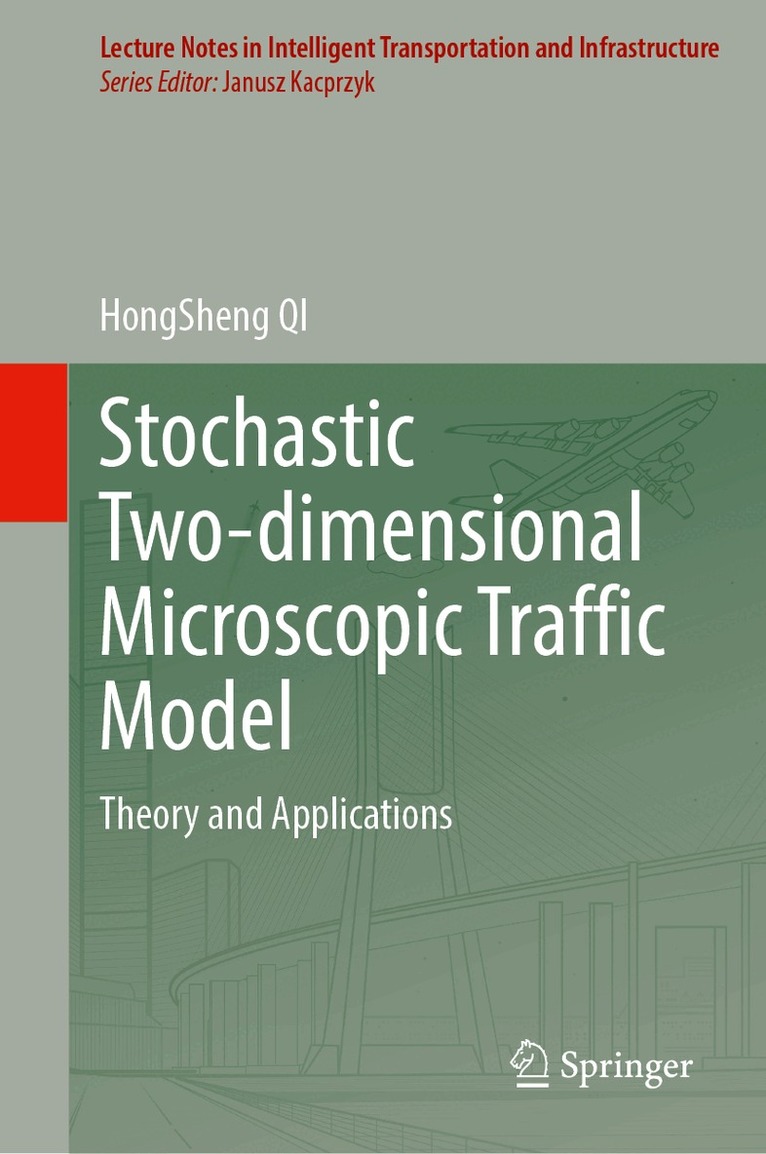
Stochastic Two-Dimensional Microscopic Traffic Model
Av HongSheng Qi
1971 kr
Beställningsvara. Skickas inom 10-15 vardagar. Fri frakt över 249 kr.
Beskrivning
Microscopic traffic model serves as the foundation of traffic flow theory and is the basis for applications such as traffic simulation, autonomous vehicle simulation, and digital twin technology. Conventional traffic models have primarily focused on the longitudinal dimension and have been deterministic in nature. However, vehicles' movements involve both longitudinal and lateral dimensions, and their dynamics are inherently stochastic. Therefore, a two-dimensional treatment is essential.This book explores the theory and application of stochastic two-dimensional microscopic traffic models, including the development of theory, establishment of methods, and applications to autonomous vehicles. The book is organized into three sections: data, theory, and application. In the data section, various open-source trajectory data are analyzed and noise reduction techniques are discussed. In the theory section, various two-dimensional traffic models are developed. In the application section, the potential applications of these models are discussed, including behavioral inferences and lateral wandering. This book will be a useful reference for students, researchers and engineers in the fields of vehicle engineering and traffic technology.
Produktinformation
- Utgivningsdatum: 2024-07-27
- Mått: 155 x 235 x 26 mm
- Vikt: 836 g
- Format: Inbunden
- Språk: Engelska
- Serie: Lecture Notes in Intelligent Transportation and Infrastructure
- Antal sidor: 376
- Förlag: Springer Verlag, Singapore
- ISBN: 9789819735969
Utforska kategorier
Betyg & recensioner
0 recensioner
Inga recensioner tillgängliga.