• Fri frakt över 249 kr
  • •
  • Snabba leveranser
  • •
  • Billiga böcker
Kundservice

Du är på sajten för privatpersoner.

Företag, bibliotek eller offentlig verksamhet?

Du handlar på classic.bokus.com, där alla dina funktioner finns intakta.
Till classic.bokus.com
Bokus logotyp. Gå till startsidan.
  • Erbjudanden
  • Nyheter
  • Student
  • Topplistor
  • Barn & ungdom
  • Bokus Play
  • E-böcker
  • Pocketböcker
  • Spel & pussel

10% studentrabatt med kod TERM26

Sidfot

Mina sidor

    Hjälp

    • Kundservice
    • Vanliga frågor och svar
    • Frakt och leverans
    • Retur vid ångerrätt
    • Reklamera vara
    • Betalning
    • Köpvillkor
    • Allmänna villkor
    • Information om webbplatsens tillgänglighet

    Om Bokus

    • Om oss
    • Pressrum
    • För studenter
    • För företag
    • För bibliotek och offentlig verksamhet
    • För leverantörer
    • Hållbarhet

    Populärt

    • Aktuella erbjudanden
    • Presentkort
    • Studentlitteratur
    • Nya böcker
    • Topplistor
    • Signerade böcker
    • Engelska böcker

    Inspiration

    • Boktips
    • BookTok
    • Populära bokserier
    • Barnbokskaraktärer
    • Populära författare
    Logotyp för Bokus
    Följ oss på Facebook (extern länk)Följ oss på Instagram (extern länk)Följ oss på YouTube (extern länk)Följ oss på TikTok (extern länk)
    bokus @ CookiesAnpassa cookiesIntegritetspolicyKöpvillkor
    Till Citymail hemsida (extern länk)Till Budbee hemsida (extern länk)Till Postnord hemsida (extern länk)Till Schenker hemsida (extern länk)Till Early Bird hemsida (extern länk)Till Walleys hemsida (extern länk)
    1. Ekonomi och Ledarskap
    2. Nationalekonomi

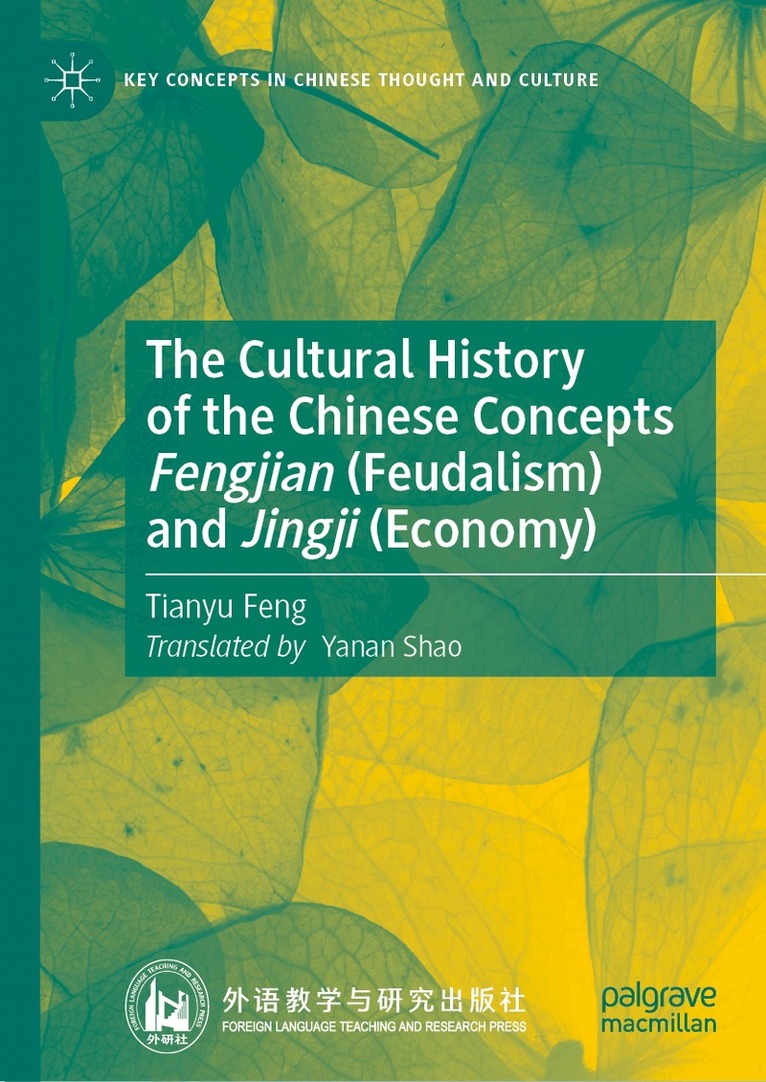
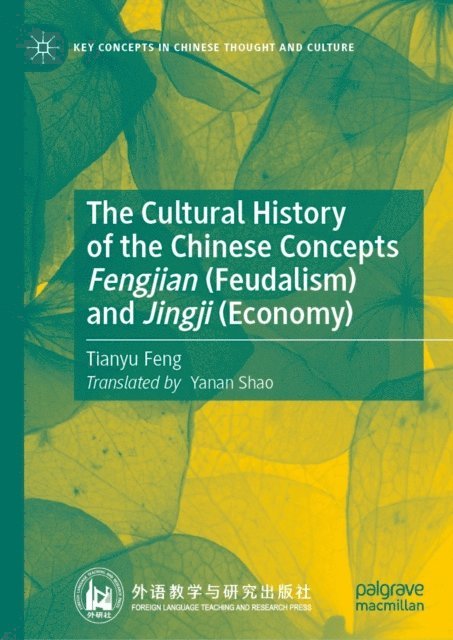
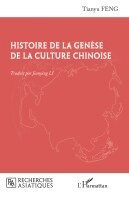
    Cultural History of the Chinese Concepts Fengjian (Feudalism) and Jingji (Economy)

    AvTianyu Feng

    Häftad, Engelska, 2024

    Del i serien Key Concepts in Chinese Thought and Culture

    1 200 kr

    Beställningsvara. Skickas inom 10-15 vardagar. Fri frakt över 249 kr.

    Fler format och utgåvor

    Inbunden

    1 200 kr

    E-bok

    1 570 kr

    Beskrivning

    This book interprets the typical Chinese concepts of fengjian (feudalism) and jingji (economy) by reviewing the mistranslation and mismatching of concepts from ancient to modern times and from a Western language to Chinese and exploring Chinese and Western acculturation, which is in line with Mr. Chen Yinque’s theory—”To interpret a Chinese character is to write a history of culture”. In the coordinates of time and space for the transformation of Chinese concepts from ancient to modern times and their translation from Western languages, this book explores the generation and evolution of Chinese concepts; using the semantic window of Chinese characters, the book reviews the historical and cultural connotations of the semantic changes and the history of the long-lasting culture of Chinese characters. This volume moves from reviewing the semantic changes of fengjian and jingji to elaborating concepts of thought; it makes the study of the history of terms and concepts the study of the history of culture and thought; it analyzes words as part of cultural history to welcome the era of cultural and historical research with a focus on words.This book is both scholarly and readable, satisfying both the academic needs of specialized researchers and the cultural curiosity of those with secondary education or above.

    Produktinformation

    • Utgivningsdatum:2024-08-06
    • Mått:148 x 210 x 10 mm
    • Vikt:236 g
    • Format:Häftad
    • Språk:Engelska
    • Serie:Key Concepts in Chinese Thought and Culture
    • Antal sidor:157
    • Upplaga:2023
    • Förlag:Springer Verlag, Singapore
    • ISBN:9789819926190
    • Originaltitel:概念的文化史:以“封建”与“经济”为例
    • Översättare:Yanan Shao

    Utforska kategorier

    • Nationalekonomi inom Ekonomi och Ledarskap
    • Socialhistoria och kulturhistoria inom Historia och arkeologi
    • Filosofiska discipliner inom Filosofi och religion

    Mer om författaren

    Feng Tianyu (January 12th, 2023), an expert in Chinese culture and history, senior professor at Wuhan University, who used to be  the director of Research Centre of Chinese Traditional Culture at Wuhan University (the Key Research Base of Humanities and Social Sciences of Ministry of Education) and the head of the Innovation Base of Chinese Traditional Culture and Its Modern Transformation. He was the member of the Social Science Committee of the Ministry of Education, vice-president of Association of Chinese Historians, deputy director of Academic Committee at Wuhan University, and deputy chief-editor of local chronicles of Hubei province and Wuhan city.In recent decade, Prof. Feng focused on the study of the modern transformation of Chinese culture under the circumstance of the interaction between Chinese and Western cultures. His works achieved the first prize of China Book Award, the second prize of Outstanding Achievements in Humanities and Social Sciences Research from Ministry of Education and other prizes. Some of his papers have been published abroad in foreign languages, such as in Japanese, English and Spanish.

    Innehållsförteckning

    • Introduction.- Part I Fengjian (Feudal).- Chapter 1: Composition of the Classical Chinese Term “Fengjian”.- Chapter 2: The Zhou Fengjian System of Decentralization and the Qin System of Monarchical Centralization.- Chapter 3: The Concept of Hōken (封建)in Early Modern Japan.- Chapter 4: A Discovery of the Similarities between Fengjian and Feudalism.- Chapter 5: Establishment of the Concept of Feudalism in Western Europe and Its Encounter with Feudalism in East Asia.- Chapter 6: The New Term “Fengjian” in the Late Qing and Early Ming Dynasties.- Chapter 7: The Alienation of the New Term “Fengjian”.- Chapter 8: Generalization of the Concept of “Feudalism”.- Chapter 9: The Truth about Marx’s Theory of Feudalism.- Chapter 10: Criticism of Generalized Feudalism by Chinese Scholars.- Chapter 11: Patriarchal Landowners’ Authoritarian Society and the Age of Imperial Power.- Part II Jingji (Economy).- Chapter 12: The Classical Meaning of “Jingji”: Governance for the People.- Chapter 13: Jingji as Envisaged in the Studies for Practical Solutions in China and Japan in the Near-Ancient Period: The National Economy and the People’s Livelihood.- Chapter 14: The Evolution of Ancient and Modern Meaning of Economy in the West until It Was Finally Settled.- Chapter 15: Translation of Economy into Keizai in the Late Edo Period and during the Meiji Period.- Chapter 16: Modern Japan Doubted about the Translation of Economy as Keizai and Tried Other Alternatives.- Chapter 17: The Rejection of Japan’s Translation of Economy as Keizai by Chinese Scholars in the Late Qing Dynasty and Their New Alternatives.- Chapter 18: The Early Republican Period: Establishment of “Jingji” as the Translation of Economy in China.- Chapter 19: Examination of Jingji in Its Present Sense.