• Fri frakt över 249 kr
  • •
  • Snabba leveranser
  • •
  • Billiga böcker
Kundservice

Du är på sajten för privatpersoner.

Företag, bibliotek eller offentlig verksamhet?

Du handlar på classic.bokus.com, där alla dina funktioner finns intakta.
Till classic.bokus.com
Bokus logotyp. Gå till startsidan.
  • Erbjudanden
  • Nyheter
  • Student
  • Topplistor
  • Barn & ungdom
  • Bokus Play
  • E-böcker
  • Pocketböcker
  • Spel & pussel

10% rabatt på allt med kod: NYSTART10 →

Sidfot

Mina sidor

    Hjälp

    • Kundservice
    • Vanliga frågor och svar
    • Frakt och leverans
    • Retur vid ångerrätt
    • Reklamera vara
    • Betalning
    • Köpvillkor
    • Allmänna villkor
    • Information om webbplatsens tillgänglighet

    Om Bokus

    • Om oss
    • Pressrum
    • För studenter
    • För företag
    • För bibliotek och offentlig verksamhet
    • För leverantörer
    • Hållbarhet

    Populärt

    • Aktuella erbjudanden
    • Presentkort
    • Studentlitteratur
    • Nya böcker
    • Topplistor
    • Signerade böcker
    • Engelska böcker

    Inspiration

    • Boktips
    • BookTok
    • Populära bokserier
    • Barnbokskaraktärer
    • Populära författare
    Logotyp för Bokus
    Följ oss på Facebook (extern länk)Följ oss på Instagram (extern länk)Följ oss på YouTube (extern länk)Följ oss på TikTok (extern länk)
    bokus @ CookiesAnpassa cookiesIntegritetspolicyKöpvillkor
    Till Citymail hemsida (extern länk)Till Budbee hemsida (extern länk)Till Postnord hemsida (extern länk)Till Schenker hemsida (extern länk)Till Early Bird hemsida (extern länk)Till Walleys hemsida (extern länk)
    1. Psykologi och pedagogik
    2. Pedagogik
    3. Material och digital teknik i undervisningen

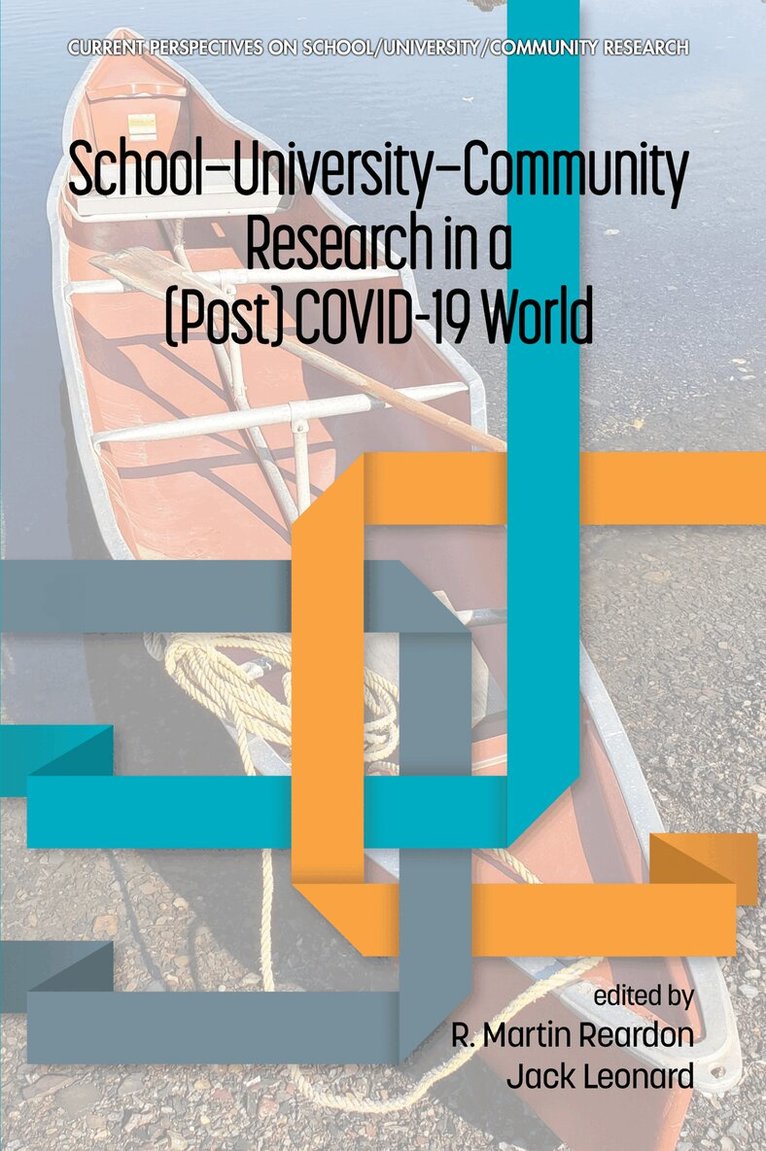
    School-University-Community Research in a (Post) COVID-19 World

    AvR. Martin Reardon,Jack Leonard

    Inbunden, Engelska, 2023

    Del i serien Current Perspectives on School/University/Community Research

    1 070 kr

    Beställningsvara. Skickas inom 5-8 vardagar. Fri frakt över 249 kr.

    Beskrivning

    The American Psychological Association (2020) reported that some 81% of teenage children (13 to 17 years-of-age) were negatively impacted in a range of ways due to school closures in connection with COVID-19, including 47% who indicated that they “didn’t learn as much as they did in previous years” (para. 21). That perhaps many more than 47% of teenage children in the United States did not learn as much as they did in previous years was documented in the most recent National Assessment of Educational Progress (NAEP) report which found that “the national average score declines in mathematics for fourth- and eighth-graders were the largest ever recorded in that subject” (Wilburn & Elias, 2022, para. 1). The National Center for Educational Statistics Commissioner commented somewhat hyperbolically that the results showed that “every student was vulnerable to the pandemic’s disruptions” (Wilburn & Elias, 2022, para. 5) and called for a single-minded emphasis on ways to assist students to recover from their trauma and accelerate their learning. Wilburn and Elias (2022) joined those who have pointed out that the learning declines associated with COVID-19 did not occur equitably. The likelihood of a single-minded policy response to change the system and address the achievement gaps exposed by the range of responses to COVID-19 seems small. On the one hand, doubting the sustainability of innovative responses, education historian Larry Cuban referenced the dominant stability of schooling which, if anything, “produces this huge public and professional need to resume schooling as it was” (Young, 2022, para. 18). On the other hand, diverse political agendas will diffuse concerted efforts. Grossman et al. (2021) discussed a pertinent example from Michigan where “public health data, partisanship, and collective bargaining” (p. 637) each played a role in determining school reopening decisions. On this same issue of school reopening, there is credible evidence from Massachusetts that the much maligned and politically explosive masking policies implemented in some schools may have saved lives (Cowger et al., 2022). Roy (2020) asserted that “historically, pandemics have forced humans to break with the past and imagine their world anew. This one is no different. It is a portal, a gateway between one world and the next” (para. 48). The chapters in this volume attest to the willingness of individuals to collaborate in stepping through that portal.

    Produktinformation

    • Utgivningsdatum:2023-07-31
    • Mått:156 x 234 x 21 mm
    • Vikt:659 g
    • Format:Inbunden
    • Språk:Engelska
    • Serie:Current Perspectives on School/University/Community Research
    • Antal sidor:344
    • Förlag:Emerald Publishing Inc
    • ISBN:9798887303505

    Utforska kategorier

    • Material och digital teknik i undervisningen inom Psykologi och pedagogik
    • Utbildningsstrategier och utbildningspolitik inom Psykologi och pedagogik

    Innehållsförteckning

    • Introduction; R. Martin Reardon.Section I: Online Learning For Specific Groups Of Students.Chapter 1. COVID-19 and the Retrenchment of the IDEA; Christina Payne-Tsoupros.Chapter 2. Surviving the Pandemic: Empowering Immigrant Families to Advocate and Support Their Children/Youth With Disabilities at Home; Lusa Lo and Kimberly Lee.Chapter 3. Suggestions for Promising Practices for Black Autistic Children and Their Families Post-Pandemic; Elizabeth Holliday Morgan, Margaret L. Sebastian, and Kanwardeep Singh.Chapter 4. The Disruption of Mentoring for Black Youth During COVID-19: No One to Turn to; Jay Matthew and Detra D. Johnson.Chapter 5. Educational and Mental Health Challenges of Grandchildren Raised by Grandparents During the COVID-19 Pandemic in South Carolina: Qualitative Results From a Community-Based Study; Theresa M. Harrison, Yanfeng Xu, Patrice Forrester, Sue Levkoff, Ashlee A. Lewis, Gina M. Kunz, and Karen Utter.Section II: Perspectives On Learning.Chapter 6. Study Buddy: An Online Individualized Tutoring Program for Racialized, Indigenous, and Immigrant Students; Wendy Cukier, Bincy Wilson, Donna Fradley, Aaron Smajda, and Stefan Karajovic.Chapter 7. If You Ever Did Need the Help, It Would Be There in a Second. No Questions Asked: A Study of Perceived Impact of Out-of-School STEM Programs During COVID-19; Christopher J. Fornaro, Kimberly Sterin, Katrina Struloeff, and Alonzo M. Flowers III.Chapter 8. Remote Instructional Coaching During the COVID-19 Pandemic: An Exploration of Coaching Moves and Teacher Reflection; Jeanna R. Wieselmann and Marc T. Sager.Section III: Twin Epidemics.Chapter 9. Youth Curation as Collective Disruption: Making in Museums During the COVID-19 Pandemic; Kristina M. Stamatis, Joseph L. Polman, and José Rogelio Manriquez-Hernandez.Chapter 10. Leveraging University Partners as Brokers to Navigate Research Practice Partnerships During Intertwined Global Pandemics; Holly Plank, Eleanor R. Anderson, and Cassie Quigley.Section IV: Reflections And Roadmaps.Chapter 11. Video Documentation of the International Rural School Leadership Project: A Retrospective Case Study of University-School-Community Collaboration; Jerry D. Johnson and Hobart L. Harmon.Chapter 12. Building Reciprocal University-School-Community Relationships to Explore the Impact of COVID-19 on Rural Schools in Aotearoa New Zealand; Jennifer Tatebe and Carol Mutch.Chapter 13. Emergent Program Evaluation (Post) COVID-19; Nicole Weinberg, Elissa Bryant, Kayla Bullard, and Gabriel Huddleston.About the Editors.About the Contributors.