• Fri frakt över 249 kr
  • •
  • Snabba leveranser
  • •
  • Billiga böcker
Kundservice

Du är på sajten för privatpersoner.

Företag, bibliotek eller offentlig verksamhet?

Du handlar på classic.bokus.com, där alla dina funktioner finns intakta.
Till classic.bokus.com
Bokus logotyp. Gå till startsidan.
  • Erbjudanden
  • Nyheter
  • Student
  • Topplistor
  • Barn & ungdom
  • Bokus Play
  • E-böcker
  • Pocketböcker
  • Spel & pussel

10% rabatt på allt med kod: NYSTART10 →

Sidfot

Mina sidor

    Hjälp

    • Kundservice
    • Vanliga frågor och svar
    • Frakt och leverans
    • Retur vid ångerrätt
    • Reklamera vara
    • Betalning
    • Köpvillkor
    • Allmänna villkor
    • Information om webbplatsens tillgänglighet

    Om Bokus

    • Om oss
    • Pressrum
    • För studenter
    • För företag
    • För bibliotek och offentlig verksamhet
    • För leverantörer
    • Hållbarhet

    Populärt

    • Aktuella erbjudanden
    • Presentkort
    • Studentlitteratur
    • Nya böcker
    • Topplistor
    • Signerade böcker
    • Engelska böcker

    Inspiration

    • Boktips
    • BookTok
    • Populära bokserier
    • Barnbokskaraktärer
    • Populära författare
    Logotyp för Bokus
    Följ oss på Facebook (extern länk)Följ oss på Instagram (extern länk)Följ oss på YouTube (extern länk)Följ oss på TikTok (extern länk)
    bokus @ CookiesAnpassa cookiesIntegritetspolicyKöpvillkor
    Till Citymail hemsida (extern länk)Till Budbee hemsida (extern länk)Till Postnord hemsida (extern länk)Till Schenker hemsida (extern länk)Till Early Bird hemsida (extern länk)Till Walleys hemsida (extern länk)
    1. Kultur
    2. Arkitektur

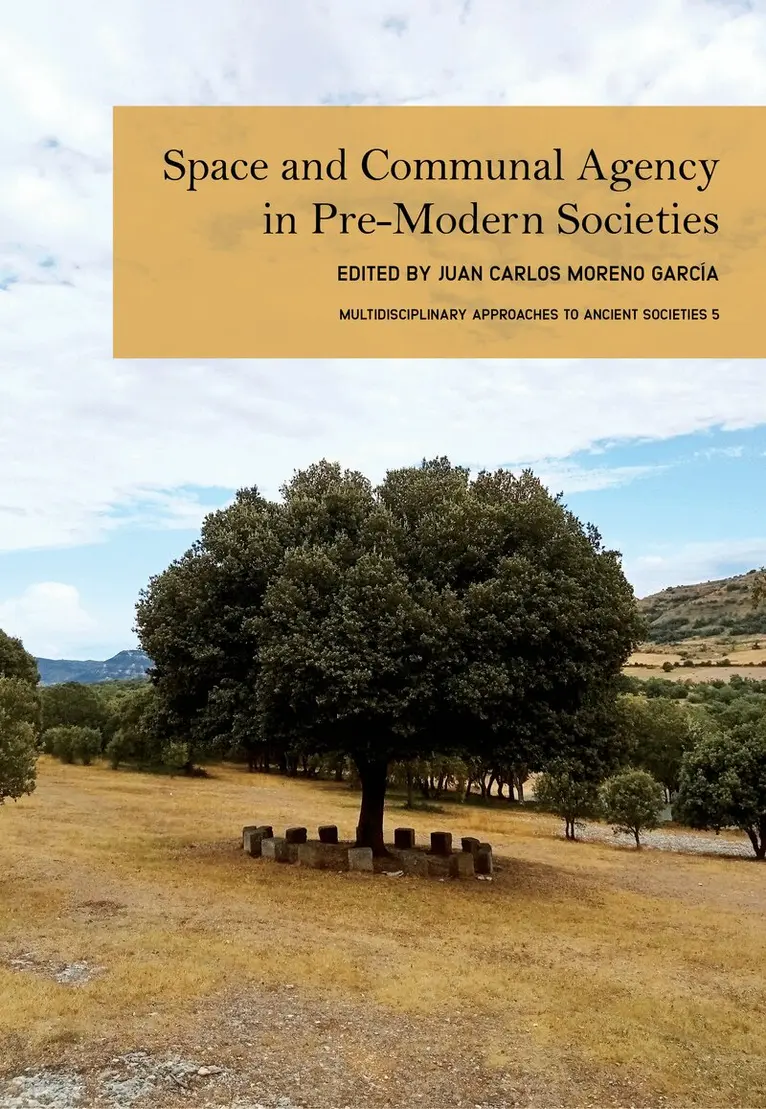
    Space and Communal Agency in Pre-Modern Societies

    AvJuan Carlos Moreno García

    Inbunden, Engelska, 2025

    836 kr

    Skickas . Fri frakt över 249 kr.

    Beskrivning

    Monumental spaces were fundamental in the construction of power, political order and community identities in the ancient and pre-modern world. It was for this reason that authorities invested heavily in the construction of ideal landscapes of power that embodied the basic representation about what a harmonious society and an ordered world under the inspired guidance of the ruler(s) was. Such landscapes conveyed thus powerful cultural values and ideals about the social order that had produced them, not to speak about the authorities’ ability –who designed and built them – to lead their societies. However, far from being fixed over time, those spaces underwent changes to accommodate new values, to express a new balance of power resulting in transformations, rebuilding, integration of selected aspects of the past or, simply, utter destruction of landscapes no longer functional. Monumental spaces were fundamental in constructing power, political order and collective identities in the ancient and pre-modern world. Authorities dedicated considerable resources to building power landscapes that represented their ideals about what a harmonious society and an ordered world should be under their inspired guidance. However, social stability actually depended on the rulers’ capacity to integrate diverse social sectors beyond the usually restricted circle of the elite. These sectors may influence decision-making and produce formal or informal institutions that the rulers should consider. Communal and civic agency appears thus as a fundamental field of research. Whereas these sectors are frequently underrepresented in the written and monumental record, the traces of their values, aspirations, needs and social influence may be detected through archaeology. In Mesoamerican cities, for example, with their often loose urban layouts and autonomous neighbourhoods, the rulers needed to gather people as spectators to legitimate their authority. Plazas therefore became essential to negotiate consent and social consensus. In the Classical world, agoras, forums and amphitheatres were intended to promote civic values, deliberation and collective identity. Finally, social confrontation could result in disputed interpretations, alternative uses, abandonment and destruction of built environments and spaces. The traditional focus on elite areas and buildings may thus conceal the political importance of spatial forms and constructions serving communal needs.This book delves into the intricate relationship between built environments, collective identities and civic agency. It also scrutinises the potential conflicts that can emerge from the competing or alternative uses of space, whether public, ritual, civic or a combination of these. By presenting a selection of historical case studies from various regions of the world, the book aims to challenge existing concepts and perspectives about the civic and communal influences in settlement organisation and monumentality. It also sheds light on the boundaries of rulers’ authority and the presence of collective institutions, identities and decision-making forms that are seldom discussed in official sources.

    Produktinformation

    • Utgivningsdatum:2025-04-15
    • Mått:170 x 240 x 30 mm
    • Vikt:1 124 g
    • Format:Inbunden
    • Språk:Engelska
    • Antal sidor:352
    • Förlag:Casemate Publishers
    • ISBN:9798888571934

    Utforska kategorier

    • Arkitektur inom Kultur
    • Arkeologiska perioder och områden inom Historia och arkeologi
    • Forntidens historia inom Historia och arkeologi

    Mer om författaren

    Juan Carlos Moreno García (PhD in Egyptology, 1995) is a CNRS senior researcher at the University of Paris IV-Sorbonne, as well as lecturer on social and economic history of ancient Egypt at the École Pratique des Hautes Études (EPHE) in Paris. He has published extensively on the administration, socio-economic history, and landscape organisation of ancient Egypt, usually in a comparative perspective with other civilisations of the ancient world, and has organised several conferences on these topics.

    Innehållsförteckning

    • 1. Introduction: Community, public space and collective political agency in pre-modern societies Juan Carlos Moreno García2. Understanding the North-West Palace in the Neo-Assyrian capital of Nimrud as people’s movement and sensorial experience of space Paolo Brusasco3. A tale of two tells: Making pots, making monuments, making polity Anne Porter4. Building monuments to build communities: Monumental space as public space in the Iron Age Levant Timothy Hogue5. Identities, space, monumentality at Avaris Silvia Gómez-Senovilla6. Community, public space and civic agency in pharaonic Egypt Juan Carlos Moreno García7. Political memory and imagined diversity. Agorai and theatres in Near Eastern Hellenistic cities: Public spaces and political agency Claudia Horst8. Plazas and theatrical performances in ancient Maya society: A case from El Palmar, Mexico Kenichiro Tsukamoto9. Real, imagined, vibrant: Ruins-as-cemeteries in ancient coastal Peru David Chicoine and Matthew Helmer10. Collectivity and monumentality in Indigenous eastern North America Victor D. Thompson and Jennifer Birch11. Reimagining structures of power: The role of kiva architecture in religious and political reorganisation in the US Southwest Susan C. Ryan12. Agency and invisibility in the Islamic city: Qadīb al-Bān and the city’s edge Ethel Sara Wolper13. Power and monumentality in (Islamic) towns of pre-colonial Africa Monika Baumanova14. Power, patronage and pilgrimage within Early Historic and medieval Anuradhapura, Sri Lanka: The development of state and Sangha relations and the representations and limits of royal control Christopher Davis, Robin Coningham and Prishanta Gunawardhana15. The importance of communal spaces in Scandinavia: Collective control vs elite authority and processes of state formation (AD 800–1350) Marie Ødegaard and Kjetil Loftsgarden