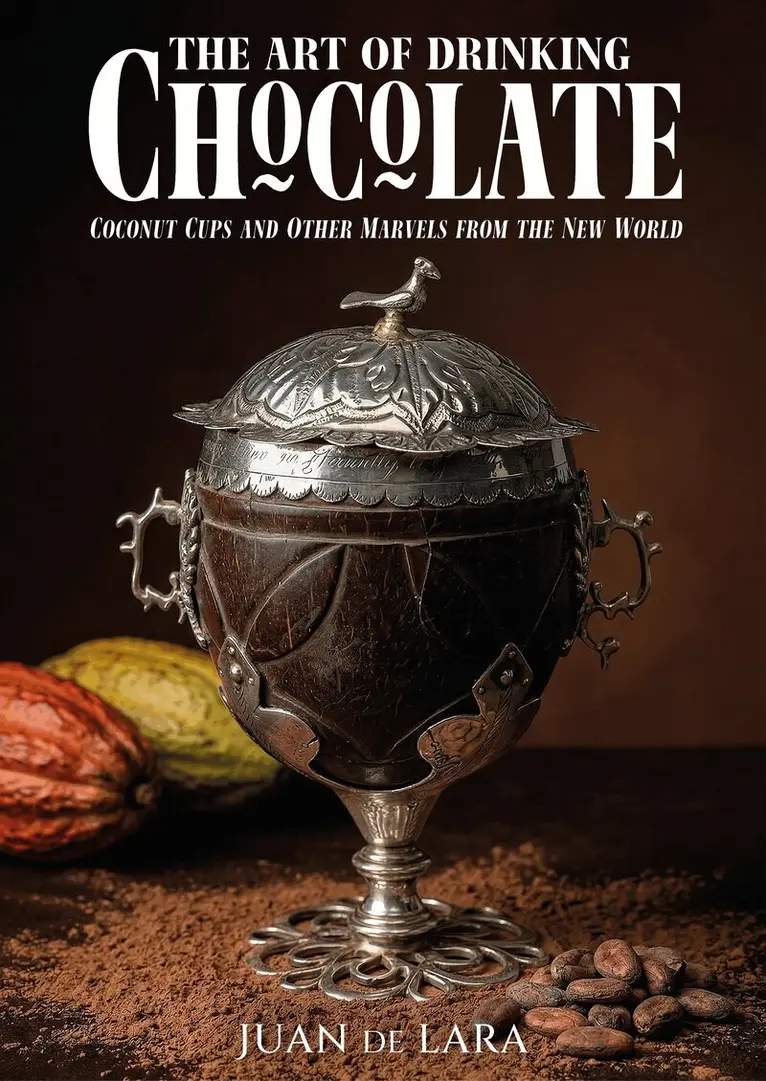
Häftad, Engelska, 2026
Art of Drinking Chocolate
Av Juan de Lara
556 kr
Kommande
Beskrivning
This book presents the first comprehensive study of coconut cups for chocolate, combining archival research with the analysis of surviving pieces in museum and private collections worldwide. By reconstructing their chronology, identifying regional workshops, and tracing stylistic influences, the study sheds new light on a largely overlooked artistic tradition.The story of these cups begins with the story of chocolate itself. Before it had became the solid confection we enjoy today, it was consumed as a beverage for millennia. The cacao tree from which it originates first appeared in the Orinoco basin and from there spread and acclimated to other regions of the Americas. Pre-Hispanic American communities consumed this beverage (which the Mayas called chocolhaa and the Aztecs xocolatl) ceremonially and socially, drinking it from simple vessels such as hollowed gourds. When the Spanish arrived in the Americas in the fifteenth century, they quickly adopted the local tradition of chocolate drinking. Originally bitter, the beverage was gradually transformed by the addition of ingredients introduced through global trade networks – such as sugar, anise, jasmine water, and cinnamon.The so-called Age of Discovery was a period of profound global exchange, in which ideas, objects, and beliefs travelled alongside commodities. Chocolate became part of this expanding cultural landscape, surrounded not only by new tastes but also by new ideas about health and the body. The healing properties of chocolate became one of its most noted qualities of this drink, as it was considered a ‘fortifying beverage’, acting as a stimulant that aided digestion. To drink this new version of chocolate, the Spanish adopted a type of organic vessel reminiscent of the Indigenous gourd cup but fashioned from a fruit that, although closely associated with tropical landscapes, had not been present in the Americas before the sixteenth century: the coconut.The coconut is native to the Moluccas and the wider Indo-Pacific seas. Through ocean currents and early trade networks, coconuts reached India and were subsequently transported westward to Africa and Europe. Archaeological finds indicate that coconut shells were known in the Roman world (for instance, shells dating to the second century CE have been found in the port of Berenike, in Egypt), while later Arab and Persian traders circulated them widely and introduced them to the Mediterranean (see for instance the famous coconut in the cathedral of Munster, garnished with Fatimid rock crystal). In medieval and early modern Europe, coconuts were considered rare and exotic objects. Some writers believed them to be the carcass and remains of marine creatures that lived under the sea, while others regarded them as the fruit of Paradise, as described in Arabic travel literature such as that of Ibn Battuta. By at least the tenth century, coconut shells began to be fashioned into drinking vessels, both in West Asia and Europe, as they were believed to possess alexipharmic properties – capable of preventing poisoning and protecting the body from disease.When in 1565 the Spanish established suzerainty over the Philippines, coconuts were introduced to the Americas through transpacific trade. Coconut palms were planted along the Pacific coast of Mexico and eventually, in just one generation, they spread throughout coastal regions of the Caribbean and Central America. By the early seventeenth century, coconut groves had become widespread. Subsequently, the fast access to these ‘magical’ shells, generated a large surplus and they began to be used as drinking vessels for various beverages – including wine, chicha, and pulque – but most prominently for chocolate.Over the following three centuries, these coconut vessels evolved into remarkable luxury objects known as cocos chocolateros (i.e. coconut cups for chocolate). Artisans carved the shells with intricate geometric and vegetal motifs and mounted them in silver, often using elaborate filigree techniques. These vessels became prized objects in elite households across the Spanish world and beyond. Inventories from the courts of Europe and Asia – including those of royal households in England, Portugal, and Sumatra—record the presence of such cups, sometimes in extraordinary quantities. Ultimately, these cocos chocolateros demonstrate the profound interconnectedness of the early modern world. They embody the movement of materials, techniques, and people across continents and oceans, revealing a rich story of cross-cultural exchange between the Islamic world, Asia, Europe, and the Americas during the Age of Discovery.
Produktinformation
- Utgivningsdatum: 2026-09-18
- Mått: 170 x 240 x undefined mm
- Format: Häftad
- Språk: Engelska
- Antal sidor: 256
- Förlag: Casemate Publishers
- ISBN: 9798888572832
Utforska kategorier
Betyg & recensioner
0 recensioner
Inga recensioner tillgängliga.