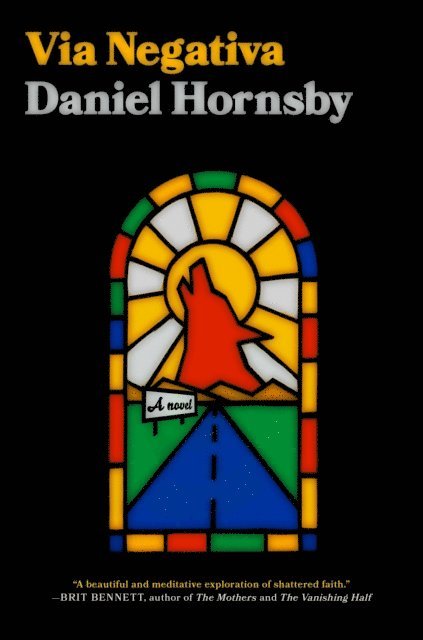
Visar resultat för..."Via negativa"
Sökningen "Via negativa Staffan Larsson" gav inga träffar.14 produkter
14 produkter
174 kr
Skickas inom 11-20 vardagar
118 kr
Skickas inom 5-8 vardagar
In this kaleidoscopic and engrossing novella, the reader is drawn into the shifting world of Beirut, “city of whores and city of dames”, when Yusuf, an inveterate observer of his native city, is given several unfinished stories by one of his most promising students and finds that his life’s drift is about to hit rough water …
150 kr
Skickas inom 5-8 vardagar
A collection of fascinating quotations from the legendary artist and graffiti pioneerFutura is a living legend—a world-renowned painter, designer, and photographer who was a pioneer of graffiti art and New York City’s “subway school.” His radical abstract work in the street and on canvas established him as a central figure in an important art movement that included Jean-Michel Basquiat, Keith Haring, Rammellzee, Lee Quiñones, and Dondi White. Futura-isms is a collection of essential quotations from this fascinating artist. Gathered from four decades of interviews and panel discussions, this memorable selection illuminates Futura’s thoughts on legal and illegal art, his influences, fellow artists, and the past, present, and future. He also offers colorful memories of his adventurous life—growing up in New York City, serving in the Navy, touring with The Clash—and reflects on how his experiences have shaped his art.Select quotations from the book:“Graffiti was a way for me to exist. I wanted the world to know my name. I wanted to be somebody.”“The essence of what graffiti is . . . is creating this identity and taking it to the public.”“My whole life, I think, I’ve been a nomad.”“I was always at home in the subway system.”“People say, ‘Let’s play within the rules.’ I say, ‘No—let’s break the rules a little bit.’”
Apophatic Elements in the Theory and Practice of Psychoanalysis
Pseudo-Dionysius and C.G. Jung
Häftad, Engelska, 2016
797 kr
Skickas inom 10-15 vardagar
How can the psychotherapist think about not knowing? Is psychoanalysis a contemplative practice? This book explores the possibility that there are resources in philosophy and theology which can help psychoanalysts and psychotherapists think more clearly about the unknown and the unknowable. The book applies the lens of apophasis to psychoanalysis, providing a detailed reading of apophasis in the work of Pseudo-Dionysius and exploring C.G. Jung's engagement with apophatic discourse. Pseudo-Dionysius brought together Greek and biblical currents of negative theology and the via negativa, and the psychology of Jung can be read as a continuation and extension of the apophatic tradition. Henderson discusses the concept of the transcendent function as an apophatic dynamic at the heart of Jung's thought, and suggests that apophasis can provide the key to understanding the family resemblance among the disparate schools of psychoanalysis. Chapters consider:-Jung’s discussion of opposites, including his reception of Nicholas of Cusa’s concept of the coincidence of opposites-Jung's engagement with Neoplatonism and Pseudo-Dionysius-the work of Jung in relation to Deleuze, Derrida and other writers-how motifs in Pseudo-Dionysius’ Ecclesiastical Hierarchy resonate with contemporary psychoanalytic psychotherapy.The in-depth examination of primary sources in this comprehensive volume provides a platform for research into apophasis in the wider field of psychoanalysis. It will prove valuable reading for scholars and analysts of Jungian psychology studying religion and mysticism.
Apophatic Elements in the Theory and Practice of Psychoanalysis
Pseudo-Dionysius and C.G. Jung
Inbunden, Engelska, 2013
2 187 kr
Skickas inom 10-15 vardagar
How can the psychotherapist think about not knowing? Is psychoanalysis a contemplative practice? This book explores the possibility that there are resources in philosophy and theology which can help psychoanalysts and psychotherapists think more clearly about the unknown and the unknowable. The book applies the lens of apophasis to psychoanalysis, providing a detailed reading of apophasis in the work of Pseudo-Dionysius and exploring C.G. Jung's engagement with apophatic discourse. Pseudo-Dionysius brought together Greek and biblical currents of negative theology and the via negativa, and the psychology of Jung can be read as a continuation and extension of the apophatic tradition. Henderson discusses the concept of the transcendent function as an apophatic dynamic at the heart of Jung's thought, and suggests that apophasis can provide the key to understanding the family resemblance among the disparate schools of psychoanalysis. Chapters consider:-Jung’s discussion of opposites, including his reception of Nicholas of Cusa’s concept of the coincidence of opposites-Jung's engagement with Neoplatonism and Pseudo-Dionysius-the work of Jung in relation to Deleuze, Derrida and other writers-how motifs in Pseudo-Dionysius’ Ecclesiastical Hierarchy resonate with contemporary psychoanalytic psychotherapy.The in-depth examination of primary sources in this comprehensive volume provides a platform for research into apophasis in the wider field of psychoanalysis. It will prove valuable reading for scholars and analysts of Jungian psychology studying religion and mysticism.
699 kr
Skickas inom 3-6 vardagar
Jaime Saenz is arguably the greatest Bolivian writer of the twentieth century. His poetry is apocalyptic, transcendent, hallucinatory, brilliant--and, until recently, available only in Spanish. Forrest Gander and Kent Johnson's translations of Saenz's work have garnered much-deserved attention and acclaim. Here for the first time in English they give us his masterpiece, The Night, Saenz's most famous poem and the last he wrote before his death in 1986. An unusual man, Saenz lived his whole life in La Paz, Bolivia, seldom venturing far from the city and its indigenous culture that feature so prominently in his writings. He sought God in unlikely places: slum taverns, alcoholic excess, the street. Saenz was nocturnal. He once stole a leg from a cadaver and hid it under his bed. On his wedding night he brought home a panther. In this epic poem, Saenz explores the singular themes that possessed him: alcoholism, death, nightmares, identity, otherness, and his love for La Paz. The poem's four movements culminate in some of the most profoundly mystical, beautiful, and disturbing passages of modern Latin American poetry.They are presented here in this faithful and inspired English translation of the Spanish original. Complete with an introduction by the translators that paints a vivid picture of the poet's life, and an afterword by Luis H. Antezana, a notable Bolivian literary critic and close friend of Saenz, this bilingual edition is the essential introduction to one of the most visionary and enigmatic poets of the Hispanic world.
1 753 kr
Tillfälligt slut
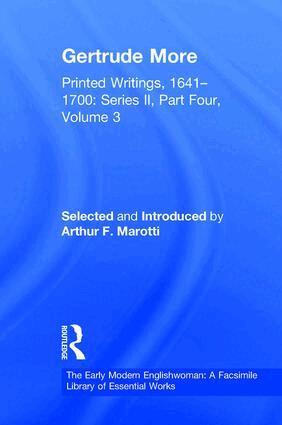
Gertrude More belongs to a tradition of mystical writers who believed in the value of the via negativa, a path to union with God by way of total self-abnegation and the emptying of the mind of set ideas and images. Her only book-length work, THE SPIRITVAL EXERCISES (Paris, 1658), is a collection of her writing assembled by Dom Augustine Baker, OSB, and published some thirty-three years after her death. Some of More’s other verse and prose appears in the biography that Baker composed, but her SPIRITVAL EXERCISES remains the main text she has bequeathed to her order and to posterity. It is reprinted here in full with Arthur F. Marotti's introductory note outlining Gertrude More's life and work.
1 616 kr
Skickas inom 10-15 vardagar
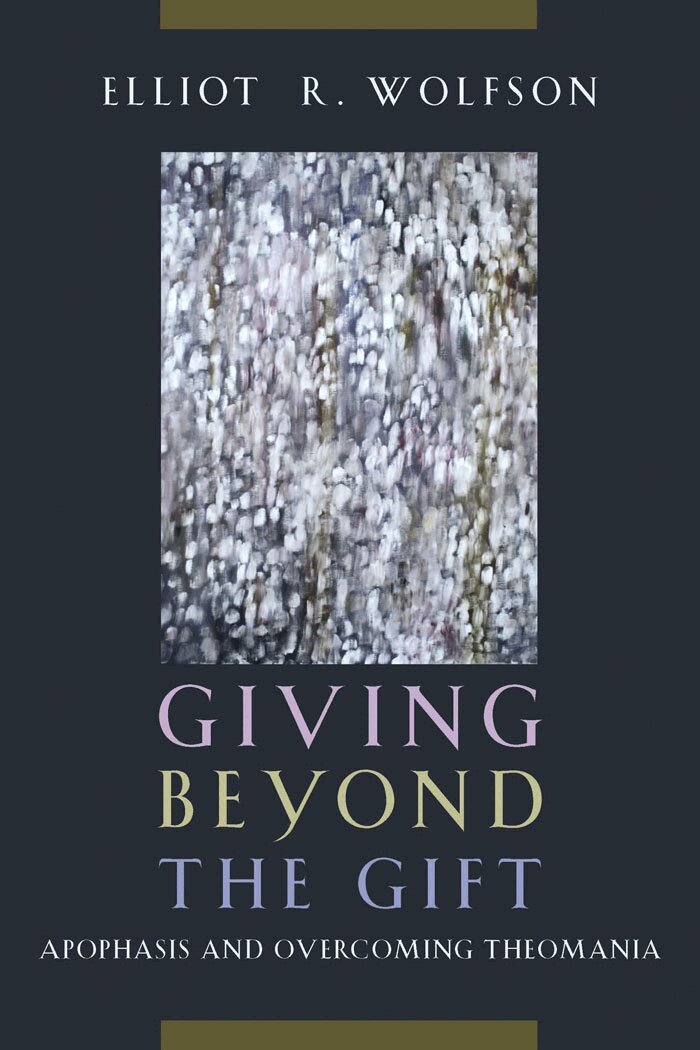
This book explores the co-dependency of monotheism and idolatry by examining the thought of several prominent twentieth-century Jewish philosophers—Cohen, Buber, Rosenzweig, and Levinas. While all of these thinkers were keenly aware of the pitfalls of scriptural theism, to differing degrees they each succumbed to the temptation to personify transcendence, even as they tried either to circumvent or to restrain it by apophatically purging kataphatic descriptions of the deity. Derrida and Wyschogrod, by contrast, carried the project of denegation one step further, embarking on a path that culminated in the aporetic suspension of belief and the consequent removal of all images from God, a move that seriously compromises the viability of devotional piety.The inquiry into apophasis, transcendence, and immanence in these Jewish thinkers is symptomatic of a larger question. Recent attempts to harness the apophatic tradition to construct a viable postmodern negative theology, a religion without religion, are not radical enough. Not only are these philosophies of transcendence guilty of a turn to theology that defies the phenomenological presupposition of an immanent phenomenality, but they fall short on their own terms, inasmuch as they persist in employing metaphorical language that personalizes transcendence and thereby runs the risk of undermining the irreducible alterity and invisibility attributed to the transcendent other.The logic of apophasis, if permitted to run its course fully, would exceed the need to posit some form of transcendence that is not ultimately a facet of immanence. Apophatic theologies, accordingly, must be supplanted by a more far-reaching apophasis that surpasses the theolatrous impulse lying coiled at the crux of theism, an apophasis of apophasis, based on accepting an absolute nothingness—to be distinguished from the nothingness of an absolute—that does not signify the unknowable One but rather the manifold that is the pleromatic abyss at being's core. Hence, the much-celebrated metaphor of the gift must give way to the more neutral and less theologically charged notion of an unconditional givenness in which the distinction between giver and given collapses. To think givenness in its most elemental, phenomenological sense is to allow the apparent to appear as given without presuming a causal agency that would turn that given into a gift.
450 kr
Skickas inom 10-15 vardagar
This book explores the co-dependency of monotheism and idolatry by examining the thought of several prominent twentieth-century Jewish philosophers—Cohen, Buber, Rosenzweig, and Levinas. While all of these thinkers were keenly aware of the pitfalls of scriptural theism, to differing degrees they each succumbed to the temptation to personify transcendence, even as they tried either to circumvent or to restrain it by apophatically purging kataphatic descriptions of the deity. Derrida and Wyschogrod, by contrast, carried the project of denegation one step further, embarking on a path that culminated in the aporetic suspension of belief and the consequent removal of all images from God, a move that seriously compromises the viability of devotional piety.The inquiry into apophasis, transcendence, and immanence in these Jewish thinkers is symptomatic of a larger question. Recent attempts to harness the apophatic tradition to construct a viable postmodern negative theology, a religion without religion, are not radical enough. Not only are these philosophies of transcendence guilty of a turn to theology that defies the phenomenological presupposition of an immanent phenomenality, but they fall short on their own terms, inasmuch as they persist in employing metaphorical language that personalizes transcendence and thereby runs the risk of undermining the irreducible alterity and invisibility attributed to the transcendent other.The logic of apophasis, if permitted to run its course fully, would exceed the need to posit some form of transcendence that is not ultimately a facet of immanence. Apophatic theologies, accordingly, must be supplanted by a more far-reaching apophasis that surpasses the theolatrous impulse lying coiled at the crux of theism, an apophasis of apophasis, based on accepting an absolute nothingness—to be distinguished from the nothingness of an absolute—that does not signify the unknowable One but rather the manifold that is the pleromatic abyss at being's core. Hence, the much-celebrated metaphor of the gift must give way to the more neutral and less theologically charged notion of an unconditional givenness in which the distinction between giver and given collapses. To think givenness in its most elemental, phenomenological sense is to allow the apparent to appear as given without presuming a causal agency that would turn that given into a gift.
190 kr
Skickas inom 5-8 vardagar
322 kr
Skickas inom 5-8 vardagar
Del 19 - Sophia Studies in Cross-cultural Philosophy of Traditions and Cultures
Cloud of Nothingness
The Negative Way in Nagarjuna and John of the Cross
Inbunden, Engelska, 2016
960 kr
Skickas inom 10-15 vardagar
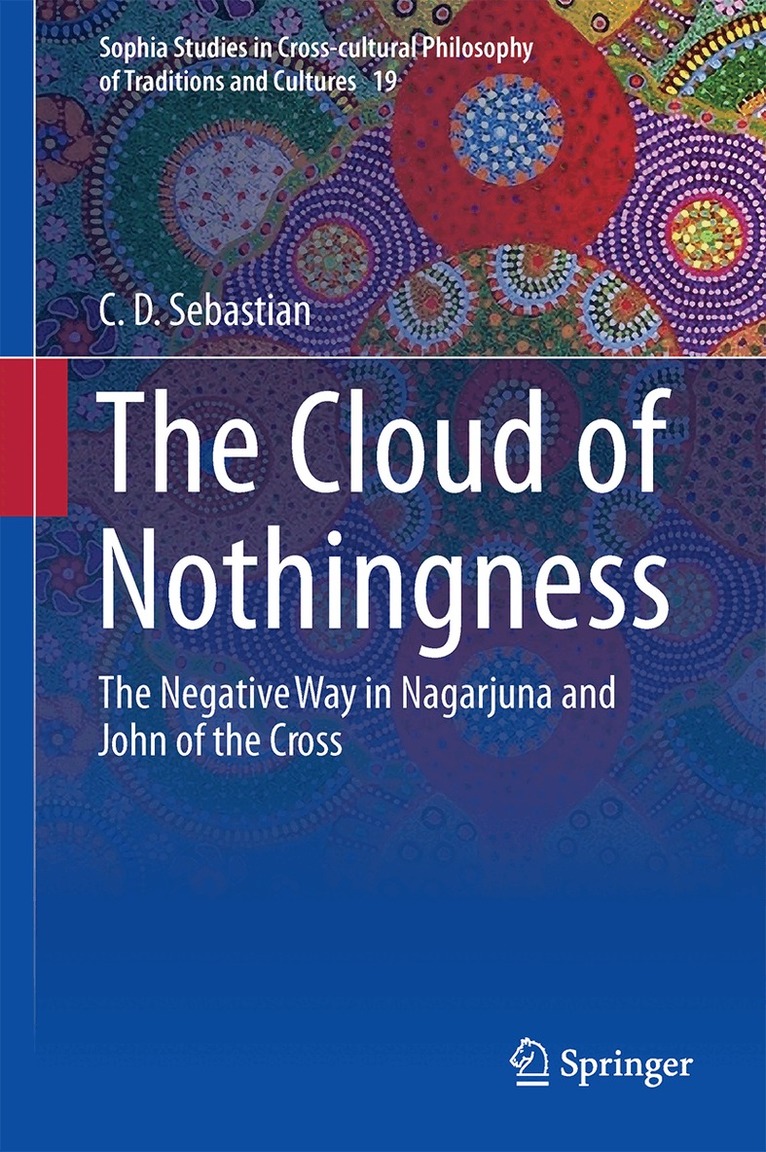
This book explores ‘nothingness’, the negative way found in Buddhist and Christian traditions, with a focused and comparative approach. It examines the works of Nagarjuna (c. 150 CE), a Buddhist monk, philosopher and one of the greatest thinkers of classical India, and those of John of the Cross (1542-1591), a Carmelite monk, outstanding Spanish poet, and one of the greatest mystical theologians. The conception of nothingness in both the thinkers points to a paradox of linguistic transcendence and provides a novel insight into via negativa. This is the first full-length work comparing nothingness (emptiness) in Nagarjuna (Mahayana Buddhism) and John of the Cross (Christianity) in any language. It augments the comparative approach found in Buddhist-Christian comparative philosophy and theology. This book is of especial interest to academics of Buddhist and Christian studies searching for avenues for intellectual dialogue.
Del 19 - Sophia Studies in Cross-cultural Philosophy of Traditions and Cultures
Cloud of Nothingness
The Negative Way in Nagarjuna and John of the Cross
Häftad, Engelska, 2018
761 kr
Skickas inom 10-15 vardagar
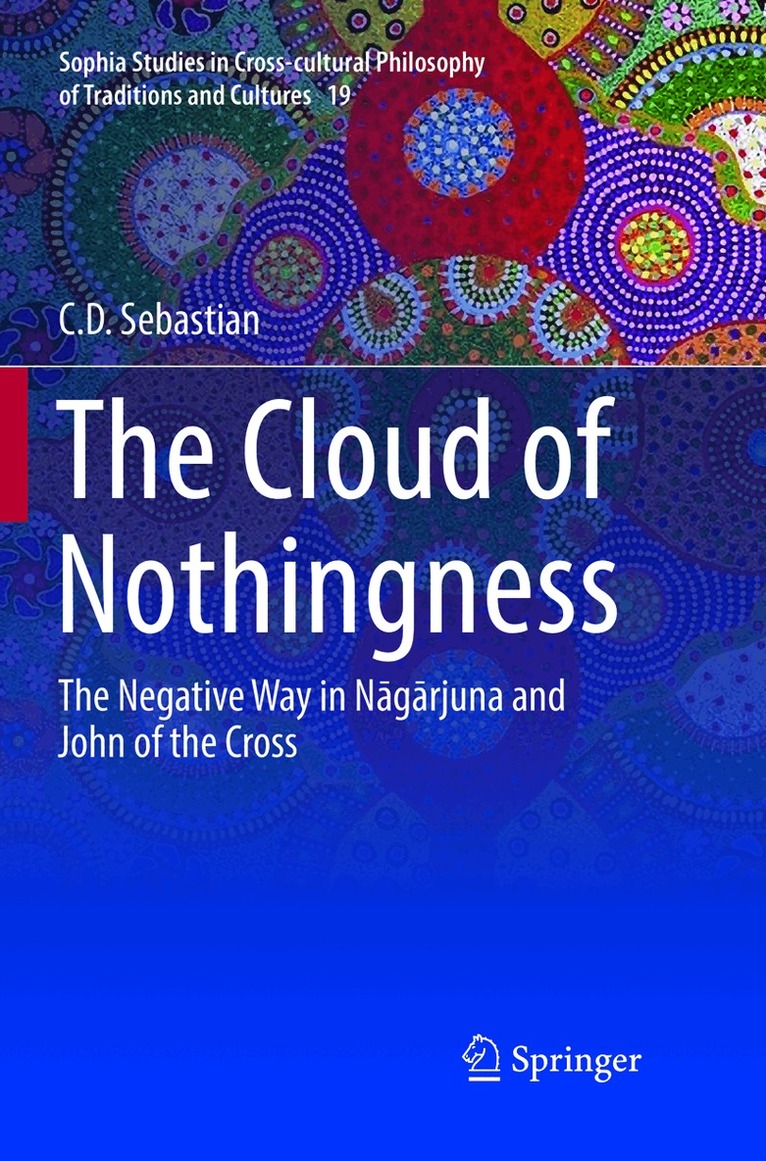
This book explores ‘nothingness’, the negative way found in Buddhist and Christian traditions, with a focused and comparative approach. It examines the works of Nagarjuna (c. 150 CE), a Buddhist monk, philosopher and one of the greatest thinkers of classical India, and those of John of the Cross (1542-1591), a Carmelite monk, outstanding Spanish poet, and one of the greatest mystical theologians. The conception of nothingness in both the thinkers points to a paradox of linguistic transcendence and provides a novel insight into via negativa. This is the first full-length work comparing nothingness (emptiness) in Nagarjuna (Mahayana Buddhism) and John of the Cross (Christianity) in any language. It augments the comparative approach found in Buddhist-Christian comparative philosophy and theology. This book is of especial interest to academics of Buddhist and Christian studies searching for avenues for intellectual dialogue.
Del 42 - Aries Book Series
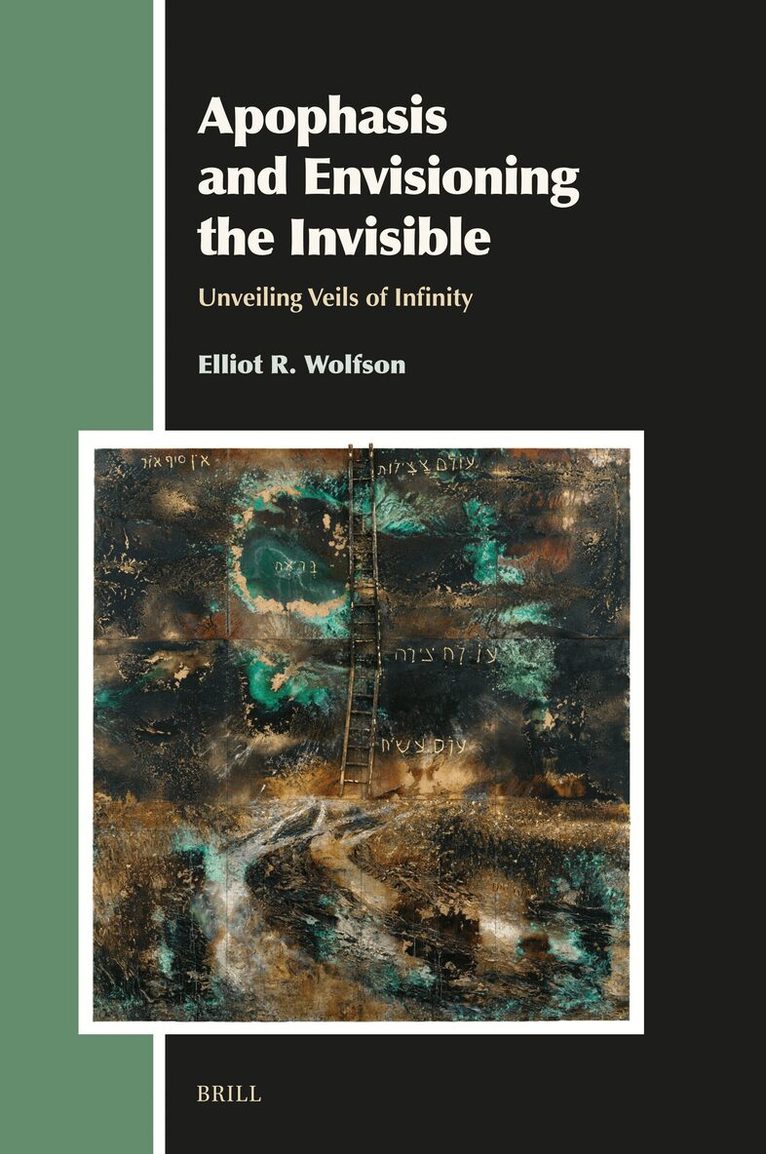
Apophasis and Envisioning the Invisible
Unveiling Veils of Infinity
Inbunden, Engelska, 2026
3 005 kr
Skickas inom 3-6 vardagar
In this monograph, two of the most complicated theoretical topics confronting the scholar of mysticism (apophasis and infinity) are tackled. Writing about apophasis presents a unique dilemma as the term itself connotes the inability of language to name the namelessness of ultimate reality. Yet, the apophatic is a gesture of speaking-not, which entails saying the unsayable, as opposed to not speaking, which is the reticence appropriate to silence. The exploration of infinity presents an equally daunting demand as the intellect embarking on this path is summoned to circumscribe the uncircumscribable. Just as communicating the incommunicable is an endless enterprise of speaking the unspeakable, so mapping infinity is an unremitting pursuit of delimiting the limitless. The two subjects thus intersect at the vanishing point where the human mind reaches its limit by confronting the limitlessness that can be described only as indescribable.
Letar du efter digitala böcker?
E-böcker och ljudböcker handlar du än så länge på vår tidigare sajt.