A. de Vries – författare
Visar alla böcker från författaren A. de Vries. Handla med fri frakt och snabb leverans.
4 produkter
4 produkter
E-bok
PDF, Engelska, 2014779 kr
Läs direkt efter köp
This dictionary supplies associations which have been evoked by certain words, signs, etc. in Western civilization in the past, and which may float to the surface again tomorrow; for however ''daringly new'' a modern use of imagery may look, it generally appears to have roots in what has been said and done in the past. No fine distinctions have been made between symbols (in the limited sense), allegories, metaphors, signs, types, images, etc. (not to mention ''ascending'' and ''descending'' symbols), since such subtle distinctions, however sensible from a scientific point of view, are useless to a person struggling with the deeper comprehension (and thus appreciation) of a particular ''symbol''.
Inbunden, Engelska, 1988
1 619 kr
Skickas inom 10-15 vardagar
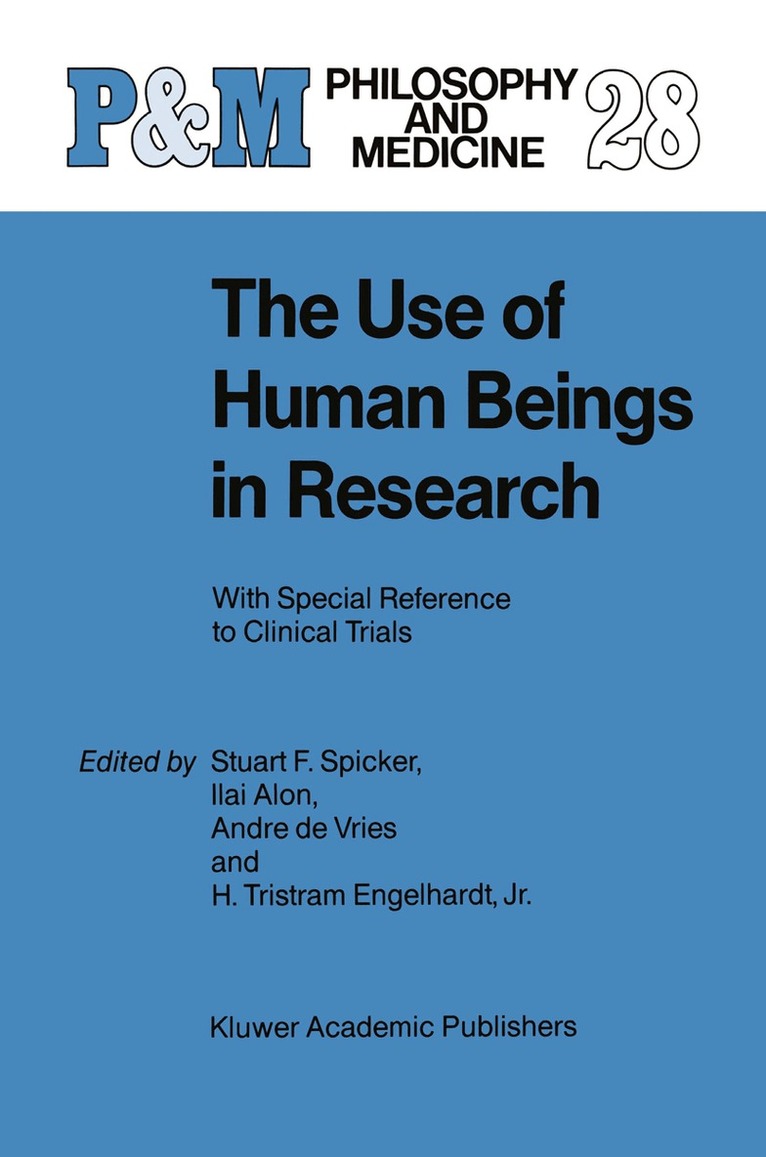
This volume, which has developed from the Fourteenth Trans Disciplinary Symposium on Philosophy and Medicine, September 5-8, 1982, at Tel Aviv University, Israel, contains the contributions of a group of distinguished scholars who together examine the ethical issues raised by the advance of biomedical science and technology. We are, of course, still at the beginning of a revolution in our understanding of human biology; scientific medicine and clinical research are scarcely one hundred years old. Both the sciences and the technology of medicine until ten or fifteen years ago had the feeling of the 19th century about them; we sense that they belonged to an older time; that era is ending. The next twenty-five to fifty years of investigative work belong to neurobiology, genetics, and reproductive biology. The technologies of information processing and imaging will make diagnosis and treatment almost incomprehensible by my generation of physicians. Our science and technology will become so powerful that we shall require all of the art and wisdom we can muster to be sure that they remain dedicated, as Francis Bacon hoped four centuries ago, "to the uses of life." It is well that, as philosophers and physicians, we grapple with the issues now when they are relatively simple, and while the pace of change is relatively slow. We require a strategy for the future; that strategy must be worked out by scientists, philosophers, physicians, lawyers, theologians, and, I should like to add, artists and poets.
E-bok
PDF, Engelska, 20121 937 kr
Läs direkt efter köp
This volume, which has developed from the Fourteenth Trans Disciplinary Symposium on Philosophy and Medicine, September 5-8, 1982, at Tel Aviv University, Israel, contains the contributions of a group of distinguished scholars who together examine the ethical issues raised by the advance of biomedical science and technology. We are, of course, still at the beginning of a revolution in our understanding of human biology; scientific medicine and clinical research are scarcely one hundred years old. Both the sciences and the technology of medicine until ten or fifteen years ago had the feeling of the 19th century about them; we sense that they belonged to an older time; that era is ending. The next twenty-five to fifty years of investigative work belong to neurobiology, genetics, and reproductive biology. The technologies of information processing and imaging will make diagnosis and treatment almost incomprehensible by my generation of physicians. Our science and technology will become so powerful that we shall require all of the art and wisdom we can muster to be sure that they remain dedicated, as Francis Bacon hoped four centuries ago, "to the uses of life." It is well that, as philosophers and physicians, we grapple with the issues now when they are relatively simple, and while the pace of change is relatively slow. We require a strategy for the future; that strategy must be worked out by scientists, philosophers, physicians, lawyers, theologians, and, I should like to add, artists and poets.
Del 28 - Philosophy and Medicine
Use of Human Beings in Research
With Special Reference to Clinical Trials
Häftad, Engelska, 2014
1 605 kr
Skickas inom 10-15 vardagar
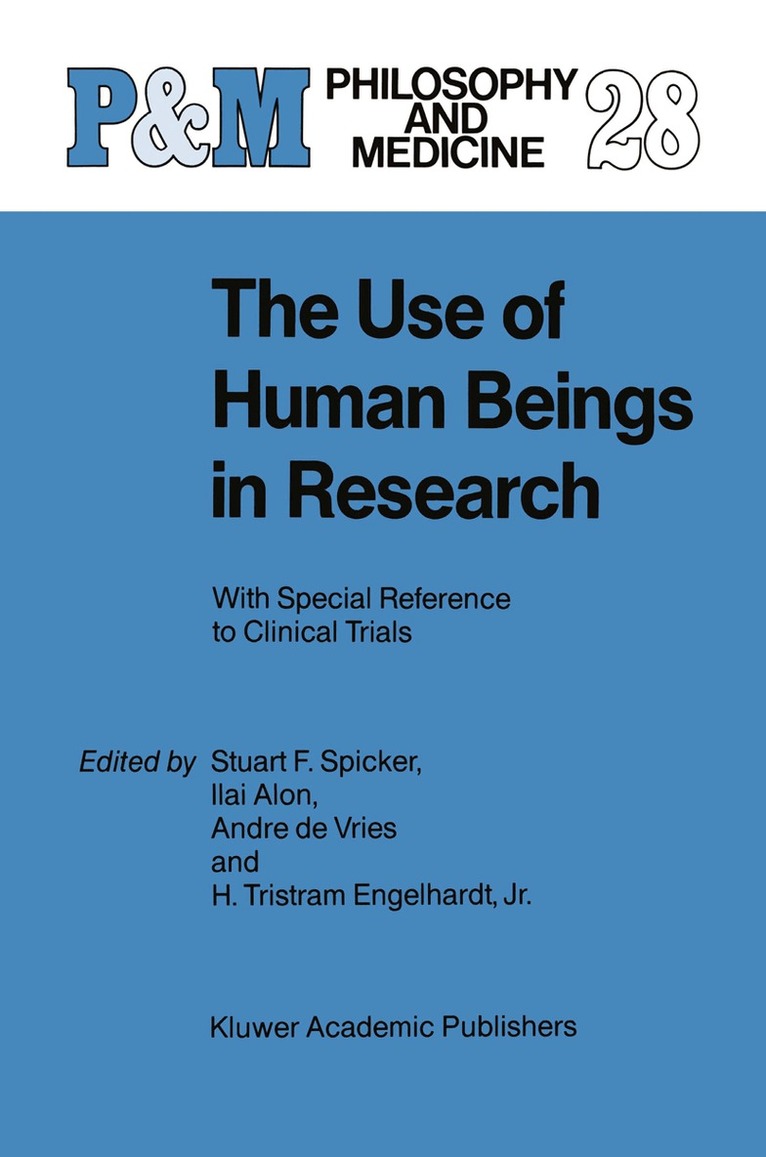
This volume, which has developed from the Fourteenth Trans Disciplinary Symposium on Philosophy and Medicine, September 5-8, 1982, at Tel Aviv University, Israel, contains the contributions of a group of distinguished scholars who together examine the ethical issues raised by the advance of biomedical science and technology. We are, of course, still at the beginning of a revolution in our understanding of human biology; scientific medicine and clinical research are scarcely one hundred years old. Both the sciences and the technology of medicine until ten or fifteen years ago had the feeling of the 19th century about them; we sense that they belonged to an older time; that era is ending. The next twenty-five to fifty years of investigative work belong to neurobiology, genetics, and reproductive biology. The technologies of information processing and imaging will make diagnosis and treatment almost incomprehensible by my generation of physicians. Our science and technology will become so powerful that we shall require all of the art and wisdom we can muster to be sure that they remain dedicated, as Francis Bacon hoped four centuries ago, "to the uses of life." It is well that, as philosophers and physicians, we grapple with the issues now when they are relatively simple, and while the pace of change is relatively slow. We require a strategy for the future; that strategy must be worked out by scientists, philosophers, physicians, lawyers, theologians, and, I should like to add, artists and poets.