A. K. Tiwari – författare
Visar alla böcker från författaren A. K. Tiwari. Handla med fri frakt och snabb leverans.
6 produkter
6 produkter
Häftad, Engelska, 2012
551 kr
Skickas inom 5-8 vardagar
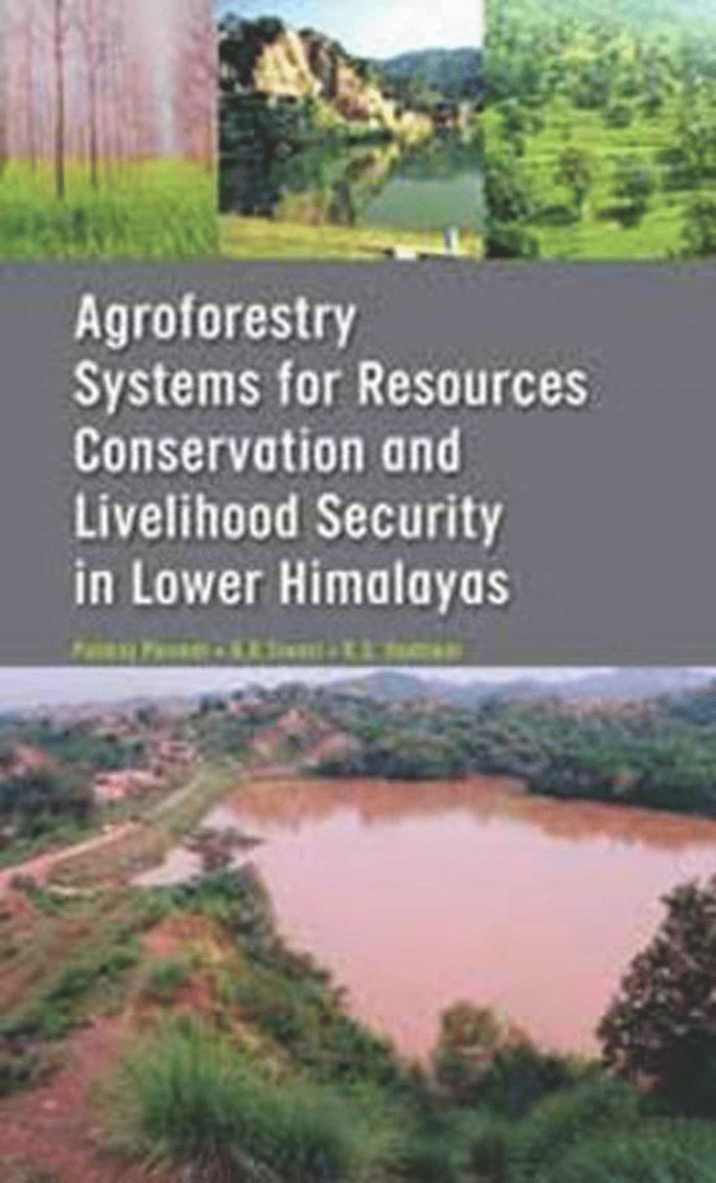
Shivalik ranges span approximately 2.14 million hectares across Himachal Pradesh, Uttarakhand, Jammu and Kashmir, Punjab, and Haryana in northwest India. The excessive exploitation of resources in the region has led to soil erosion, resulting in the rise of riverbeds, siltation of tanks, reservoirs, and other natural water bodies. Soil erosion exceeding 80 t ha-1 yr-1 has been documented in denuded hills at certain locations. Approximately 70% of the population in the region relies on agriculture, but only 18% of the cultivated area is irrigated. Agroforestry, which involves integrating trees and crops, has been recommended globally to mitigate soil erosion and achieve production goals simultaneously. Adopting scientifically proven agroforestry systems in the Shivaliks could reverse the degradation and enhance the economic status of the regions farmers.To date, extensive research has been conducted on the role of agroforestry in resource conservation and livelihood security in the region. This book aims to compile the existing knowledge on the subject, with 20 chapters covering various topics related to agroforestry systems and their impact on soil and water conservation, livelihood security, slope protection through mechanical and vegetative measures, fertility build-up, mine spoil rehabilitation, bamboos, climate change, and carbon sequestration.
Inbunden, Engelska, 2012
1 380 kr
Skickas inom 5-8 vardagar
The Shivalik ranges cover a vast area of approximately 2.14 million hectares across the states of Himachal Pradesh, Uttarakhand, Jammu and Kashmir, Punjab, and Haryana in north-west India. Over-exploitation of resources in the region has led to soil erosion, resulting in the rise of riverbeds and siltation of tanks, reservoirs, and other natural water bodies. Soil erosion rates of more than 80 tonnes per hectare per year have been recorded in some denuded hills. In this region, over 70% of the population depends on agriculture, but only 18% of the cultivated area is irrigated.To address this issue, agroforestry, which integrates trees with crops, has been recommended worldwide to check soil erosion and achieve production goals simultaneously. The adoption of scientifically proven agroforestry systems in the Shivalik region has the potential to reverse the degradation and improve the economic status of the farmers in the area.Extensive research has been conducted on the role of agroforestry in resource conservation and livelihood security in the region. This book aims to compile the available knowledge on the subject and contains 20 chapters covering various topics related to agroforestry systems, soil and water conservation, livelihood security, slope protection through mechanical and vegetative measures, fertility build-up, mine spoil rehabilitation, bamboos, climate change, and carbon sequestration.
E-bok
Engelska, 20106 498 kr
Läs direkt efter köp
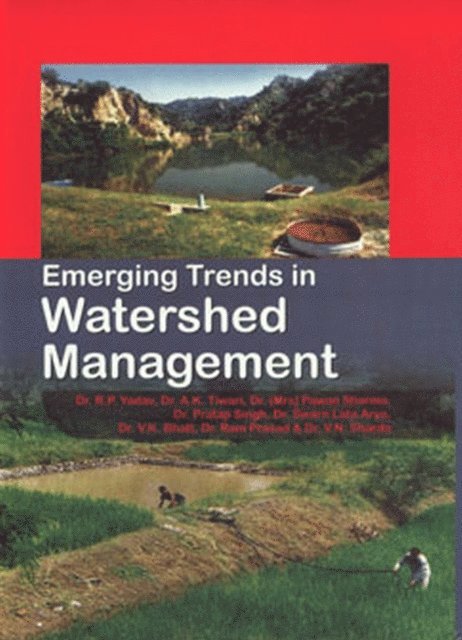
Over-exploitation of natural resources resulting in their severe degradation, diminishing water resources, declining forest cover, depleting energy sources, loss of biodiversity and generation of various kinds of wastes are the issues to be addressed on priority in India. About 45% of total geographical area of the country is degraded due to various processes of land degradation with water erosion affecting maximum area of 93.7 m ha. Land degradation causes 5% to more than 50% decline in total agricultural output every year and a loss of around 8 m tonnes of plant nutrients occurs due to water erosion annually. Intensification of agriculture in irrigated regions has also resulted in many second generation problems viz; water logging and salinization, soil sickness, nutrient imbalances etc. Hence, efficient management and utilization of land, water and vegetation resources to meet the growing basic human and animal needs in terms of food, fibre, fodder, timber and fuel continues to be an issue of utmost concern for policy makers, planners, conservationists and environmentalists. For detailed analysis and deeper understanding of region specific problems and setting up priorities for research and development in natural resources, a three day conference, ELSTRM-2007 was organized by the Indian Association of Soil and Water Conservationists, Dehradun at Chandigarh. The conference brought together more than 250 top most experts from the country on a common forum to discuss these issues. These deliberations were synthesized in the form of a chapter by the presenters. This book in all has now 59 chapters under six broad themes. Under natural resource appraisal theme status of soil erosion, land degradation, surface and ground water availability and quality, impact of human and livestock on biodiversity and land quality were discussed. Efficient techniques of water harvesting systems, ground water utilization and multiple uses for sustaining productivity were discussed under rainwater management for sustainable productivity. Alternative land use systems for improving land degradation and enhancing economic returns were discussed at great length in section 4. The topic under institutional mechanisms and policy issues were benefit sharing mechanism among stakeholders, capacity building and community empowerment, impacts and implications of watershed guidelines and gender and equity issues. State’s experiences on these burning issues were shared by state department heads and eminent scholars and future thrust were highlighted. It is hoped that the book will prove very useful to scholars, managers, policy makers and society at large in achieving environmental and livelihood security for the people of the country.
Inbunden, Engelska, 2017
1 091 kr
Skickas inom 10-15 vardagar
Begomoviruses are one of the most interesting plant viruses to study for basic and applied research as they cause huge economic losses to agriculture industries and farmers all over the world. They belong to family Geminiviridae and are emergent plant viral pathogens which cause diseases in various crops in the tropical and subtropical regions. They are transmitted by the whitefly (B. tabaci) and have either one (monopartite DNA-A) or two (bipartite DNA-A and DNA-B) genomic components. DNA-A and DNA-B are of ~2600 - 2800 nucleotides each. A number of serious diseases of cultivated crops of the Fabaceae, Malvaceae, Solanaceae and Cucurbitaceae families are caused by Begomoviruses which are considered as threat to their cultivation in many countries.Accurate diagnosis is important for successful diseases management, since plants infected by Begomovirus do not recover, suffer serious yield losses and act as further sources of inoculum, which is then picked up and spread by their vector whitefly (B. tabaci). Reports of occurrence of new viruses and re-emergence of several known viruses in new niches have become regular event. In such a dynamic system, growth of several crop species relies on an accurate diagnosis, management and better understanding of the biology of the casual virus. This is crucial to evolve appropriate control practices and to prevent the virus infection. Researchers have achieved considerable progress in characterization, detection and management of virus on different crop species in the last decade.This book covers latest information in diagnosis of begomoviruses in the present scenario and explores the new vistas in the field of genomics and proteomics. Chapters in Section 1 illustrates the occurrence, genome organisation, transmission and diagnostics of begomoviruses. It also details the diseases caused by begomoviruses on different crops, detection techniques and management strategies in support of research findings by presentation of data, graphics, figures and tables. Section 2 is a chapterwise collection of occurrence, diversity and status of begomoviruses in Asian Africa counties where the diseases are most prevalent. This book will provide wide opportunity to the readers to have complete information and status of begomovirus in Asia and Africa. This will be useful resource for researchers and extension workers involved in the begomvirus disease diagnosis and molecular biology.Expert detection, accurate diagnosis and timely management play a significant role in keeping plants free from pathogens. In this book expert researchers share their research knowledge and literature which are vital towards the diagnosis of begomoviruses, addressing traditional plant pathology techniques as well as advanced molecular diagnostic approach.The book deals with the economically important crops including fruits, vegetables along with challenges in crop protection against diseases caused by begomovirus. This will be resourceful and handy for researcher, practitioners and also students.

E-bok
Engelska, 20171 367 kr
Läs direkt efter köp
Begomoviruses are one of the most interesting plant viruses to study for basic and applied research as they cause huge economic losses to agriculture industries and farmers all over the world. They belong to family Geminiviridae and are emergent plant viral pathogens which cause diseases in various crops in the tropical and subtropical regions. They are transmitted by the whitefly (B. tabaci) and have either one (monopartite DNA-A) or two (bipartite DNA-A and DNA-B) genomic components. DNA-A and DNA-B are of ~2600 - 2800 nucleotides each. A number of serious diseases of cultivated crops of the Fabaceae, Malvaceae, Solanaceae and Cucurbitaceae families are caused by Begomoviruses which are considered as threat to their cultivation in many countries.Accurate diagnosis is important for successful diseases management, since plants infected by Begomovirus do not recover, suffer serious yield losses and act as further sources of inoculum, which is then picked up and spread by their vector whitefly (B. tabaci). Reports of occurrence of new viruses and re-emergence of several known viruses in new niches have become regular event. In such a dynamic system, growth of several crop species relies on an accurate diagnosis, management and better understanding of the biology of the casual virus. This is crucial to evolve appropriate control practices and to prevent the virus infection. Researchers have achieved considerable progress in characterization, detection and management of virus on different crop species in the last decade.This book covers latest information in diagnosis of begomoviruses in the present scenario and explores the new vistas in the field of genomics and proteomics. Chapters in Section 1 illustrates the occurrence, genome organisation, transmission and diagnostics of begomoviruses. It also details the diseases caused by begomoviruses on different crops, detection techniques and management strategies in support of research findings by presentation of data, graphics, figures and tables. Section 2 is a chapterwise collection of occurrence, diversity and status of begomoviruses in Asian Africa counties where the diseases are most prevalent. This book will provide wide opportunity to the readers to have complete information and status of begomovirus in Asia and Africa. This will be useful resource for researchers and extension workers involved in the begomvirus disease diagnosis and molecular biology. Expert detection, accurate diagnosis and timely management play a significant role in keeping plants free from pathogens. In this book expert researchers share their research knowledge and literature which are vital towards the diagnosis of begomoviruses, addressing traditional plant pathology techniques as well as advanced molecular diagnostic approach.The book deals with the economically important crops including fruits, vegetables along with challenges in crop protection against diseases caused by begomovirus. This will be resourceful and handy for researcher, practitioners and also students.

Häftad, Engelska, 2018
1 389 kr
Skickas inom 5-8 vardagar
Begomoviruses are one of the most interesting plant viruses to study for basic and applied research as they cause huge economic losses to agriculture industries and farmers all over the world. They belong to family Geminiviridae and are emergent plant viral pathogens which cause diseases in various crops in the tropical and subtropical regions. They are transmitted by the whitefly (B. tabaci) and have either one (monopartite DNA-A) or two (bipartite DNA-A and DNA-B) genomic components. DNA-A and DNA-B are of ~2600 - 2800 nucleotides each. A number of serious diseases of cultivated crops of the Fabaceae, Malvaceae, Solanaceae and Cucurbitaceae families are caused by Begomoviruses which are considered as threat to their cultivation in many countries.Accurate diagnosis is important for successful diseases management, since plants infected by Begomovirus do not recover, suffer serious yield losses and act as further sources of inoculum, which is then picked up and spread by their vector whitefly (B. tabaci). Reports of occurrence of new viruses and re-emergence of several known viruses in new niches have become regular event. In such a dynamic system, growth of several crop species relies on an accurate diagnosis, management and better understanding of the biology of the casual virus. This is crucial to evolve appropriate control practices and to prevent the virus infection. Researchers have achieved considerable progress in characterization, detection and management of virus on different crop species in the last decade.This book covers latest information in diagnosis of begomoviruses in the present scenario and explores the new vistas in the field of genomics and proteomics. Chapters in Section 1 illustrates the occurrence, genome organisation, transmission and diagnostics of begomoviruses. It also details the diseases caused by begomoviruses on different crops, detection techniques and management strategies in support of research findings by presentation of data, graphics, figures and tables. Section 2 is a chapterwise collection of occurrence, diversity and status of begomoviruses in Asian Africa counties where the diseases are most prevalent. This book will provide wide opportunity to the readers to have complete information and status of begomovirus in Asia and Africa. This will be useful resource for researchers and extension workers involved in the begomvirus disease diagnosis and molecular biology.Expert detection, accurate diagnosis and timely management play a significant role in keeping plants free from pathogens. In this book expert researchers share their research knowledge and literature which are vital towards the diagnosis of begomoviruses, addressing traditional plant pathology techniques as well as advanced molecular diagnostic approach.The book deals with the economically important crops including fruits, vegetables along with challenges in crop protection against diseases caused by begomovirus. This will be resourceful and handy for researcher, practitioners and also students.