A. Rami Horowitz - Böcker
Visar alla böcker från författaren A. Rami Horowitz. Handla med fri frakt och snabb leverans.
10 produkter
10 produkter
1 588 kr
Skickas inom 10-15 vardagar
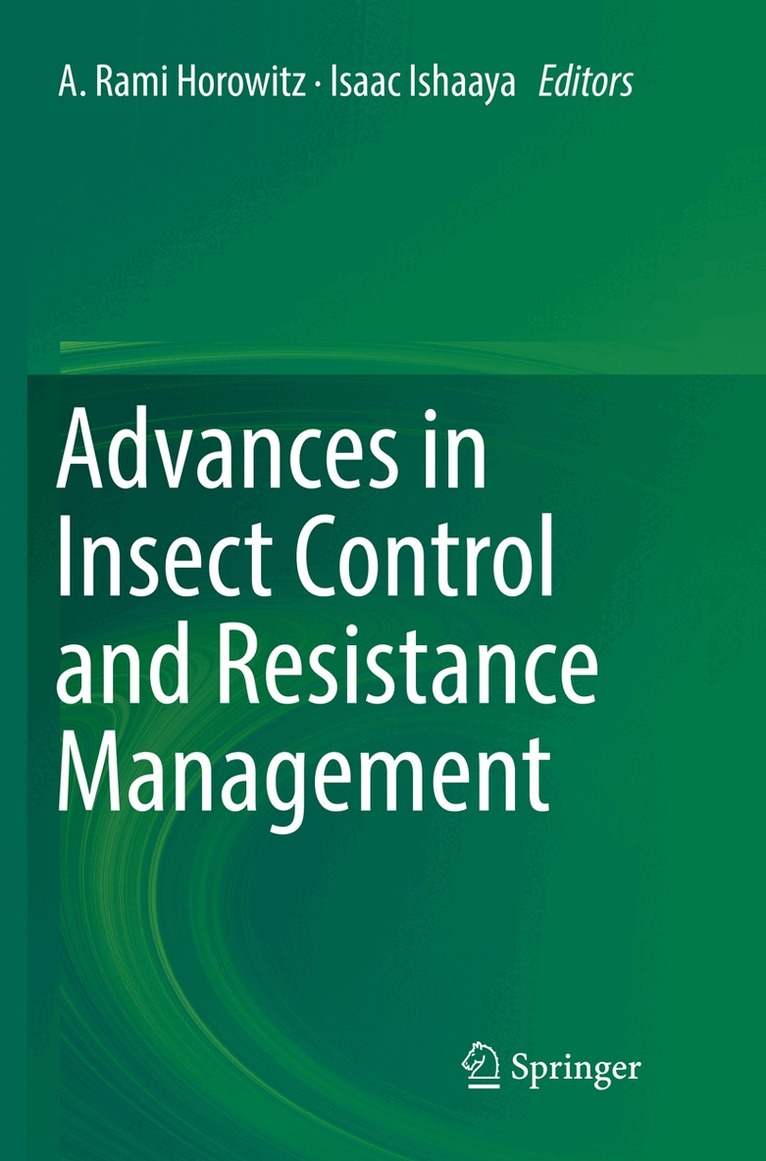
This book covers advanced concepts and creative ideas with regard to insect biorational control and insecticide resistance management. Some chapters present and summarize general strategies or tactics for managing insect pests such as the principles of IPM in various crop systems and biorational control of insect pests, advances in organic farming, alternative strategies for controlling orchard and field-crop pests. Other chapters cover alternative methods for controlling pests such as disruption of insect reproductive systems and utilization of semiochemicals and diatomaceous earth formulations, and developing bioacoustic methodsfor mating disruption. Another part is devoted to insecticide resistance: mechanisms and novel approaches for managing insect resistance in agriculture and in public health.
1 588 kr
Skickas inom 10-15 vardagar
Some chapters present and summarize general strategies or tactics for managing insect pests such as the principles of IPM in various crop systems and biorational control of insect pests, advances in organic farming, alternative strategies for controlling orchard and field-crop pests.
1 588 kr
Skickas inom 10-15 vardagar
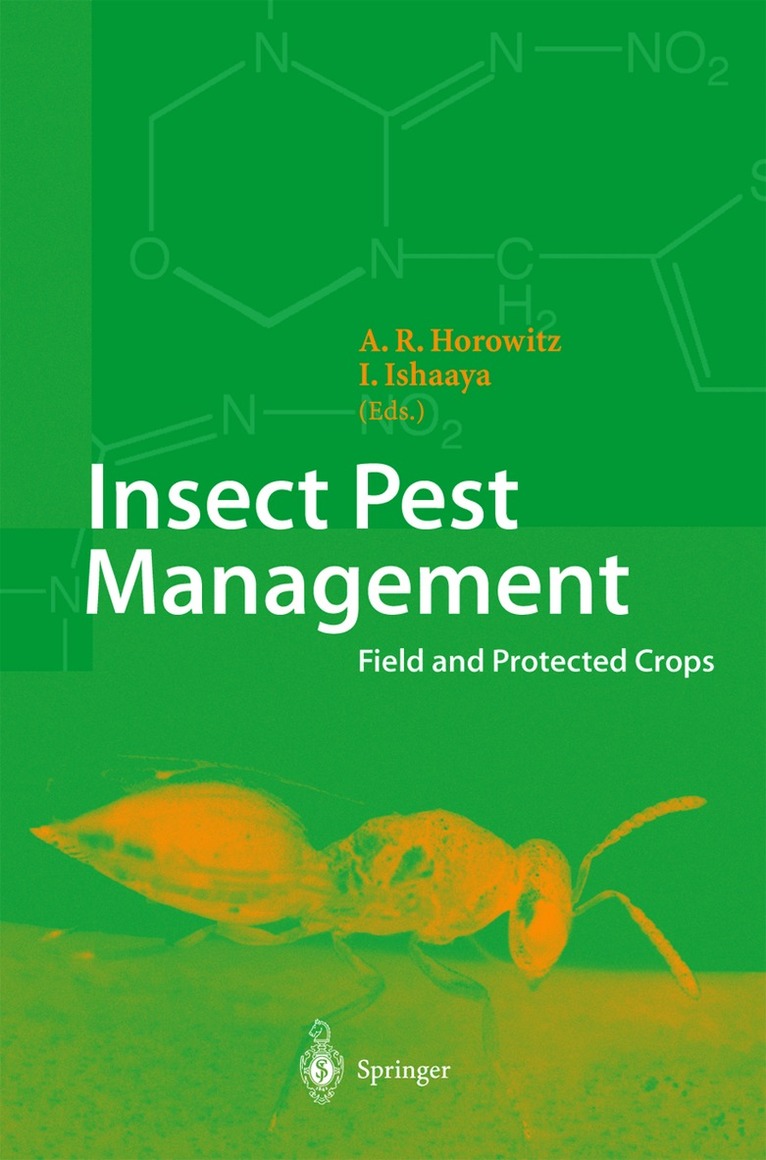
In the middle of the twentieth century, new insecticides were being con stantly developed and it seemed that pesticides would be able to control insect pests indefinitely. In fact, from the 1950s to the 1980s, pest control was mostly based on conventional insecticides such as organochlorines, organo phosphates, carbamates and pyrethroids. However, the severe adverse effects of pesticides on the environment, the resistance problems reaching crisis pro portions and public protests led to stricter regulations and legislation aimed at reducing the use of pesticides. Consequently, other ways to manage insects have been suggested, such as the use of biorational pesticides with minimal adverse effects on the environment, biological control, host-plant resistance to pests, mating disruption with pheromones, and cultural and physical con trol. The ideas behind "integrated control" were published at the end of the 1950s by groups of entomologists from California, and served as a basis for initiating integrated pest management (IPM) in the 1970s. Since the 1980s, insecticide resistant management (IRM) programs have been introduced as a result of increasing problems of resistance to pesticides. IPM programs were strengthened as the awareness of environmental fragility intensified. Since the late 1990s, advanced approaches to manage insect pests have been devel oped. One of the novel and exciting innovations in the study of plant resis tance to pests has been the introduction of genetically engineered or trans genic plants.
1 588 kr
Skickas inom 10-15 vardagar
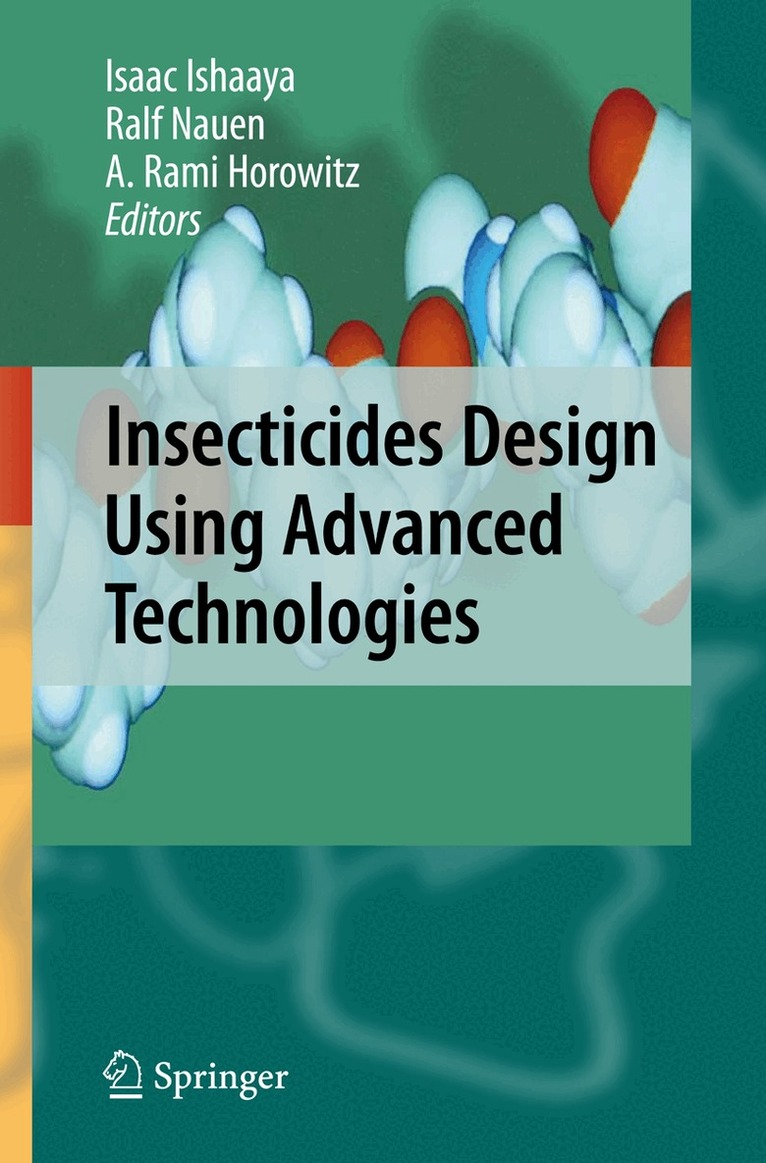
In the past, insecticide development has been guided mostly by chemo-rational and bio-rational design based on understanding of the physiology and ecology of insects and crops. A limitation in each new class of compounds is the evolution of resistance in populations of key pests, which ultimately leads to control failures. This phenomenon and the desire to produce more selective and biorational compounds serve as the driving force to develop advanced technologies for insecticide design. Among the highlights of this book are the use of nanotechnology to increase potency of available insecticides, the use of genetic engineering techniques for controlling insect pests, the development of novel insecticides that bind to unique biochemical receptors, the exploration of natural products as a source for environmentally acceptable insecticides, and the use of insect genomics and cell lines for determining biological and biochemical modes of action of new insecticides.
1 588 kr
Skickas inom 10-15 vardagar
In the middle of the twentieth century, new insecticides were being con stantly developed and it seemed that pesticides would be able to control insect pests indefinitely. In fact, from the 1950s to the 1980s, pest control was mostly based on conventional insecticides such as organochlorines, organo phosphates, carbamates and pyrethroids. However, the severe adverse effects of pesticides on the environment, the resistance problems reaching crisis pro portions and public protests led to stricter regulations and legislation aimed at reducing the use of pesticides. Consequently, other ways to manage insects have been suggested, such as the use of biorational pesticides with minimal adverse effects on the environment, biological control, host-plant resistance to pests, mating disruption with pheromones, and cultural and physical con trol. The ideas behind "integrated control" were published at the end of the 1950s by groups of entomologists from California, and served as a basis for initiating integrated pest management (IPM) in the 1970s. Since the 1980s, insecticide resistant management (IRM) programs have been introduced as a result of increasing problems of resistance to pesticides. IPM programs were strengthened as the awareness of environmental fragility intensified. Since the late 1990s, advanced approaches to manage insect pests have been devel oped. One of the novel and exciting innovations in the study of plant resis tance to pests has been the introduction of genetically engineered or trans genic plants.
1 588 kr
Skickas inom 10-15 vardagar
In the past, insecticide development has been guided mostly by chemo-rational and bio-rational design based on understanding of the physiology and ecology of insects and crops. A limitation in each new class of compounds is the evolution of resistance in populations of key pests, which ultimately leads to control failures. This phenomenon and the desire to produce more selective and biorational compounds serve as the driving force to develop advanced technologies for insecticide design. Among the highlights of this book are the use of nanotechnology to increase potency of available insecticides, the use of genetic engineering techniques for controlling insect pests, the development of novel insecticides that bind to unique biochemical receptors, the exploration of natural products as a source for environmentally acceptable insecticides, and the use of insect genomics and cell lines for determining biological and biochemical modes of action of new insecticides.
2 115 kr
Skickas inom 10-15 vardagar
Ways to reduce the use of synthetic pesticides in plant protection and to use more alternative and novel me- ods for pest control or biorational control are the challenges of pest control for the twenty-first century.
1 588 kr
Skickas inom 10-15 vardagar
Among the highlights of this book is the use of novel insecticides acting on a specific site in an insect group and are compatible with natural enemies and the environment.
2 115 kr
Skickas inom 10-15 vardagar
Ways to reduce the use of synthetic pesticides in plant protection and to use more alternative and novel me- ods for pest control or biorational control are the challenges of pest control for the twenty-first century.
1 588 kr
Skickas inom 10-15 vardagar
Among the highlights of this book is the use of novel insecticides acting on a specific site in an insect group and are compatible with natural enemies and the environment.