Isaac Ishaaya - Böcker
Visar alla böcker från författaren Isaac Ishaaya. Handla med fri frakt och snabb leverans.
15 produkter
15 produkter
1 588 kr
Skickas inom 10-15 vardagar
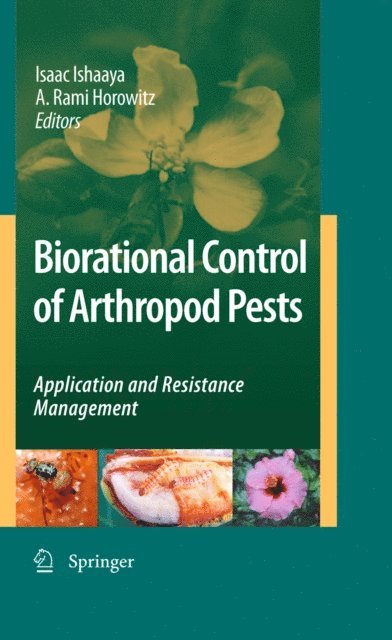
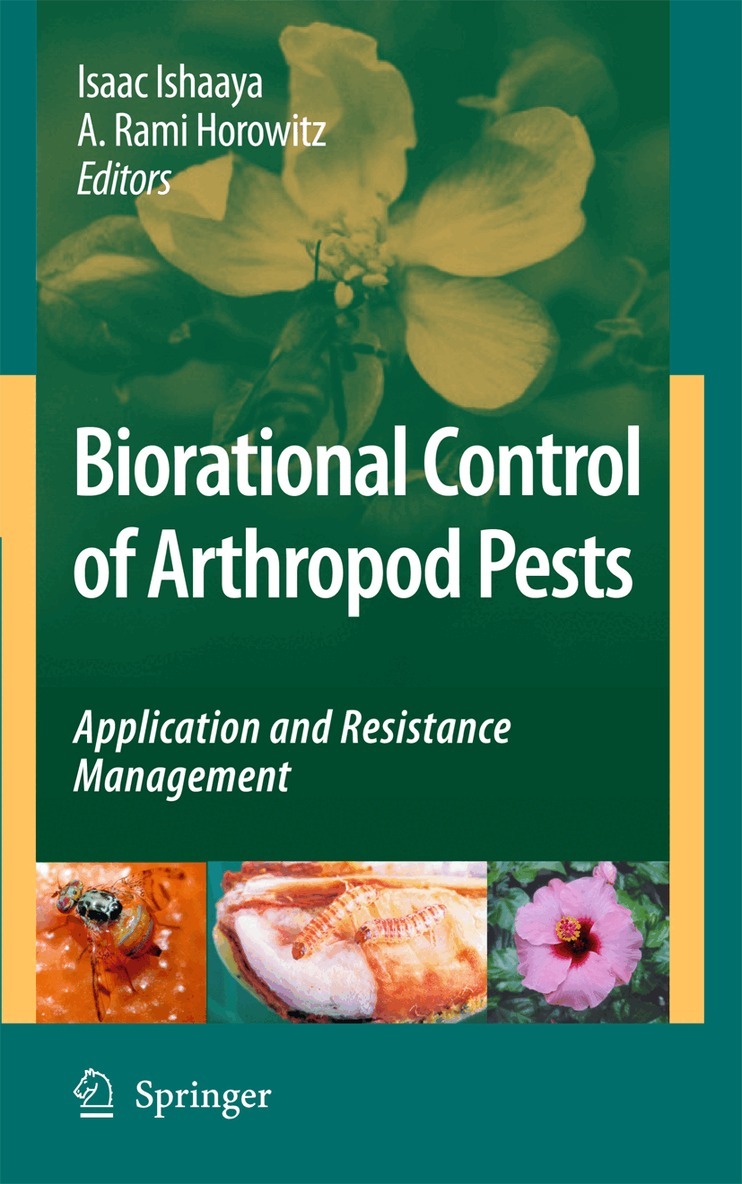
This book covers advanced concepts and creative ideas with regard to insect biorational control and insecticide resistance management. Some chapters present and summarize general strategies or tactics for managing insect pests such as the principles of IPM in various crop systems and biorational control of insect pests, advances in organic farming, alternative strategies for controlling orchard and field-crop pests. Other chapters cover alternative methods for controlling pests such as disruption of insect reproductive systems and utilization of semiochemicals and diatomaceous earth formulations, and developing bioacoustic methodsfor mating disruption. Another part is devoted to insecticide resistance: mechanisms and novel approaches for managing insect resistance in agriculture and in public health.
1 588 kr
Skickas inom 10-15 vardagar
Some chapters present and summarize general strategies or tactics for managing insect pests such as the principles of IPM in various crop systems and biorational control of insect pests, advances in organic farming, alternative strategies for controlling orchard and field-crop pests.
1 588 kr
Skickas inom 10-15 vardagar
In the middle of the twentieth century, new insecticides were being con stantly developed and it seemed that pesticides would be able to control insect pests indefinitely. In fact, from the 1950s to the 1980s, pest control was mostly based on conventional insecticides such as organochlorines, organo phosphates, carbamates and pyrethroids. However, the severe adverse effects of pesticides on the environment, the resistance problems reaching crisis pro portions and public protests led to stricter regulations and legislation aimed at reducing the use of pesticides. Consequently, other ways to manage insects have been suggested, such as the use of biorational pesticides with minimal adverse effects on the environment, biological control, host-plant resistance to pests, mating disruption with pheromones, and cultural and physical con trol. The ideas behind "integrated control" were published at the end of the 1950s by groups of entomologists from California, and served as a basis for initiating integrated pest management (IPM) in the 1970s. Since the 1980s, insecticide resistant management (IRM) programs have been introduced as a result of increasing problems of resistance to pesticides. IPM programs were strengthened as the awareness of environmental fragility intensified. Since the late 1990s, advanced approaches to manage insect pests have been devel oped. One of the novel and exciting innovations in the study of plant resis tance to pests has been the introduction of genetically engineered or trans genic plants.
1 588 kr
Skickas inom 10-15 vardagar
In the past, insecticide development has been guided mostly by chemo-rational and bio-rational design based on understanding of the physiology and ecology of insects and crops. A limitation in each new class of compounds is the evolution of resistance in populations of key pests, which ultimately leads to control failures. This phenomenon and the desire to produce more selective and biorational compounds serve as the driving force to develop advanced technologies for insecticide design. Among the highlights of this book are the use of nanotechnology to increase potency of available insecticides, the use of genetic engineering techniques for controlling insect pests, the development of novel insecticides that bind to unique biochemical receptors, the exploration of natural products as a source for environmentally acceptable insecticides, and the use of insect genomics and cell lines for determining biological and biochemical modes of action of new insecticides.
2 115 kr
Skickas inom 10-15 vardagar
This book conveys a wealth of information on pesticide chemistry, biochemical modes of action, biological activity, and theory of pesticide application for management programs. Emphasis is placed on novel biological insecticides which block certain stages in the development of pest insects. Special attention is given to insecticides with selective properties. Their role in integrated pest management programs and in insecticide resistance management strategies is discussed. The data and concepts presented are essential in establishing new technologies and developing novel groups of compounds which will determine our future agricultural practices. Everybody involved in crop protection and developing new insecticide chemistry from universities to chemical industries will benefit from this volume.
1 588 kr
Skickas inom 10-15 vardagar
The authors of this book report up-to-date methodologies relating to isolation, identification and use of various enzymes and receptor systems that serve as targets for insecticide action or as sites for resistance development. Thus, this book serves as an indispensable tool for scientists in academia and industry research, investigating or developing new insecticides with selective properties for the benefit of the environment. Possible countermeasures for resistance to novel insecticides are discussed.
1 588 kr
Skickas inom 10-15 vardagar
In the middle of the twentieth century, new insecticides were being con stantly developed and it seemed that pesticides would be able to control insect pests indefinitely. In fact, from the 1950s to the 1980s, pest control was mostly based on conventional insecticides such as organochlorines, organo phosphates, carbamates and pyrethroids. However, the severe adverse effects of pesticides on the environment, the resistance problems reaching crisis pro portions and public protests led to stricter regulations and legislation aimed at reducing the use of pesticides. Consequently, other ways to manage insects have been suggested, such as the use of biorational pesticides with minimal adverse effects on the environment, biological control, host-plant resistance to pests, mating disruption with pheromones, and cultural and physical con trol. The ideas behind "integrated control" were published at the end of the 1950s by groups of entomologists from California, and served as a basis for initiating integrated pest management (IPM) in the 1970s. Since the 1980s, insecticide resistant management (IRM) programs have been introduced as a result of increasing problems of resistance to pesticides. IPM programs were strengthened as the awareness of environmental fragility intensified. Since the late 1990s, advanced approaches to manage insect pests have been devel oped. One of the novel and exciting innovations in the study of plant resis tance to pests has been the introduction of genetically engineered or trans genic plants.
1 588 kr
Skickas inom 10-15 vardagar
In the past, insecticide development has been guided mostly by chemo-rational and bio-rational design based on understanding of the physiology and ecology of insects and crops. A limitation in each new class of compounds is the evolution of resistance in populations of key pests, which ultimately leads to control failures. This phenomenon and the desire to produce more selective and biorational compounds serve as the driving force to develop advanced technologies for insecticide design. Among the highlights of this book are the use of nanotechnology to increase potency of available insecticides, the use of genetic engineering techniques for controlling insect pests, the development of novel insecticides that bind to unique biochemical receptors, the exploration of natural products as a source for environmentally acceptable insecticides, and the use of insect genomics and cell lines for determining biological and biochemical modes of action of new insecticides.
2 958 kr
Skickas inom 10-15 vardagar
This book conveys a wealth of information on pesticide chemistry, biochemical modes of action, biological activity, and theory of pesticide application for management programs. Emphasis is placed on novel biological insecticides which block certain stages in the development of pest insects. Special attention is given to insecticides with selective properties. Their role in integrated pest management programs and in insecticide resistance management strategies is discussed. The data and concepts presented are essential in establishing new technologies and developing novel groups of compounds which will determine our future agricultural practices. Everybody involved in crop protection and developing new insecticide chemistry from universities to chemical industries will benefit from this volume.
1 588 kr
Skickas inom 10-15 vardagar
In recent years many of the conventional methods of insect control by broad spectrum synthetic chemicals have come under scrutiny because of their unde sirable effects on human health and the environment. In addition, some classes of pesticide chemistry, which generated resistance problems and severely affected the environment, are no longer used. It is against this background that the authors of this book present up-to-date findings-relating to biochemical sites that can serve as targets for developing insecticides with selective prop erties, and as the basis for the elucidation of resistance mechanisms and countermeasures. The book consists of eight chapters relating to biochemical targets for insec ticide action and seven chapters relating to biochemical modes of resistance and countermeasures. The authors of the chapters are world leaders in pesti cide chemistry, biochemical modes of action and mechanisms of resistance. Biochemical sites such as chitin formation, juvenile hormone and ecdysone receptors, acetylcholine and GABA receptors, ion channels, and neuropeptides are potential targets for insecticide action. The progress made in recent years in molecular biology (presented in depth in this volume) has led to the iden tification of genes that confer mechanisms of resistance, such as increased detoxification, decreased penetration and insensitive target sites. A combina tion of factors can lead to potentiation of the resistance level. Classifications of these mechanisms are termed gene amplification, changes in structural genes, and modification of gene expression.
1 272 kr
Skickas inom 10-15 vardagar
Professor Albert S. Perry passed away suddenly on February 18, 1992, leaving behind his grieving family, friends and colleagues. It was his aspiration to produce a comprehensive work on insecticides to summarize his lifelong dedication to the field of entomology and public health. On the day before his operation, he expressed his desire with the following words: . "1 am coming out of this surgery and will recuperate from it as soon as possible for the sake of my boy (then aged three) and the book". He also told me that he would like to add a chapter on IPM (Integrated Pest Management) and suggested that we write it together. The sad reality is that none of this took place the way he had planned and these became his last words. On my own, I found it difficult to proceed with the writing of the IPM chapter, since several chapters are required to cover· this subject and, in fact, several books. are already devoted to IPM. There was even an IPM article written in a journal (Awake 1983) for a general audience to which he commented that he would like to use it someday because it was well written for laymen, thus providing the readers a wide selection of journals and books to choose from.
2 115 kr
Skickas inom 10-15 vardagar
Ways to reduce the use of synthetic pesticides in plant protection and to use more alternative and novel me- ods for pest control or biorational control are the challenges of pest control for the twenty-first century.
1 588 kr
Skickas inom 10-15 vardagar
Among the highlights of this book is the use of novel insecticides acting on a specific site in an insect group and are compatible with natural enemies and the environment.
2 115 kr
Skickas inom 10-15 vardagar
Ways to reduce the use of synthetic pesticides in plant protection and to use more alternative and novel me- ods for pest control or biorational control are the challenges of pest control for the twenty-first century.
1 588 kr
Skickas inom 10-15 vardagar
Among the highlights of this book is the use of novel insecticides acting on a specific site in an insect group and are compatible with natural enemies and the environment.