Aage Sandqvist – författare
Visar alla böcker från författaren . Handla med fri frakt och snabb leverans.
4 produkter
4 produkter
Häftad, Engelska, 2014
545 kr
Skickas inom 10-15 vardagar
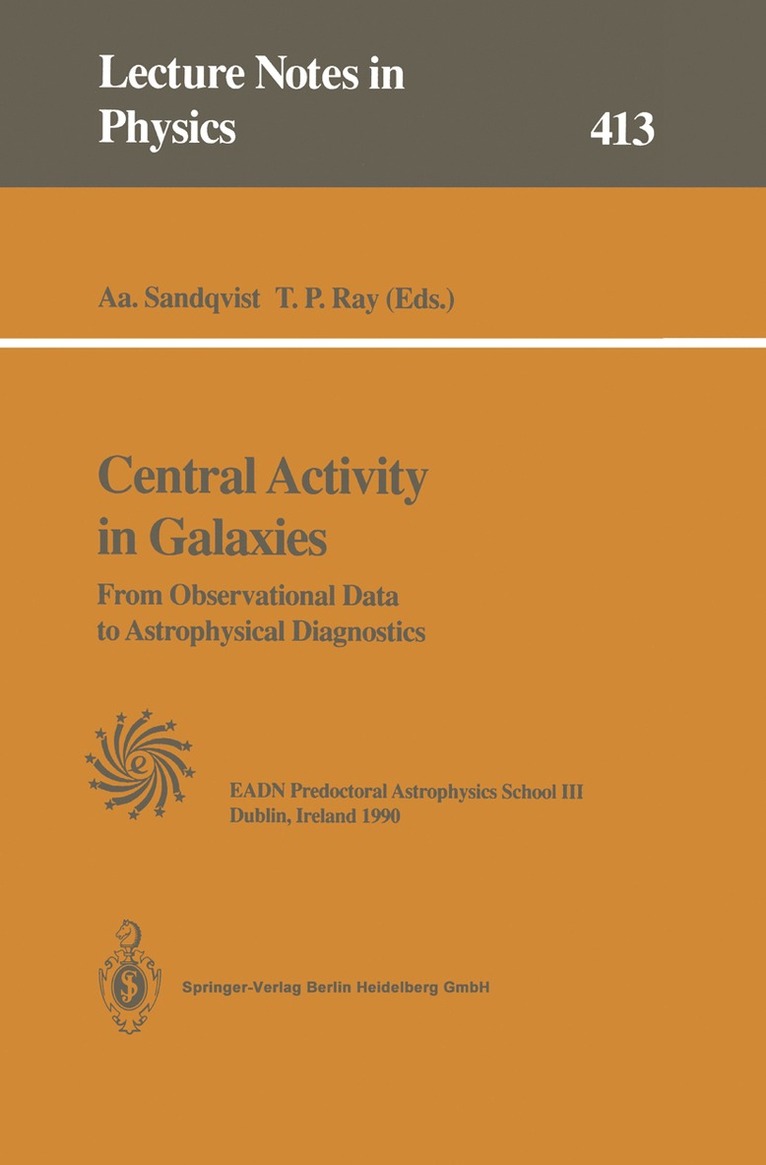
This outstanding collection of surveys addresses graduateand predoctoral students. It reports on theoretical researchand observational data on active galactic nuclei: The enigmaof the nuclei of galaxies with their central "monster"driving the vast range of activity observed in quasars,radio galaxies, Seyferts, starburst galaxies and even ourown Galaxy are explored in this volume. Topics coveredinclude: the impact of recent measurements in the infraredand radio region on our knowledge of thenucleus of ourGalaxy; the spectra and classification of active galacticnuclei, the properties of their host galaxies, theircosmological distribution and evolution, the role of starsand thehydrodynamics of the interstellar medium in thenuclei; the description of the inner parsec of a standardactive galactic nucleus based on direct interpretation ofthe observations; the infrared activity of galaxies; thephysics of radio galaxies and their jets, emphasizing thephysics ofgas flow and high-energy particle interactions aswell as shock acceleration. These are all discussed inconsiderable depth and presented inself-contained chapterswith exhaustive reference lists of the scientificliterature.
E-bok
Svenska, 201979 kr
Läs direkt efter köp
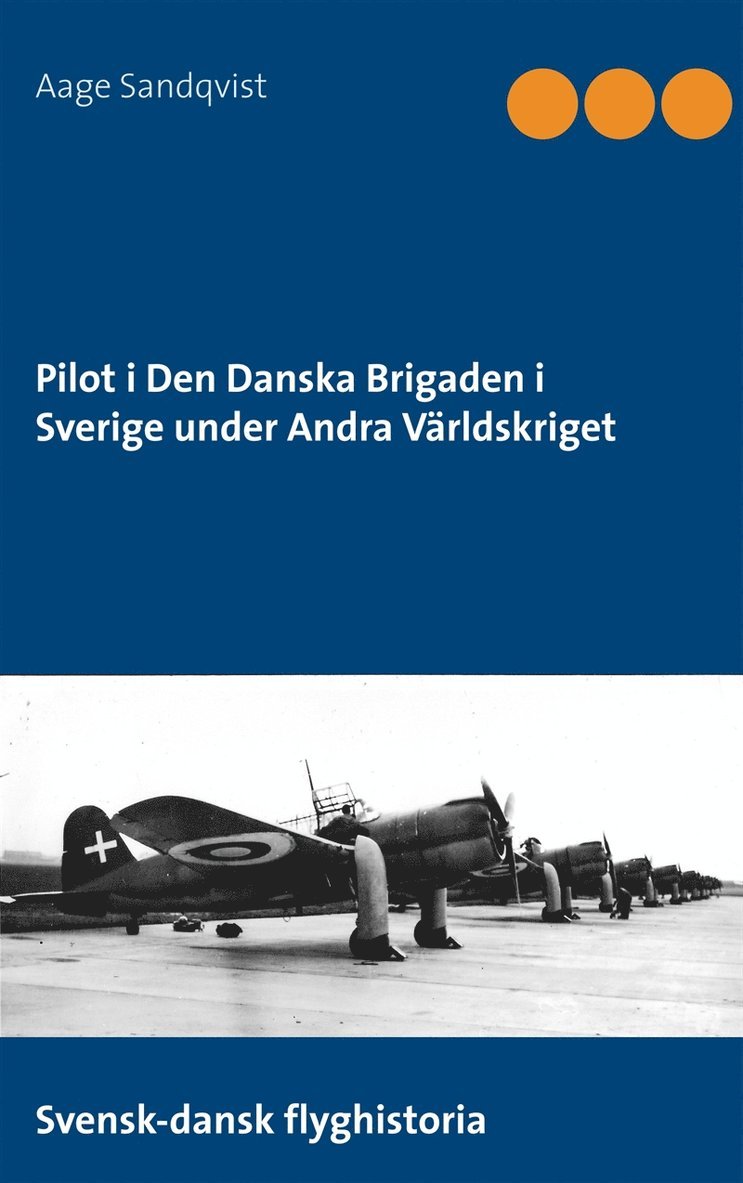
Under andra världskrigets andra hälft började Sverige tillhandahålla hjälp till sina två fränder, Norge och Danmark, i form av s.k. polisläger, där flyktingar från dessa två av tyskarna ockuperade länder kunde samlas och förbereda sig för ett återtåg till sina hemländer när tyskarna förväntades ge upp. I hemländerna skulle dessa polistrupper återställa ordningen i samhället och denna motivation från det neutrala Sverige accepterades av tyskarna. Men allteftersom tiden gick ändrades karaktären från att vara polistrupper till att mer och mer bli reguljära trupper, med enklare vapenutrustning. Den s.k. Danska Brigaden bestod så småningom av nära 5000 danska flyktingar, placerade i olika läger runt om i Sverige.Bland dessa danska flyktingar fanns ett dussintal danska piloter som i största hemlighet blev placerade två och två på olika svenska flygflottiljer där de så småningom fick tillgångtill Sveriges främsta stridsflygplan, nämligen störtbomplanet Saab 17. I krigets sista dagar samlades dessa piloter på flygflottiljen F7 Såtenäs vid Vänerns strand där de bildade Den Danska Brigadens Flygstyrka vars huvudsyfte var att stödja Den Danska Brigadens återtåg till Danmark med de enda verkligen slagkraftiga vapen som Brigaden fått tillgång till av Sverige. Den 5 maj 1945 stod åtta danska piloter med åtta danska tekniker som signalister framför åtta B17 flygplan som under natten försetts med danska nationalitetsbeteckningar, redo att flyga mot Köpenhamn. En av dessa piloter var löjtnant Carlo Hjalmar Sandqvist. Det är Carlo som är Pilot i Den Danska Brigaden i Sverige under Andra Världskriget.
Häftad, Engelska, 2021
143 kr
Skickas inom 5-8 vardagar
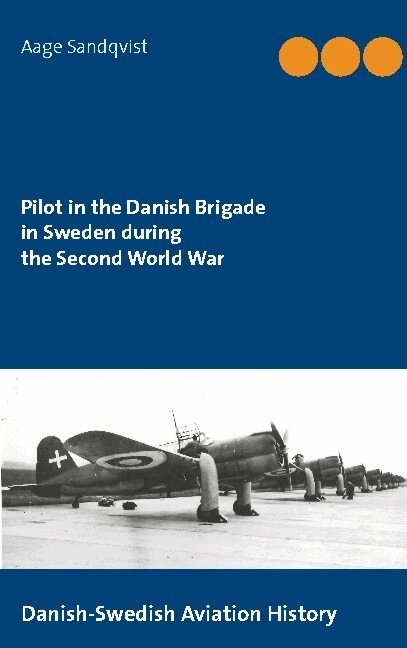
During the second half of World War II, Sweden began to provide confidential assistance to its two neighbours, Norway and Denmark. This aid was in the form of so-called police camps, where refugees from these two German occupied countries could gather and prepare for a return to their homelands, when the Germans were expected to give up. In the home countries, these police forces were to restore order in society, and this motivation from neutral Sweden was tolerated by the Germans. But as time went on, the character changed from being police forces to becoming more and more regular military troops, although with simple weapons. The so-called Danish Brigade eventually consisted of nearly 5,000 Danish refugees, who were placed in various camps around Sweden. Among these Danish refugees, were slightly more than a dozen Danish pilots, who were secretly placed in pairs on different Swedish airbases. They eventually gained access to Sweden's foremost military aircraft, namely the Saab B17 dive-bomber. In the last days of the war, these pilots gathered at the F7 Såtenäs airbase on the shores of Lake Vänern, where they formed the Danish Brigade's Air Unit. Its main purpose was to support the Danish Brigade's return to Denmark. One of these pilots was the author's father, Lieutenant Carlo Hjalmar Sandqvist. Carlo is the "Pilot in the Danish Brigade in Sweden during the Second World War." This book presents inside views of the Danish resistance movement and German concentration camps in Denmark during World War II, and a dramatic escape. It describes the Danish Brigade in Sweden - a secret organization in which Sweden trained up to 5,000 Danish refugees as "police troops", eventually a paramilitary organization. It also presents the secret Swedish military plan for "Saving Denmark" in the last year of the war.
E-bok
Engelska, 202179 kr
Läs direkt efter köp
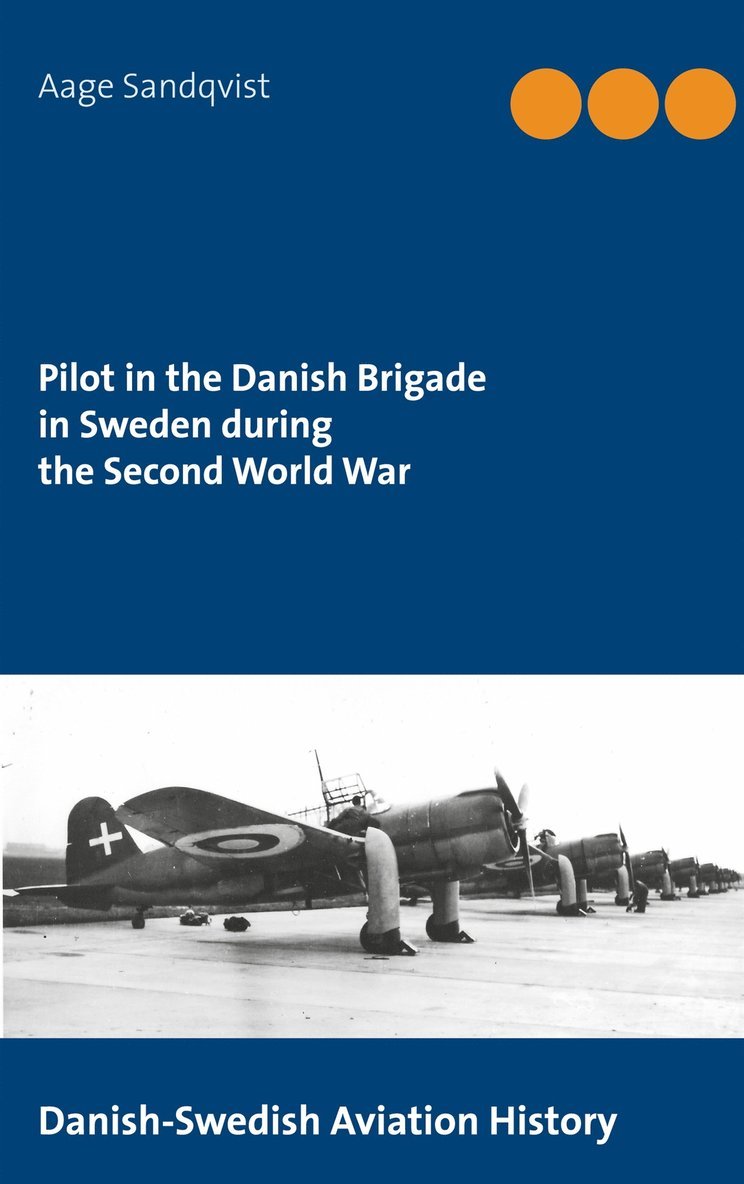
During the second half of World War II, Sweden began to provide confidential assistance to its two neighbours, Norway and Denmark. This aid was in the form of so-called police camps, where refugees from these two German occupied countries could gather and prepare for a return to their homelands, when the Germans were expected to give up. In the home countries, these police forces were to restore order in society, and this motivation from neutral Sweden was tolerated by the Germans. But as time went on, the character changed from being police forces to becoming more and more regular military troops, although with simple weapons. The so-called Danish Brigade eventually consisted of nearly 5,000 Danish refugees, who were placed in various camps around Sweden. Among these Danish refugees, were slightly more than a dozen Danish pilots, who were secretly placed in pairs on different Swedish airbases. They eventually gained access to Sweden's foremost military aircraft, namely the Saab B17 dive-bomber. In the last days of the war, these pilots gathered at the F7 Såtenäs airbase on the shores of Lake Vänern, where they formed the Danish Brigade's Air Unit. Its main purpose was to support the Danish Brigade's return to Denmark. One of these pilots was the author's father, Lieutenant Carlo Hjalmar Sandqvist. Carlo is the "Pilot in the Danish Brigade in Sweden during the Second World War."This book presents inside views of the Danish resistance movement and German concentration camps in Denmark during World War II, and a dramatic escape. It describes the Danish Brigade in Sweden - a secret organization in which Sweden trained up to 5,000 Danish refugees as "police troops", eventually a paramilitary organization. It also presents the secret Swedish military plan for "Saving Denmark" in the last year of the war.