Abel Bojar – författare
Visar alla böcker från författaren Abel Bojar. Handla med fri frakt och snabb leverans.
6 produkter
6 produkter
Häftad, Engelska, 2023
270 kr
Skickas
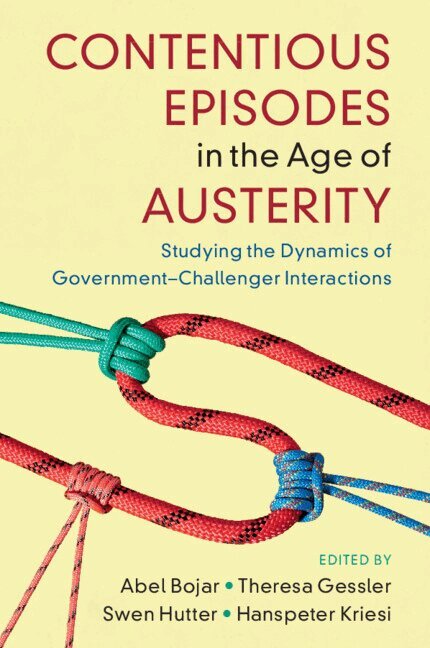
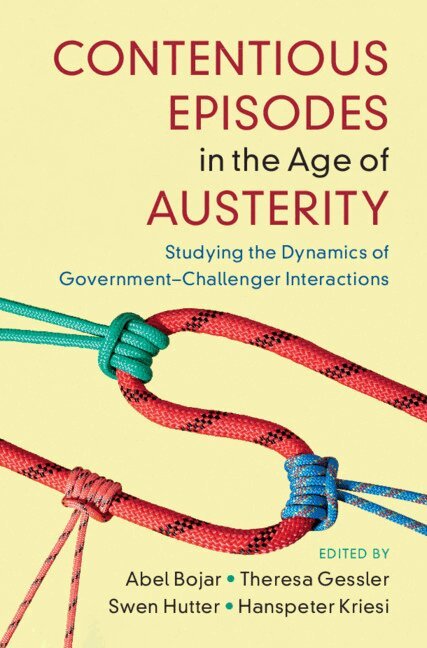
Based on extensive data and analysis of sixty contentious episodes in twelve European countries, this book proposes a novel approach that takes a middle ground between narrative approaches and conventional protest event analysis. Looking particularly at responses to austerity policies in the aftermath of the Great Recession (2008-2015), the authors develop a rigorous conceptual framework that focuses on the interactions between three types of participants in contentious politics: governments, challengers, and third parties. This approach allows political scientists to map not only the variety of actors and actor coalitions that drove the interactions in the different episodes, but also the interplay of repression/concessions/support and of mobilization/cooperation/mediation on the part of the actors involved in the contention. The methodology used will enable researchers to answer old (and new) research questions related to political conflict in a way that is simultaneously attentive to conceptual depth and statistical rigor.
E-bok
Engelska, 2021367 kr
Läs direkt efter köp
Based on extensive data and analysis of sixty contentious episodes in twelve European countries, this book proposes a novel approach that takes a middle ground between narrative approaches and conventional protest event analysis. Looking particularly at responses to austerity policies in the aftermath of the Great Recession (2008–2015), the authors develop a rigorous conceptual framework that focuses on the interactions between three types of participants in contentious politics: governments, challengers, and third parties. This approach allows political scientists to map not only the variety of actors and actor coalitions that drove the interactions in the different episodes, but also the interplay of repression/concessions/support and of mobilization/cooperation/mediation on the part of the actors involved in the contention. The methodology used will enable researchers to answer old (and new) research questions related to political conflict in a way that is simultaneously attentive to conceptual depth and statistical rigor.
E-bok
PDF, Engelska, 2021367 kr
Läs direkt efter köp
Based on extensive data and analysis of sixty contentious episodes in twelve European countries, this book proposes a novel approach that takes a middle ground between narrative approaches and conventional protest event analysis. Looking particularly at responses to austerity policies in the aftermath of the Great Recession (2008–2015), the authors develop a rigorous conceptual framework that focuses on the interactions between three types of participants in contentious politics: governments, challengers, and third parties. This approach allows political scientists to map not only the variety of actors and actor coalitions that drove the interactions in the different episodes, but also the interplay of repression/concessions/support and of mobilization/cooperation/mediation on the part of the actors involved in the contention. The methodology used will enable researchers to answer old (and new) research questions related to political conflict in a way that is simultaneously attentive to conceptual depth and statistical rigor.
E-bok
Engelska, 2024474 kr
Läs direkt efter köp
E-bok
PDF, Engelska, 2024474 kr
Läs direkt efter köp
Inbunden, Engelska, 2021
1 071 kr
Skickas inom 7-10 vardagar
Based on extensive data and analysis of sixty contentious episodes in twelve European countries, this book proposes a novel approach that takes a middle ground between narrative approaches and conventional protest event analysis. Looking particularly at responses to austerity policies in the aftermath of the Great Recession (2008-2015), the authors develop a rigorous conceptual framework that focuses on the interactions between three types of participants in contentious politics: governments, challengers, and third parties. This approach allows political scientists to map not only the variety of actors and actor coalitions that drove the interactions in the different episodes, but also the interplay of repression/concessions/support and of mobilization/cooperation/mediation on the part of the actors involved in the contention. The methodology used will enable researchers to answer old (and new) research questions related to political conflict in a way that is simultaneously attentive to conceptual depth and statistical rigor.