Abid A. Ansari - Böcker
Visar alla böcker från författaren Abid A. Ansari. Handla med fri frakt och snabb leverans.
13 produkter
13 produkter
2 318 kr
Skickas inom 10-15 vardagar
Phytoremediation
2 318 kr
Skickas inom 10-15 vardagar
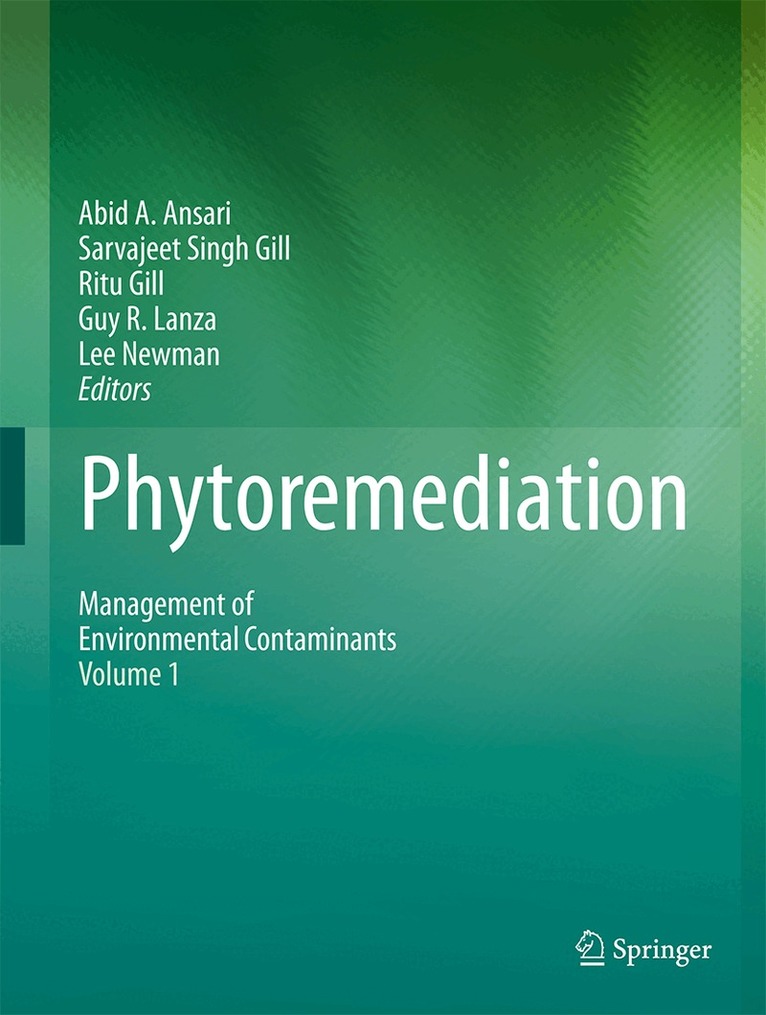
This text details the plant-assisted remediation method, “phytoremediation”, which involves the interaction of plant roots and associated rhizospheric microorganisms for the remediation of soil and water contaminated with high levels of metals, pesticides, solvents, radionuclides, explosives, nutrients, crude oil, organic compounds and various other contaminants. Each chapter highlights and compares the beneficial and economical alternatives of phytoremediation to currently practiced soil and water removal and burial practices.This book covers state of the art approaches in Phytoremediation written by leading and eminent scientists from around the globe. Phytoremediation: Management of Environmental Contaminants, Volume 1 supplies its readers with a multidisciplinary understanding in the principal and practical approaches of phytoremediation from laboratory research to field application.
1 582 kr
Skickas inom 10-15 vardagar
This text details the plant-assisted remediation method, “phytoremediation," which involves the interaction of plant roots and associated rhizospheric microorganisms for the remediation of soil contaminated with high levels of metals, pesticides, solvents, radionuclides, explosives, crude oil, organic compounds and various other contaminants. Each chapter highlights and compares the beneficial and economical alternatives of phytoremediation to currently practiced soil removal and burial practices.
2 107 kr
Skickas inom 10-15 vardagar
This text details the plant-assisted remediation method, “phytoremediation”, which involves the interaction of plant roots and associated rhizospheric microorganisms for the remediation of soil contaminated with high levels of metals, pesticides, solvents, radionuclides, explosives, crude oil, organic compounds and various other contaminants.
2 646 kr
Skickas inom 10-15 vardagar
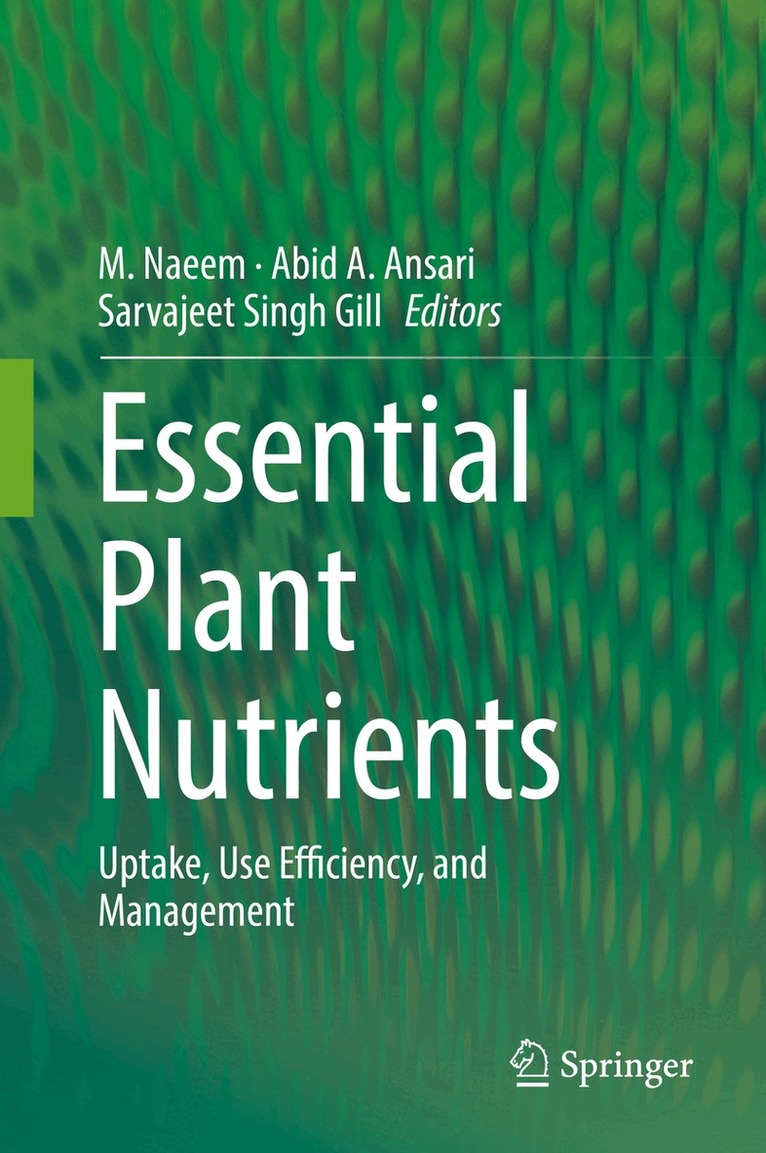
This book explores the agricultural, commercial, and ecological future of plants in relation to mineral nutrition. It covers various topics regarding the role and importance of mineral nutrition in plants including essentiality, availability, applications, as well as their management and control strategies. Plants and plant products are increasingly important sources for the production of energy, biofuels, and biopolymers in order to replace the use of fossil fuels. The maximum genetic potential of plants can be realized successfully with a balanced mineral nutrients supply. This book explores efficient nutrient management strategies that tackle the over and under use of nutrients, check different kinds of losses from the system, and improve use efficiency of the plants. Applied and basic aspects of ecophysiology, biochemistry, and biotechnology have been adequately incorporated including pharmaceuticals and nutraceuticals, agronomical, breeding and plant protectionparameters, propagation and nutrients managements. This book will serve not only as an excellent reference material but also as a practical guide for readers, cultivators, students, botanists, entrepreneurs, and farmers.
1 590 kr
Skickas inom 10-15 vardagar
This text details the plant-assisted remediation method, “phytoremediation," which involves the interaction of plant roots and associated rhizospheric microorganisms for the remediation of soil contaminated with high levels of metals, pesticides, solvents, radionuclides, explosives, crude oil, organic compounds and various other contaminants.
2 118 kr
Skickas inom 10-15 vardagar
This text details the plant-assisted remediation method, “phytoremediation”, which involves the interaction of plant roots and associated rhizospheric microorganisms for the remediation of soil contaminated with high levels of metals, pesticides, solvents, radionuclides, explosives, crude oil, organic compounds and various other contaminants.
2 646 kr
Skickas inom 10-15 vardagar
This book explores the agricultural, commercial, and ecological future of plants in relation to mineral nutrition. This book explores efficient nutrient management strategies that tackle the over and under use of nutrients, check different kinds of losses from the system, and improve use efficiency of the plants.
3 174 kr
Skickas inom 10-15 vardagar
This text details the plant-assisted remediation method, “phytoremediation”, which involves the interaction of plant roots and associated rhizospheric microorganisms for the remediation of soil contaminated with high levels of metals, metalloids, fuel and oil hydrocarbons, nano particles, pesticides, solvents, organic compounds and various other contaminants. Many chapters highlight and compare the efficiency and economic advantages of phytoremediation and nano-phytoremediation to currently practiced soil and water treatment practices.Volume 6 of Phytoremediation: Management of Environmental Contaminants continues the series. Taken together, the six volumes provide a broad–based global synopsis of the current applications of phytoremediation using plants and the microbial communities associated with their roots to decontaminate terrestrial and aquatic ecosystems.
1 590 kr
Skickas inom 10-15 vardagar
Eutrophication continues to be a major global challenge to water quality scientists. The global demand on water resources due to population increases, economic development, and emerging energy development schemes has created new environmental challenges to global sustainability. Eutrophication, causes, consequences, and control provides a current account of many important aspects of the processes of natural and accelerated eutrophication in major aquatic ecosystems around the world. The connections between accelerated eutrophication and climate change, chemical contamination of surface waters, and major environmental and ecological impacts on aquatic ecosystems are discussed. Water quality changes typical of eutrophication events in major climate zones including temperate, tropical, subtropical, and arid regions are included along with current approaches to treat and control increased eutrophication around the world. The book provides many useful new insights to address the challenges of global increases in eutrophication and the increasing threats to biodiversity and water quality.
1 073 kr
Skickas inom 10-15 vardagar
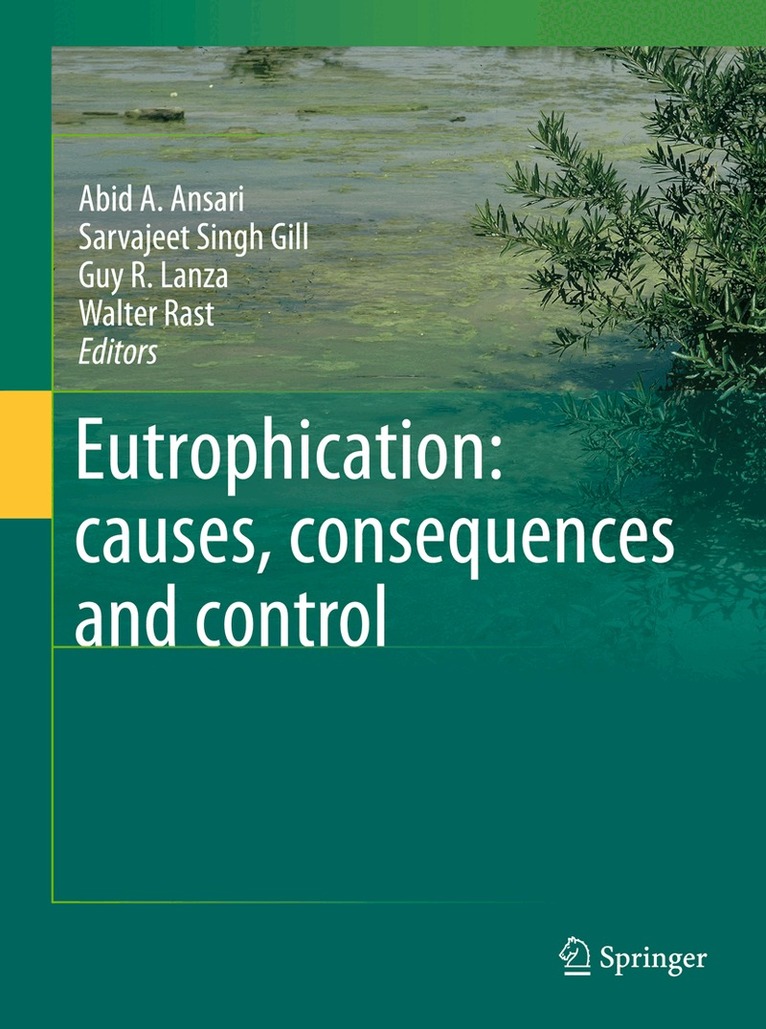
Eutrophication continues to be a major global challenge and the problem of eutrophication and availability of freshwater for human consumption is an essential ecological issue. The global demand for water resources due to increasing population, economic developments, and emerging energy development schemes has created new environmental challenges for global sustainability. Accordingly, the area of research on eutrophication has expanded considerably in recent years. Eutrophication, acidification and contamination by toxic substances are likely to pose increasing threats to freshwater resources and ecosystems. The consequences of anthropogenic-induced eutrophication of freshwaters are severe deterioration of surface waters and growing public concern, as well as new interest among the scientific community. “Eutrophication: causes, consequences & control” provides the latest information on many important aspects of the processes of natural and accelerated eutrophication in major aquatic ecosystems around the world. This book offers a cutting-edge resource for researchers and students alike who are studying eutrophication in various ecosystems. It presents the latest trends and developments in the field, including: global scenarios and local threats to the dynamics of aquatic ecosystems, economics of eutrophication, eutrophication in the great lakes of the Chinese pacific drainage basin, photoautotrophic productivity in eutrophic ecosystems, eutrophication’s impacts on natural metal remediation in salt marshes, phytoplankton assemblages as an indicator of water quality in seven temperate estuarine lakes in southeast Australia, biogeochemical indicators of nutrient enrichments in wetlands – the microbial response as a sensitive indicator of wetland eutrophication, and ultraviolet radiation and bromide as limiting factors in eutrophication processes in semi-arid climate zones. Written by respected experts and featuring helpful illustrations andphotographs, “Eutrophication: causes, consequences & control” provides a concise and practical update on the latest developments in eutrophication.
1 590 kr
Skickas inom 10-15 vardagar
Eutrophication continues to be a major global challenge to water quality scientists. The global demand on water resources due to population increases, economic development, and emerging energy development schemes has created new environmental challenges to global sustainability. Eutrophication, causes, consequences, and control provides a current account of many important aspects of the processes of natural and accelerated eutrophication in major aquatic ecosystems around the world. The connections between accelerated eutrophication and climate change, chemical contamination of surface waters, and major environmental and ecological impacts on aquatic ecosystems are discussed. Water quality changes typical of eutrophication events in major climate zones including temperate, tropical, subtropical, and arid regions are included along with current approaches to treat and control increased eutrophication around the world. The book provides many useful new insights to address the challenges of global increases in eutrophication and the increasing threats to biodiversity and water quality.
1 073 kr
Skickas inom 10-15 vardagar
Eutrophication continues to be a major global challenge and the problem of eutrophication and availability of freshwater for human consumption is an essential ecological issue. The global demand for water resources due to increasing population, economic developments, and emerging energy development schemes has created new environmental challenges for global sustainability. Accordingly, the area of research on eutrophication has expanded considerably in recent years. Eutrophication, acidification and contamination by toxic substances are likely to pose increasing threats to freshwater resources and ecosystems. The consequences of anthropogenic-induced eutrophication of freshwaters are severe deterioration of surface waters and growing public concern, as well as new interest among the scientific community. “Eutrophication: causes, consequences & control” provides the latest information on many important aspects of the processes of natural and accelerated eutrophication in major aquatic ecosystems around the world. This book offers a cutting-edge resource for researchers and students alike who are studying eutrophication in various ecosystems. It presents the latest trends and developments in the field, including: global scenarios and local threats to the dynamics of aquatic ecosystems, economics of eutrophication, eutrophication in the great lakes of the Chinese pacific drainage basin, photoautotrophic productivity in eutrophic ecosystems, eutrophication’s impacts on natural metal remediation in salt marshes, phytoplankton assemblages as an indicator of water quality in seven temperate estuarine lakes in southeast Australia, biogeochemical indicators of nutrient enrichments in wetlands – the microbial response as a sensitive indicator of wetland eutrophication, and ultraviolet radiation and bromide as limiting factors in eutrophication processes in semi-arid climate zones. Written by respected experts and featuring helpful illustrations andphotographs, “Eutrophication: causes, consequences & control” provides a concise and practical update on the latest developments in eutrophication.