Achim Wiesner – författare
Visar alla böcker från författaren Achim Wiesner. Handla med fri frakt och snabb leverans.
5 produkter
5 produkter
Inbunden, Engelska, 2010
544 kr
Skickas inom 10-15 vardagar
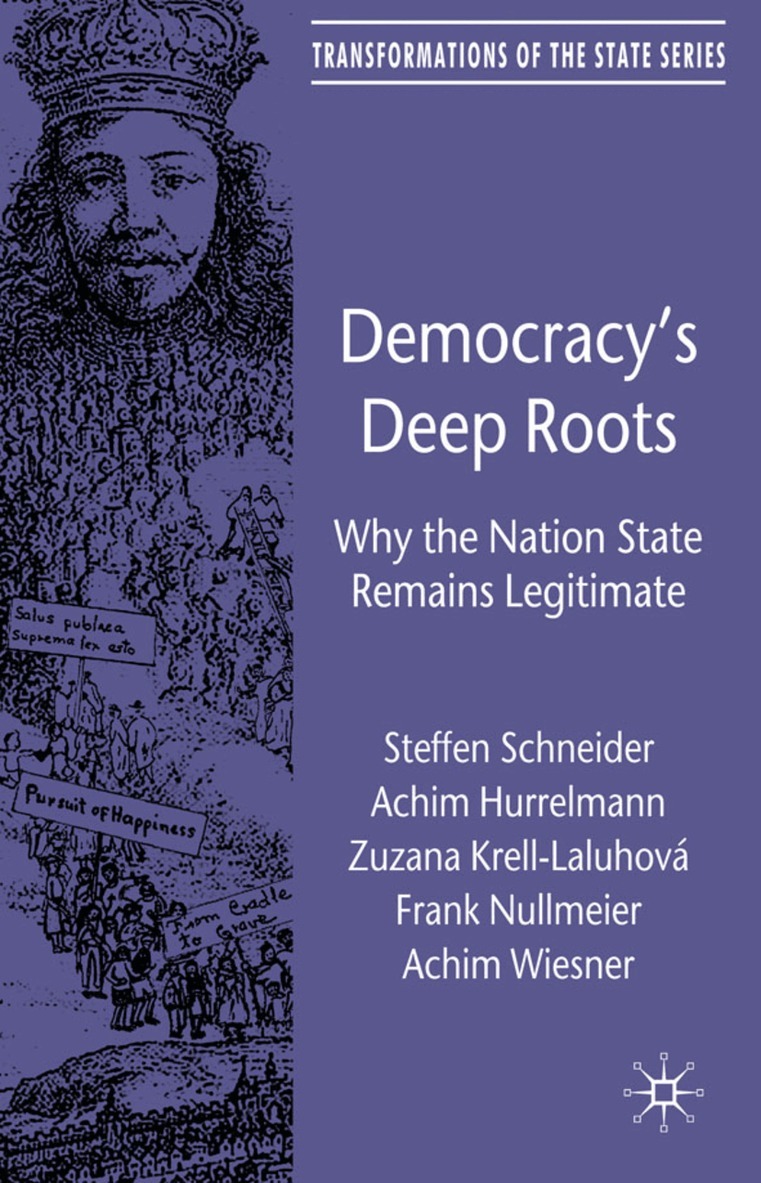
Does the democratic nation state remain a legitimate regime form in the current age of globalization? This book uses a novel, analytical approach to probe this topical question, drawing on a comparative study of legitimation discourses in the media of four Western democracies (Switzerland, Germany, Britain, and the United States.)
E-bok
PDF, Engelska, 2015712 kr
Läs direkt efter köp
Does the democratic nation state remain a legitimate regime form in the current age of globalization? This book uses a novel, analytical approach to probe this topical question, drawing on a comparative study of legitimation discourses in the media of four Western democracies (Switzerland, Germany, Britain, and the United States.)
Häftad, Engelska, 2010
544 kr
Skickas inom 10-15 vardagar
Does the democratic nation state remain a legitimate regime form in the current age of globalization? This book uses a novel, analytical approach to probe this topical question, drawing on a comparative study of legitimation discourses in the media of four Western democracies (Switzerland, Germany, Britain, and the United States.)
E-bok
PDF, Tyska, 2013449 kr
Läs direkt efter köp
Häftad, Tyska, 2003
610 kr
Skickas inom 10-15 vardagar
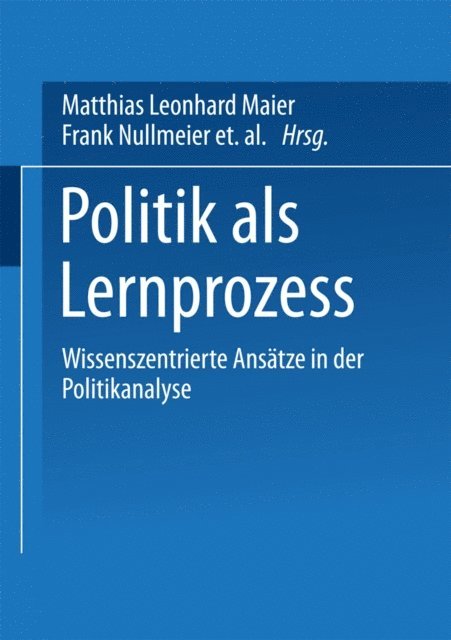
In den 1990er Jahren hat die internationale Politikwissenschaft verstärkt argumentative, interpretative, (sozial)konstruktivistische, kognitive und lerntheoretische Ansätze der Politikanalyse hervorgebracht. Diese haben die politische Funktion und Bedeutung von Wissen, Ideen und Argumentationen betont und im Detail untersucht. Das Buch bietet eine Zusammenschau und Bilanz dieser in der Bundesrepublik nur vereinzelt rezipierten Ansätze. Wissenszentrierte Politikanalysen legen nahe, Politik als argumentativ oder von neuen Erkenntnissen geprägten Lernprozess zu verstehen. Die gegenwartsdiagnostische Fragestellung lautet daher: - Befördert die aufziehende Wissensgesellschaft eine lernende Politik? - Ist Politik lernfähig? - Was heißt Lernen in politischen Kontexten?